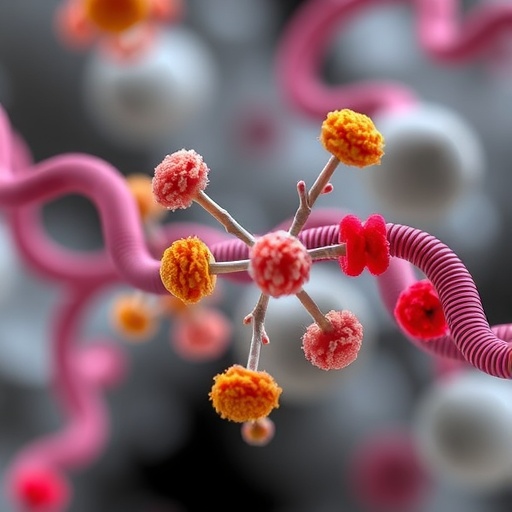
In the intricate world of cellular biology, the trace element zinc has long been known as a vital player, orchestrating countless physiological processes. Scientists have established that maintaining precise zinc levels within the body is crucial, as imbalances—whether deficits or surpluses—can precipitate severe health issues, including weakened immune responses, delayed tissue repair, and sensory malfunctions. Yet, the molecular mechanisms underpinning how altered zinc concentrations translate into such cellular dysfunctions have remained enigmatic. A groundbreaking study emerging from Kyushu University now sheds light on this mystery by revealing the nuanced interplay between zinc homeostasis and protein folding dynamics within the endoplasmic reticulum (ER).
The ER is a fundamental cellular organelle dedicated to the synthesis and processing of secretory proteins, ensuring they attain their native, functional three-dimensional structures through a process dependent on highly controlled redox conditions. Protein folding within the ER involves the formation of disulfide bonds, which stabilize the proteins and are orchestrated by redox-active enzymes. This newly published research highlights how zinc concentrations within the ER can directly modulate these redox pathways, thereby impacting overall protein homeostasis or proteostasis.
Professor Kenji Inaba and his team at the Medical Institute of Bioregulation, Kyushu University, initiated this study motivated by prior observations that the zinc concentration inside the ER is markedly lower than that found in the surrounding cytosol. This stark contrast pointed towards a tightly regulated zinc partitioning mechanism, begging the question: why maintain such low zinc levels in the ER, and what cellular consequences arise if this balance is perturbed?
Focusing on ZIP7, a zinc transporter protein embedded in the ER membrane, the researchers sought to unravel its precise role in maintaining zinc homeostasis and ensuring proper proteostasis. While ZIP7 deficiency had been implicated in inducing ER stress and detrimental developmental outcomes, the specific biochemical connections linking this transporter’s function to the fidelity of protein folding had not been clearly defined.
By employing innovative live-cell imaging techniques that allowed direct visualization of zinc ion fluxes within the ER, the investigators observed that inhibition of ZIP7 led to an abnormal surge of zinc within the ER lumen. This discovery was critical, as it established a causal relationship between ZIP7 activity and ER zinc concentration homeostasis under physiological conditions.
Subsequent biochemical assays revealed that this zinc elevation within the ER hampers the activity of Ero1, a pivotal oxidoreductase enzyme responsible for creating the oxidizing environment essential for disulfide bond formation. Ero1 operates in concert with protein disulfide isomerase (PDI) to ensure proteins fold correctly, but excess zinc was found to directly inhibit Ero1’s enzymatic function, thereby stalling the oxidative folding process.
Disruption of oxidative protein folding signifies a severe cellular stress, as misfolded proteins accumulate, triggering ER stress responses and potentially precipitating pathological conditions. This mechanistic insight into zinc’s interference with ER redox enzymes underscores a previously unappreciated regulatory axis—zinc-redox crosstalk—that governs proteostasis within the cell.
Further experiments demonstrated that the zinc-induced impairment of Ero1 activity selectively affects membrane proteins essential for cellular signaling and proliferation. Since these proteins are crucial for coordinated cell growth and environmental responsiveness, their misfolding offers a plausible molecular explanation for how zinc imbalances may contribute to complex diseases including oncogenesis.
This revelation not only advances fundamental understanding of ER biology but also opens new vistas for therapeutic strategies aimed at modulating zinc levels to restore proper protein folding environments. Moreover, the researchers intend to extend their methodological framework to investigate zinc’s role in other organelles such as the Golgi apparatus and lysosomes, which may further elucidate how this metal ion orchestrates cellular function on a broader scale.
Inaba’s team’s work exemplifies the critical importance of metalloregulation in cellular homeostasis, emphasizing zinc as a master regulator within intracellular compartments. The discovery that zinc levels can fine-tune redox enzymes pivotal for proteostasis reframes zinc from merely a nutritional element to a dynamic signaling modulator integral to cellular health.
As the biomedical community continues to grapple with diseases rooted in protein misfolding and ER stress, these findings provide an invaluable molecular foundation. Targeted pharmaceutical modulation of zinc transporters like ZIP7 or redox enzymes such as Ero1 could soon represent novel interventions designed to correct proteostatic imbalances implicated in diverse pathological states.
This study, published April 22, 2026, in Nature Communications, distills years of meticulous inquiry into a compelling narrative of metal biology intersecting with protein folding machinery. It represents a milestone in the quest to decode cellular zinc regulation, with promising implications for translational medicine aimed at improving immune function, tissue regeneration, and cancer treatment.
By bridging the gap between zinc homeostasis and ER redox biology, Kyushu University researchers have firmly positioned zinc as a critical lynchpin in the maintenance of intracellular proteostasis. This research heralds a new era of exploration into metallobiology and its multifaceted impact on human health, urging scientists and clinicians alike to reassess zinc’s role from multiple novel angles.
Subject of Research: Cells
Article Title: Zinc-redox crosstalk regulates proteostasis in the endoplasmic reticulum
News Publication Date: 22-Apr-2026
Web References: http://dx.doi.org/10.1038/s41467-026-72250-w
References: Amagai Y, Arai C, Yamamoto W, et al. “Zinc-redox crosstalk regulates proteostasis in the endoplasmic reticulum.” Nature Communications, 22-Apr-2026.
Image Credits: Kenji Inaba / Kyushu University
Keywords: Zinc homeostasis, endoplasmic reticulum, protein folding, redox enzymes, ZIP7, Ero1, proteostasis, oxidative folding, ER stress, metalloregulation, cell signaling, cancer
Tags: cellular zinc concentration effectsendoplasmic reticulum protein quality controlimpact of zinc on proteostasismolecular mechanisms of zinc imbalanceprotein folding dynamics in ERredox regulation of disulfide bond formationredox-active enzymes in protein foldingzinc homeostasis in protein foldingzinc influence on cellular health mechanismszinc modulation of ER redox pathwayszinc redox crosstalk in cellular biologyzinc role in ER stress response