
Iron-based magnetic nanomaterials have swiftly ascended to prominence within the biomedical sphere, promising transformative applications grounded in their unique and multifaceted physicochemical properties. While their clinical utility as contrast enhancers in magnetic resonance imaging (MRI) is well-established, emerging research reveals these nanomaterials possess far broader therapeutic and diagnostic potential. Their capabilities extend into realms such as targeted drug delivery, magnetic hyperthermia for cancer treatment, and innovative approaches toward managing iron deficiency. Central to these advances is an intricate interplay between the nanomaterials and key immune cells known as macrophages, which orchestrate myriad responses integral to host defense and tissue homeostasis.
Macrophages, renowned for their remarkable plasticity and phenotypic adaptability, serve as primary cellular effectors in vivo that interact intimately with iron-based magnetic nanomaterials. The biological outcomes stemming from these interactions are intrinsically linked to the macrophages’ ability to dynamically transition between pro-inflammatory and anti-inflammatory states. Despite burgeoning interest, the mechanistic underpinnings of how iron-based nanomaterials modulate macrophage behavior and immune regulation remain incompletely understood. Developing a comprehensive framework detailing these processes is critical to harnessing the full biomedical potential of these advanced nanostructures.
Recently, a meticulous review authored by a research team based in Nanjing and published in the journal Magnetic Medicine offers an exhaustive synthesis of current knowledge surrounding the metabolic fate of iron-based magnetic nanomaterials and their influence on macrophage function. This scholarly work delves deeply into the biodistribution, cellular uptake, and biodegradation pathways of these nanoparticles, outlining how physicochemical parameters such as particle size, surface charge, and routes of administration decisively shape their in vivo journey and biological impact. Such insights are invaluable for the rational design of nanomedicines with optimized efficacy and safety profiles.
One focal aspect explored in the review is the complex interaction between iron-based nanomaterials and the mononuclear phagocyte system, chiefly macrophages, which mediate their uptake and clearance. Upon internalization, these nanomaterials undergo biodegradation within lysosomal compartments, leading to the release of iron ions. This process not only influences iron homeostasis intracellularly but also triggers a cascade of biochemical events that can reprogram macrophage physiology. The metabolic fate of iron within these cells is inextricably linked to cellular functions including energy metabolism, signaling, and immune response modulation.
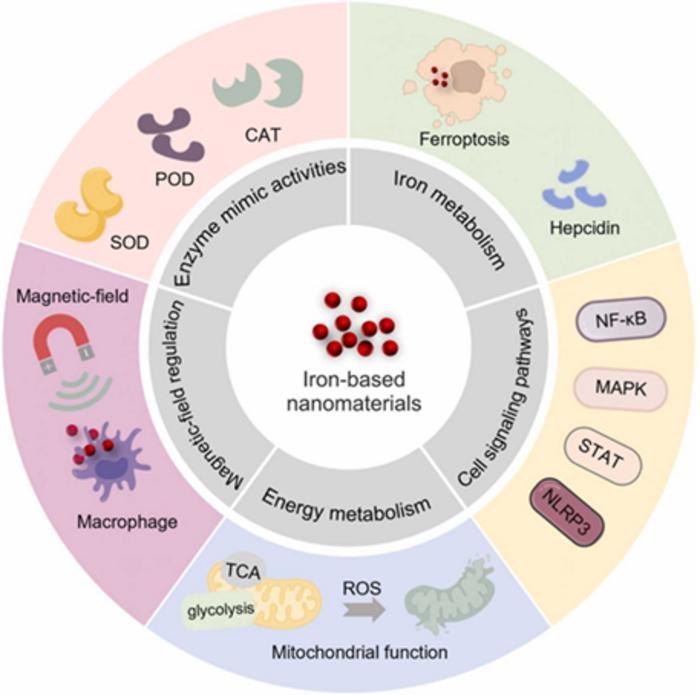
A particularly fascinating dimension of this interaction is the enzyme-mimicking, or “nanozyme,” activities exhibited by certain iron-based magnetic nanomaterials. These materials can emulate the functions of endogenous antioxidant enzymes such as superoxide dismutase (SOD), peroxidase (POD), and catalase (CAT), thereby influencing the cellular redox environment. The resultant modulation of reactive oxygen species (ROS) levels within macrophages has profound implications, as ROS serve both as signaling molecules and effectors in immune responses. Elevations in ROS can tip the balance toward either inflammatory activation or resolution, depending on contextual cues and nanomaterial properties.
The liberated iron ions from nanoparticle biodegradation also engage several critical cell signaling pathways. Notably, the nuclear factor-kappa B (NF-κB), mitogen-activated protein kinase (MAPK), signal transducer and activator of transcription (STAT), and nucleotide-binding oligomerization domain-like receptor family pyrin domain-containing 3 (NLRP3) inflammasome pathways are influenced by these bioavailable iron pools. Activation or suppression of these signaling cascades redefines the inflammatory landscape orchestrated by macrophages, determining their role in various pathological or healing processes. These molecular events underscore the dualistic immunomodulatory potential inherent to iron-based magnetic nanomaterials.
Beyond their immunological impacts, the interplay between iron nanomaterials and macrophage metabolism is striking. Released iron contributes to mitochondrial functions, notably the electron transport chain (ETC), and affects glycolytic flux, both of which are indispensable for macrophage energy demands and effector functions. The modulation of these metabolic pathways by iron ions and related nanomaterials reveals a sophisticated mechanism by which macrophages might be reprogrammed toward phenotypes conducive to tissue repair or pathogen elimination.
Intriguingly, exposure to external magnetic fields amplifies these cellular effects, adding an additional layer of control over macrophage function. Magnetic stimuli can enhance nanomaterial stability, catalytic activities, and iron ion release kinetics, thereby intensifying both therapeutic and potentially adverse biological outcomes. This magnetically induced modulation opens exciting avenues for non-invasive, spatiotemporally controlled interventions in immune-related diseases.
Collectively, the insights gleaned from this comprehensive review highlight iron-based magnetic nanomaterials not merely as passive tools but as dynamic agents capable of intricate biological modulation. Their ability to interface with macrophages at metabolic, enzymatic, and signaling levels portends significant advancements in disease diagnosis, immunotherapy, and regenerative medicine. As nanotechnology continues to evolve, integrating multidisciplinary knowledge of immunology, biochemistry, and materials science will be key to realizing clinically impactful applications.
While challenges remain, including elucidating long-term safety profiles and optimizing delivery mechanisms, the expanding understanding of how iron-based magnetic nanomaterials influence macrophage biology fuels optimism. Future research endeavors leveraging these nanomaterials’ unique capabilities promise to revolutionize approaches to treating chronic inflammation, cancer, infectious diseases, and iron metabolism disorders.
In essence, the compelling synergy between iron-based magnetic nanomaterials and macrophages offers a paradigm shift in biomedicine, transforming nanoparticles from inert contrast agents into potent modulators of immune function and cellular metabolism. Ongoing studies will no doubt refine these concepts, paving the way toward next-generation nanotherapeutics that seamlessly integrate diagnostics with precisely targeted therapies.
Subject of Research: Not applicable
Article Title: The metabolic fate of iron-based magnetic nanomaterials and their impact on macrophage function
Web References: http://dx.doi.org/10.1016/j.magmed.2025.100002
Image Credits: Yubo Huang, et al
Keywords: Cell biology, Molecular biology, Biotechnology, Nanotechnology
Tags: biomedical applications of nanomaterialscomprehensive framework for nanostructuresimmune regulation mechanismsinteraction with immune systemiron deficiency managementiron-based magnetic nanomaterialsmacrophage behavior modulationmagnetic hyperthermia cancer treatmentphysicochemical properties of nanomaterialspro-inflammatory and anti-inflammatory statestargeted drug deliverytransformative applications in medicine