In the absence of carbon, life on Earth cannot exist. Yet much of how this fundamental element circulates throughout the planet's oceans remains a scientific mystery.
To learn more about the ocean's carbon cycle, a team of investigators led by UC Santa Barbara oceanographer David Siegel is set to implement a new NASA project: the EXport Processes in the Ocean from RemoTe Sensing (EXPORTS) Science Plan. EXPORTS will help scientists develop a comprehensive understanding of how the world's oceans process carbon and how they mitigate carbon dioxide accumulation in the atmosphere.
"EXPORTS combines modeling, satellite data and in situ microscopic imaging and genomic techniques as well as robotic field sampling in new and innovative ways," said Siegel, a professor in UCSB's Department of Geography and the project's lead scientist. "The resulting data sets will be used to model these processes on global scales to assess their impacts for present and future climates."
Large scientific teams will undertake two field expeditions, the first set for summer 2018 in the northeast Pacific Ocean. A dozen proposals have been funded to examine the biological ocean pathways that impact the carbon cycle; two of them will be led by UCSB researchers.
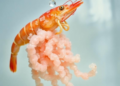
For one, Siegel will work with UCSB research oceanographers Uta Passow, whose fieldwork focuses on the formation of aggregates in the ocean, and Norman Nelson, who will measure ocean optical properties during the cruises. Other team members will deploy optical instrumentation to examine microscale images of sinking aggregates and model their dynamics. Collectively, these scientists hope to improve predictive abilities relating to the size distribution of sinking carbon and the roles that microscopic marine organisms such as phytoplankton and zooplankton play in their dynamics.
Like plants, phytoplankton get their energy from carbon dioxide (CO2) through photosynthesis, which makes them very important in carbon cycling. These tiny organisms consume CO2 from the atmosphere, forming biomass that eventually makes up aggregates that sink toward the ocean floor. This process of transferring CO2 to the deep ocean where it can be sequestered for hundreds to thousands of years is called the biological pump.
Craig Carlson, a professor in UCSB's Department of Ecology, Evolution, and Marine Biology, is leading another of the funded investigations. He and his team will analyze dissolved organic matter (DOM) cycling and its relationship to microbial uptake, seeking to understand more about what controls the accumulation of DOM and how that relates to the biological pump as well carbon flow through the food web.
"EXPORTS is extremely valuable because it's a large collaborative effort, where each component of the biological pump is going to be studied in detail," Carlson explained. "The project will have a high level of physical resolution, with autonomous assets in the water for the entire duration to help us understand when and to what depth DOM is exported to the deep ocean and its importance in the biological pump."
According to Siegel, EXPORTS innovation ranges from optics to genomics to advanced robotics. "We're going to take measurements in a variety of different ways to get at the fates of net primary production, which is pivotal in understanding how the ocean carbon cycle works," Siegel said. "Many young scientists have been funded in the hope that this next generation will clamor to do this kind of large-scale exploration again in the future."
###
Media Contact
Julie Cohen
[email protected]
805-893-7220
@ucsantabarbara
http://www.ucsb.edu
http://www.news.ucsb.edu/2017/018249/unraveling-ocean-s-secrets