The intricate development of the human brain has long captivated scientists and researchers, as it holds keys to understanding not just humanity’s evolution, but also the origins of various brain disorders, complexities, and distinguishing features compared to our closest relatives, such as chimpanzees. Recent groundbreaking research from the German Primate Center has shed light on two critical genes that significantly influence brain progenitor cell behavior, revealing how the interplay between these genes not only facilitates brain growth but also shapes the neurodevelopmental trajectory that has characterized humankind.
In the realm of neuroscience, progenitor cells have a pivotal role; they are the fundamental building blocks from which nerve cells develop. The study, led by Michael Heide and involving significant contributions from Nesil Eşiyok, focused on two human-specific genes: NBPF14 and NOTCH2NLB. These genes are instrumental in the regulation of progenitor cell proliferation and differentiation, which, in turn, affects the overall complexity and size of the brain. This finely tuned balance between cell multiplication and transformation is crucial during developmental phases, particularly in prenatal stages where the foundation for future cognitive capabilities is laid.
Understanding the cellular mechanisms underlying brain development has implications beyond just evolutionary biology; it opens doors to uncovering the etiology of various neurodevelopmental disorders that may arise due to disruptions in these processes. Disorders such as autism and schizophrenia have been associated with altered progenitor cell dynamics, hence investigating how these specific genes operate could provide valuable insights into their pathogenesis. Eşiyok articulates the significance of these findings, emphasizing that they offer a fresh perspective on both the evolution of the human brain and the potential for addressing developmental malformations that might stem from genetic anomalies.
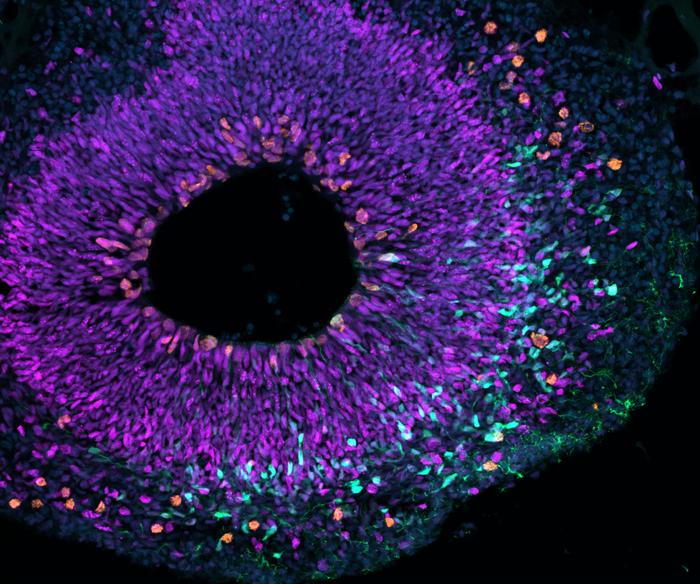
Additionally, the hybrid methodological approach adopted in this research enhances the validity and richness of the findings. By integrating traditional animal model experiments with innovative alternatives like chimpanzee brain organoids, researchers were able to corroborate results across different systems. This synergistic strategy not only affirms the reliability of the conclusions drawn but also highlights an evolving paradigm in scientific research where alternative methods can complement and potentially reduce reliance on conventional animal testing.
Furthermore, the implications of this study resonate on a broader scale, particularly in the ongoing dialogue about ethical research practices and animal welfare. By advancing alternative methodologies, the scientific community is tasked with refining tools that could allow for comprehensive studies without the necessity of extensive animal trials. This not only aligns with contemporary ethical standards but also propels the field toward innovative solutions that could minimize the impact on live subjects while still obtaining crucial data.
The research positions itself within the larger context of neurobiology and evolutionary studies, linking genetic factors to observable traits in brain structure and function. As the researchers elucidate the specific roles of NBPF14 and NOTCH2NLB, they underscore the significance of these genes in the context of human evolutionary history. The research findings suggest that the unique attributes of the human brain, including its size and complexity, can be traced back to mutations and adaptations of these genes that have occurred over millennia.
Moreover, the article titled “A dyad of human-specific NBPF14 and NOTCH2NLB orchestrates cortical progenitor abundance crucial for human neocortex expansion,” published in the reputable journal Science Advances, encapsulates the essence of this research, capturing the scientific community’s attention. The integration of various methods into one cohesive study presents a model for future research endeavors that seek to unravel the complexities of brain development while remaining cognizant of ethical concerns related to animal research.
The insights gleaned from this study not only push the boundaries of our understanding regarding human brain development but also stimulate ongoing discussions surrounding the biological underpinnings of human cognition. As we continue to explore the genetic influences on brain formation, the potential for groundbreaking therapeutic strategies rises—those that could specifically target the developmental pathways influenced by NBPF14 and NOTCH2NLB, ultimately offering hope for individuals affected by somatic mutations linked to neurodevelopmental disorders.
As the implications of the study echo throughout the scientific community, it provokes a renewed interest in interdisciplinary collaboration, uniting fields such as genetics, neuroscience, and evolutionary biology. The potential of this research to influence both academic discourse and practical therapeutic developments cannot be understated; it transcends mere academic curiosity and enters the domain of clinical applicability, establishing a robust foundation upon which future therapies could be built.
In conclusion, the findings from this research not only provide valuable contributions to our understanding of human brain evolution but also offer avenues for addressing existing challenges within the realm of developmental neurology. As contemporary research continues to unveil the interconnectedness of genetics and neurodevelopment, the work conducted at the German Primate Center stands as a testament to the power of scientific inquiry and its ability to illuminate the complexities of what makes us distinctly human.
Subject of Research: Cells
Article Title: A dyad of human-specific NBPF14 and NOTCH2NLB orchestrates cortical progenitor abundance crucial for human neocortex expansion
News Publication Date: October 2023
Web References: Science Advances
References: Not provided
Image Credits: Photo: Nesil Eşiyok
Keywords: Brain development, progenitor cells, neurobiology, genetics, human evolution, neurodevelopmental disorders, alternative research methods, ethical practices, animal testing reduction, neuroscience.
Tags: brain size and complexitychimpanzee brain comparisonevolution of human cognitionhuman brain developmentimplications of brain researchlarge brain evolutionNBPF14 gene functionsneurodevelopmental geneticsNOTCH2NLB gene impactorigins of brain disordersprenatal brain developmentprogenitor cells in neuroscience