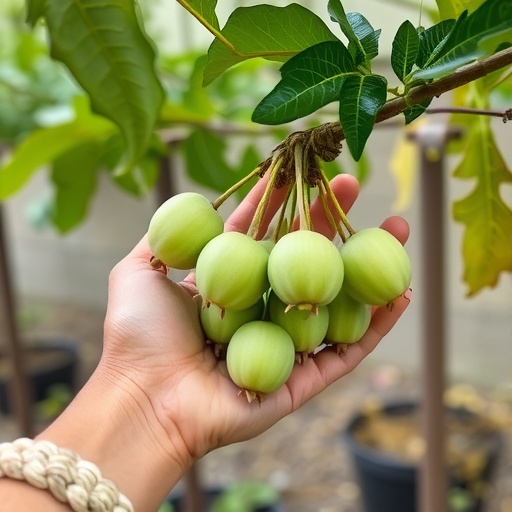
The title “Harnessing the Underutilized Blood Fruit” serves as a clarion call for researchers, conservationists, and agriculturalists alike, urging them to take notice of an often-overlooked tropical gem—the Haematocarpus validus, colloquially known as blood fruit. This remarkable species is drawing increasing interest due to its unique nutritional profile and potential benefits in sustainable agricultural practices. Originating from the lush landscapes of Southeast Asia, particularly the rainforests of Malaysia, the blood fruit has existed for centuries but is yet to enjoy widespread cultivation and appreciation, often relegated to the shadows of other more common fruit crops.
In a recent groundbreaking study published in the journal “Discover Plants,” researchers, including Pungjung and his colleagues, provided an in-depth examination of the blood fruit’s agricultural potential. Their research emphasizes the importance of transitioning from traditional forest harvesting to sustainable farming practices. This shift not only conserves biodiversity but also enhances food security and empowers local communities. The authors propose that the farming of blood fruit could provide an alternative livelihood for indigenous populations, enabling them to earn income while simultaneously protecting the forest ecosystem.
The nutritional value of Haematocarpus validus cannot be overstated. The fruit is rich in vitamins, minerals, and antioxidants, making it a valuable addition to diets commonly lacking in essential nutrients. Containing high levels of vitamin C and other antimicrobial compounds, blood fruit has the potential to promote health while also offering therapeutic benefits that could mitigate diseases that disproportionately affect marginalized communities. The study presents opportunities for farmers to cultivate blood fruit as a cash crop, addressing economic concerns while supporting dietary diversification.
An important aspect of their research involves the methods for cultivating the blood fruit sustainably. The approach aims to integrate environmentally friendly practices with local agricultural traditions, creating a symbiotic relationship between forest ecosystems and agricultural production. The study details strategies for managing soil health, water conservation, and pest control, underscoring the importance of an agroecological approach to farming. These methods seek to minimize the ecological footprint often associated with commercial agriculture, allowing for practices that can rejuvenate the land and maximize yields.
Transitioning the underutilized blood fruit from forest collection to farm cultivation necessitates a robust education and outreach program. The study highlights the need for comprehensive training programs aimed at educating local farmers about the benefits of blood fruit cultivation. Workshops could cover topics such as sustainable farming practices, post-harvest handling, and marketing strategies, thereby equipping farmers with the necessary skills to thrive in a changing agricultural landscape. Engaging local communities in this transition is critical for the long-term success of the initiative, as their involvement will ensure that cultural practices and knowledge are honored and preserved.
Furthermore, the commercialization of Haematocarpus validus holds promise for fostering resilience in agricultural systems impacted by climate change. As traditional crops face threats from shifting weather patterns, blood fruit could serve as a viable alternative for regions particularly susceptible to climate variations. The authors anticipate that by introducing this hardy plant to different climates, farmers may benefit from an additional source of income, while also contributing to the diversification of local ecosystems.
The ecological implications of promoting blood fruit cultivation extend beyond mere agricultural benefits. The study posits that increasing the cultivation of native plants like the blood fruit can assist in restoring degraded land and enhancing biodiversity. As these plants thrive, they will provide habitats for various wildlife species, further aiding in the conservation of local flora and fauna. By driving the reintroduction of native species into agricultural settings, the researchers envision a future where ecological harmony can be achieved alongside profitable farming ventures.
The research undertaken by Pungjung and his colleagues reflects a growing consciousness around the need for food systems that prioritize sustainability. This perspective aligns with global trends aimed at re-evaluating agricultural practices and seeking out alternatives that don’t exploit the earth’s resources but rather work in tandem with them. Their findings act as a beacon of hope—showing that with careful management and nurturing, even the least recognized fruits can transform local economies and support the planet’s health.
Collaboration among researchers, policymakers, and farmers is crucial for ensuring the successful adoption of blood fruit cultivation methods. The potential for funding from NGOs that focus on agricultural innovation and conservation could play a pivotal role in making this transition feasible. By securing financial support, educational programs could be established, fostering the resilience and adaptability necessary for communities to thrive amidst global changes.
The journey of Haematocarpus validus is just beginning; its path from forest to farm represents not only agricultural innovation but also a roadmap for enhancing food systems worldwide. Building a sustainable future requires intentional efforts to integrate community knowledge, scientific research, and innovative agricultural practices. The researchers advocate for continued study of this extraordinary fruit and its potential impacts on both human health and environmental sustainability.
Lastly, the drive to cultivate blood fruit aligns perfectly with global sustainability goals outlined in various frameworks, including the United Nations Sustainable Development Goals (SDGs). By addressing targets related to hunger, health, and sustainable livelihoods, this initiative promises to contribute meaningfully to international efforts aimed at fostering resilience in agriculture while safeguarding natural resources for future generations. The project epitomizes the wisdom of ancient agricultural practices enhanced by modern innovation, creating a future where agriculture and conservation coexist harmoniously.
In conclusion, the work of Pungjung and his team serves as an important reminder of the treasures that the world’s biodiversity holds, often waiting to be rediscovered. Their research on Haematocarpus validus not only illuminates a path toward sustainable farming practices but also provides a crucial narrative centered on community empowerment and ecological integrity. The time has come to harness the potential of this underutilized fruit, transforming agricultural landscapes and nurturing the planet for generations to come.
Subject of Research: The underutilization and potential sustainable cultivation of Haematocarpus validus (blood fruit).
Article Title: Harnessing the underutilized blood fruit (Haematocarpus validus (Miers) Bakh. f. ex Forman) through forest-to-farm transition for conservation and sustainable cultivation.
Article References:
Pungjung, S., Kencharaddi, H.G., Chaurasiya, A.K. et al. Harnessing the underutilized blood fruit (Haematocarpus validus (Miers) Bakh. f. ex Forman) through forest-to-farm transition for conservation and sustainable cultivation.
Discov. Plants 2, 291 (2025). https://doi.org/10.1007/s44372-025-00380-4
Image Credits: AI Generated
DOI: 10.1007/s44372-025-00380-4
Keywords: Blood fruit, Haematocarpus validus, sustainable agriculture, biodiversity, forest conservation.
Tags: biodiversity conservation strategiesblood fruit nutritional benefitsecological impacts of farmingfood security enhancementHaematocarpus validus cultivationindigenous livelihoods and agriculturelocal community empowermentrainforest agriculturesustainable agricultural practicessustainable farming techniquestropical fruit cropsunderutilized fruit species