• HOME
  • NEWS
  • EXPLORE
    • CAREER
      • Companies
      • Jobs
    • EVENTS
    • iGEM
      • News
      • Team
    • PHOTOS
    • VIDEO
    • WIKI
  • BLOG
  • COMMUNITY
    • FACEBOOK
    • INSTAGRAM
    • TWITTER
Wednesday, June 3, 2026
BIOENGINEER.ORG
No Result
View All Result
  • Login
  • HOME
  • NEWS
  • EXPLORE
    • CAREER
      • Companies
      • Jobs
        • Lecturer
        • PhD Studentship
        • Postdoc
        • Research Assistant
    • EVENTS
    • iGEM
      • News
      • Team
    • PHOTOS
    • VIDEO
    • WIKI
  • BLOG
  • COMMUNITY
    • FACEBOOK
    • INSTAGRAM
    • TWITTER
  • HOME
  • NEWS
  • EXPLORE
    • CAREER
      • Companies
      • Jobs
        • Lecturer
        • PhD Studentship
        • Postdoc
        • Research Assistant
    • EVENTS
    • iGEM
      • News
      • Team
    • PHOTOS
    • VIDEO
    • WIKI
  • BLOG
  • COMMUNITY
    • FACEBOOK
    • INSTAGRAM
    • TWITTER
No Result
View All Result
Bioengineer.org
No Result
View All Result
Home NEWS Science News Health

Unlocking how to use mRNA to target Alzheimer’s disease

Bioengineer by Bioengineer
March 28, 2024
in Health
Reading Time: 2 mins read
0
Dementia researcher, Dr Rebecca Nisbet
Share on FacebookShare on TwitterShare on LinkedinShare on RedditShare on Telegram

Scientists at The Florey have developed an mRNA technology approach to target the toxic protein tau, which builds up in patients with Alzheimer’s disease and other dementias. 
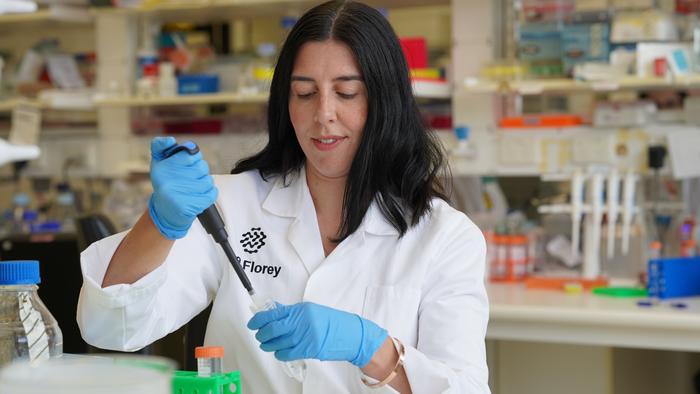
Dementia researcher, Dr Rebecca Nisbet

Credit: Supplied by The Florey

Scientists at The Florey have developed an mRNA technology approach to target the toxic protein tau, which builds up in patients with Alzheimer’s disease and other dementias. 

To date, mRNA has been predominantly used for vaccines, including those used to fight COVID-19. 

New research published today in Brain Communications establishes The Florey as a key player in the mRNA field, with Dr Rebecca Nisbet taking the technology in a new direction. 

“This is the first time mRNA has been explored for use in Alzheimer’s disease,” Dr Nisbet said. “Our work in cell models demonstrates that this technology can serve purposes other than vaccine development.”  

She likened mRNA to an instruction manual for cells.  

“Once delivered to the cell, the cell reads the mRNA and makes an antibody.”  

The Florey team used mRNA to instruct cells in cell models to create RNJ1, an antibody Dr Nisbet developed to target tau, a protein that clumps in the brain cells of dementia patients. 

“This is the first time, to our knowledge, a tau antibody has been able to directly engage tau within the cell.” 

First author on the paper, PhD student Patricia Wongsodirdjo said: “Our technique can be applied to any therapeutic antibody, and we envision that this strategy, when combined with nanoparticle packaging, will enhance targeting of toxic molecules in the brain and improve patient outcomes compared to conventional strategies.” 

Dr Nisbet said RNJ1 still needed further research. 

She said emerging Alzheimer’s treatments, such as lecanemab, which is approved in the USA and under consideration in Australia, are promising but expensive to make and are not an efficient way of getting an active antibody into brain cells. 

“With conventional antibodies, such as lecanemab, the small amount of antibody that does enter the brain can remove some harmful plaque that lies outside our brain cells but can’t access toxic proteins such as tau, which is located in our brain cells,” Dr Nisbet said. 


Journal

Brain Communications

DOI

10.1093/braincomms/fcae100

Method of Research

Experimental study

Subject of Research

Cells

Article Title

mRNA encoded antibody approach for targeting extracellular and intracellular tau

Article Publication Date

25-Mar-2024
Share12Tweet8Share2ShareShareShare2

Related Posts

Esterified IPA with Curcumin Shields Neurons from Glucose Damage

June 3, 2026

Sarcopenia, Obesity, and Frailty: Impact on Mortality

June 3, 2026

ML-Optimized Composting Boosts Nutrient Recycling, Cuts Carbon

June 3, 2026

Non-Invasive Retinal Tests Enhance Parkinson’s Diagnosis

June 3, 2026

POPULAR NEWS

  • ESMO 2025: mRNA COVID Vaccines Enhance Efficacy of Cancer Immunotherapy

    321 shares
    Share 128 Tweet 80
  • Multi-Hospital Study Reveals Long Covid Burden Is Twice as High as Current Estimates

    87 shares
    Share 34 Tweet 22
  • Saying Goodbye to PGY-6: Pediatric Fellowship Realities

    67 shares
    Share 27 Tweet 17
  • Common Food Preservatives Associated with Elevated Blood Pressure and Increased Heart Disease Risk

    57 shares
    Share 23 Tweet 14

About

We bring you the latest biotechnology news from best research centers and universities around the world. Check our website.

Follow us

Recent News

Social Interaction Boosts Brain Growth in Young Fish

Esterified IPA with Curcumin Shields Neurons from Glucose Damage

Sarcopenia, Obesity, and Frailty: Impact on Mortality

Subscribe to Blog via Email

Enter your email address to subscribe to this blog and receive notifications of new posts by email.

Join 82 other subscribers
  • Contact Us

Bioengineer.org © Copyright 2023 All Rights Reserved.

Welcome Back!

Login to your account below

Forgotten Password?

Retrieve your password

Please enter your username or email address to reset your password.

Log In
No Result
View All Result
  • Homepages
    • Home Page 1
    • Home Page 2
  • News
  • National
  • Business
  • Health
  • Lifestyle
  • Science

Bioengineer.org © Copyright 2023 All Rights Reserved.