• HOME
  • NEWS
  • EXPLORE
    • CAREER
      • Companies
      • Jobs
    • EVENTS
    • iGEM
      • News
      • Team
    • PHOTOS
    • VIDEO
    • WIKI
  • BLOG
  • COMMUNITY
    • FACEBOOK
    • INSTAGRAM
    • TWITTER
Monday, July 20, 2026
BIOENGINEER.ORG
No Result
View All Result
  • Login
  • HOME
  • NEWS
  • EXPLORE
    • CAREER
      • Companies
      • Jobs
        • Lecturer
        • PhD Studentship
        • Postdoc
        • Research Assistant
    • EVENTS
    • iGEM
      • News
      • Team
    • PHOTOS
    • VIDEO
    • WIKI
  • BLOG
  • COMMUNITY
    • FACEBOOK
    • INSTAGRAM
    • TWITTER
  • HOME
  • NEWS
  • EXPLORE
    • CAREER
      • Companies
      • Jobs
        • Lecturer
        • PhD Studentship
        • Postdoc
        • Research Assistant
    • EVENTS
    • iGEM
      • News
      • Team
    • PHOTOS
    • VIDEO
    • WIKI
  • BLOG
  • COMMUNITY
    • FACEBOOK
    • INSTAGRAM
    • TWITTER
No Result
View All Result
Bioengineer.org
No Result
View All Result
Home NEWS Science News Health

University of Waterloo develops new way to fight HIV transmission

Bioengineer by Bioengineer
April 16, 2018
in Health
Reading Time: 2 mins read
0
Share on FacebookShare on TwitterShare on LinkedinShare on RedditShare on Telegram
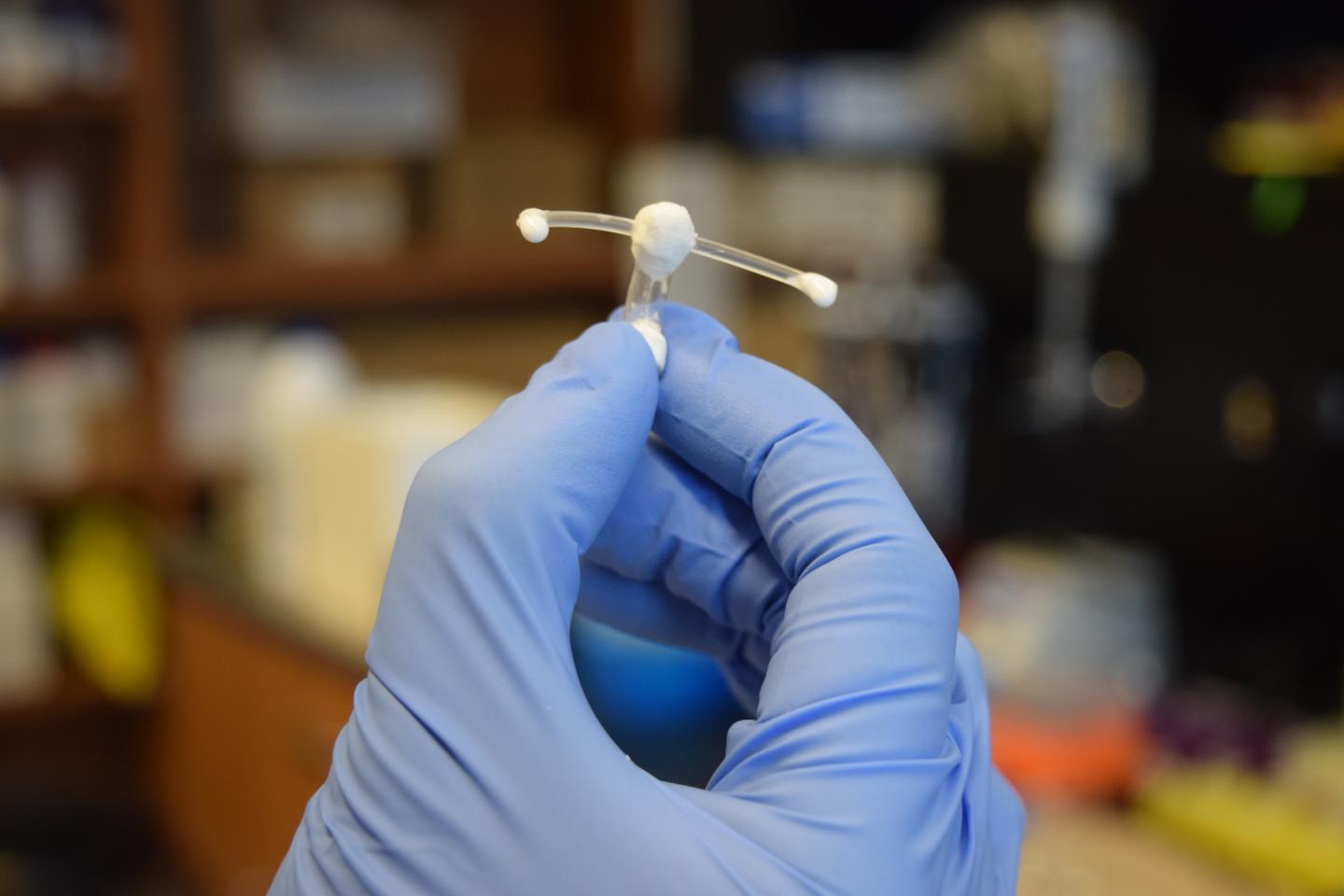
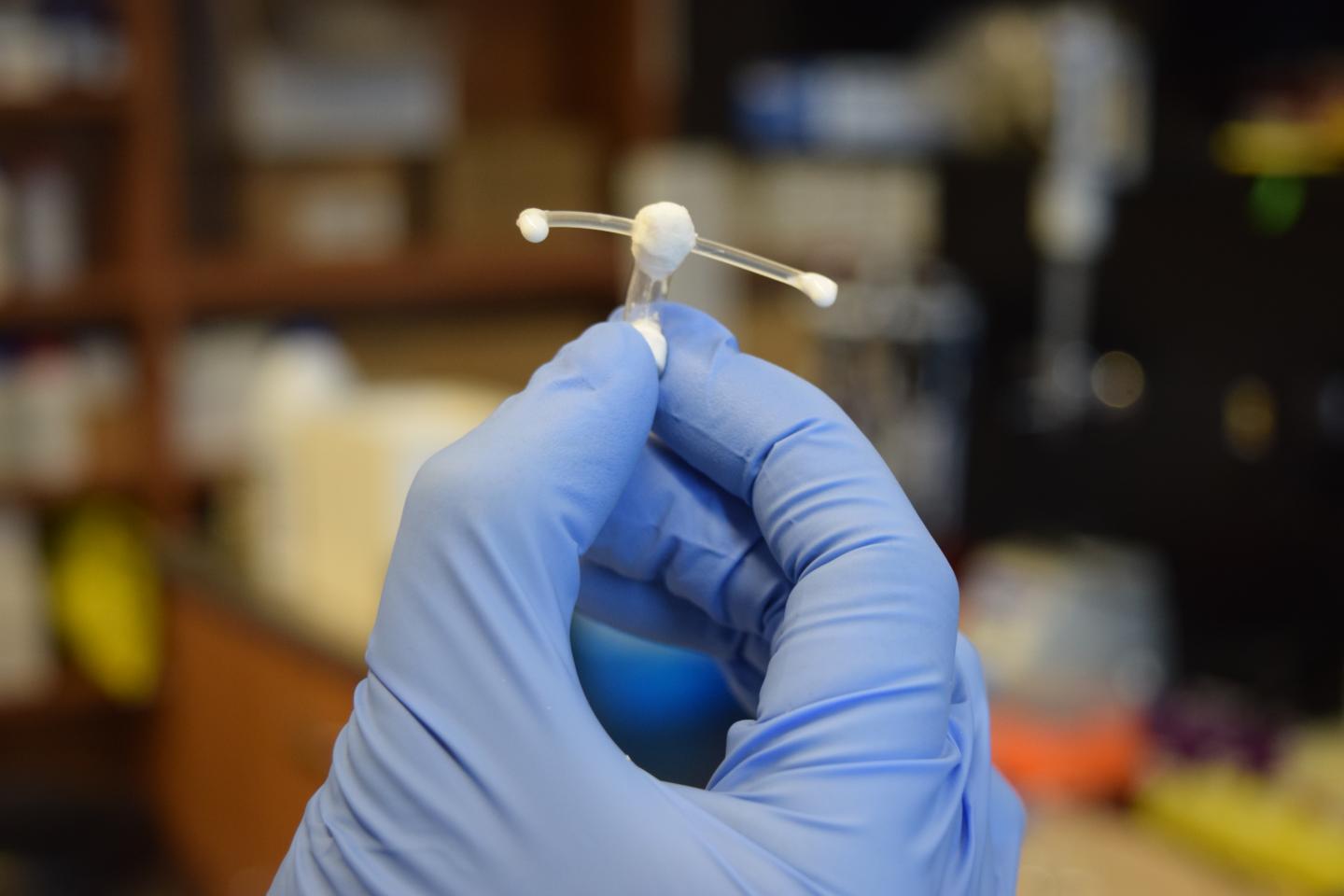
IMAGE

Credit: University of Waterloo

Scientists at the University of Waterloo have developed a new tool to protect women from HIV infection.

The tool, a vaginal implant, decreases the number of cells that the HIV virus can target in a woman's genital tract. Unlike conventional methods of HIV prevention, such as condoms or anti-HIV drugs, the implant takes advantage of some people's natural immunity to the virus.

HIV infects the body by corrupting T cells that are mobilized by the immune system when the virus enters a person's body. When the T cells stay resting and do not attempt to fight the virus they are not infected and the HIV virus is not transmitted between people. When the T cells stay resting, it's referred to as being immune quiescent.

"We know that some drugs taken orally never make it to the vaginal tract, so this implant could provide a more reliable way to encourage T cells not to respond to infection and therefore more reliably and cheaply prevent transmission," said Emmanuel Ho, a professor in the School of Pharmacy at Waterloo. "What we don't know yet is if this can be a stand-alone option for preventing HIV transmission or if it might be best used in conjunction with other prevention strategies. We aim to answer these questions with future research."

Ho's implant was inspired by previous research involving sex workers in Kenya. In Kenya, Ho and research partner Keith Fowke of the University of Manitoba, observed that many of these women who had sex with HIV positive clients but did not contract the virus. They later found the women possessed T cells that were naturally immune quiescent.

"Observing this, we asked ourselves if it was possible to pharmacologically induce immune quiescence with medication that was better assured of reaching the point of infection," said Ho. "By delivering the medication exactly where it's needed, we hoped to increase the chances of inducing immune quiescence."

The implant is composed of a hollow tube and two pliable arms to hold it in place. It contains hydroxychloroquine (HCQ) which is disseminated slowly through the porous material of the tube and absorbed by the walls of the vaginal tract.

The implants were tested in an animal model and the team observed a significant reduction in T cell activation, meaning that the vaginal tract was demonstrating an immune quiescent state.

The article recently appeared in the Journal of Controlled Release.

###

Media Contact

Ryon Jones
[email protected]
226-338-6564
@uWaterlooNews

http://www.uwaterloo.ca/

Share12Tweet8Share2ShareShareShare2

Related Posts

Sleep Quality Links Synergistically with Frailty to Increase Cardiometabolic Multimorbidity in Elderly Chinese

July 19, 2026

Cognitive reserve helps older adults resist frailty and recover better

July 19, 2026

Physical Activity and Health Inequality in China’s Older Adults

July 19, 2026

Factors Influencing Elderly Preference for Dental Services

July 18, 2026
Please login to join discussion

POPULAR NEWS

  • Groundbreaking Discovery: New Shark Species Identified for the First Time — Technology and Engineering

    Groundbreaking Discovery: New Shark Species Identified for the First Time

    34 shares
    Share 14 Tweet 9
  • Controlled Study Defines Pediatric Long COVID Features

    32 shares
    Share 13 Tweet 8
  • Behavioral Nudge Boosts Medication Prescriptions for Alcohol Reduction

    35 shares
    Share 14 Tweet 9
  • Clean Cooking and Remittances Slash Somalia’s Ecological Footprints

    31 shares
    Share 12 Tweet 8

About

We bring you the latest biotechnology news from best research centers and universities around the world. Check our website.

Follow us

Recent News

Sleep Quality Links Synergistically with Frailty to Increase Cardiometabolic Multimorbidity in Elderly Chinese

Cognitive reserve helps older adults resist frailty and recover better

Physical Activity and Health Inequality in China’s Older Adults

Subscribe to Blog via Email

Success! An email was just sent to confirm your subscription. Please find the email now and click 'Confirm' to start subscribing.

Join 85 other subscribers
  • Contact Us

Bioengineer.org © Copyright 2023 All Rights Reserved.

Welcome Back!

Login to your account below

Forgotten Password?

Retrieve your password

Please enter your username or email address to reset your password.

Log In
No Result
View All Result
  • Homepages
    • Home Page 1
    • Home Page 2
  • News
  • National
  • Business
  • Health
  • Lifestyle
  • Science

Bioengineer.org © Copyright 2023 All Rights Reserved.