• HOME
  • NEWS
  • EXPLORE
    • CAREER
      • Companies
      • Jobs
    • EVENTS
    • iGEM
      • News
      • Team
    • PHOTOS
    • VIDEO
    • WIKI
  • BLOG
  • COMMUNITY
    • FACEBOOK
    • INSTAGRAM
    • TWITTER
Monday, August 24, 2026
BIOENGINEER.ORG
No Result
View All Result
  • Login
  • HOME
  • NEWS
  • EXPLORE
    • CAREER
      • Companies
      • Jobs
        • Lecturer
        • PhD Studentship
        • Postdoc
        • Research Assistant
    • EVENTS
    • iGEM
      • News
      • Team
    • PHOTOS
    • VIDEO
    • WIKI
  • BLOG
  • COMMUNITY
    • FACEBOOK
    • INSTAGRAM
    • TWITTER
  • HOME
  • NEWS
  • EXPLORE
    • CAREER
      • Companies
      • Jobs
        • Lecturer
        • PhD Studentship
        • Postdoc
        • Research Assistant
    • EVENTS
    • iGEM
      • News
      • Team
    • PHOTOS
    • VIDEO
    • WIKI
  • BLOG
  • COMMUNITY
    • FACEBOOK
    • INSTAGRAM
    • TWITTER
No Result
View All Result
Bioengineer.org
No Result
View All Result
Home NEWS Science News Health

University of Sussex to carry out vital skin cancer research thanks to new grant

Bioengineer by Bioengineer
July 20, 2017
in Health
Reading Time: 2 mins read
2
Share on FacebookShare on TwitterShare on LinkedinShare on RedditShare on Telegram
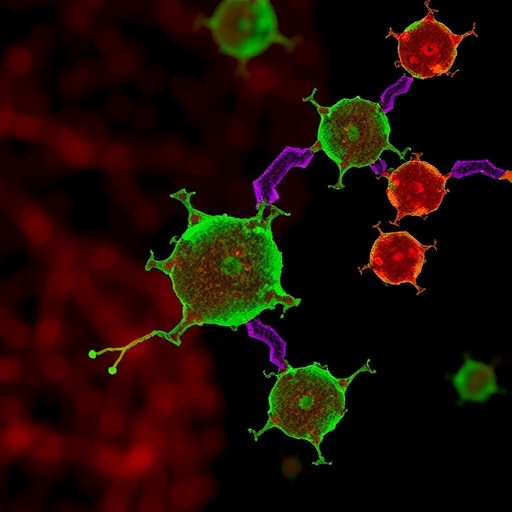
IMAGE

Credit: University of Sussex

The University of Sussex is to carry out vital research into skin cancer thanks to a new grant from The Engineering and Physical Sciences Research Council (EPSRC).

The Spencer Lab, in the University's Chemistry Department, has been awarded a £428K grant to research a protein called PHIP(2) which is present in high amounts in melanoma.

Melanoma is a devastating cancer of the skin, the occurrence of which is on the rise. It can be treated surgically but long term survival tends to be poor and clinical treatments often prove too aggressive or ineffective.

Professor Spencer's Lab, along with Paul Brennan and Frank von Delft at the Structural Genomics Consortium at Oxford University, will work to target the PHIP(2) protein with drug like molecules to try to stop the cancer's progression.

The new project will enable the scientists to study the role the protein plays in the development of melanoma and other aggressive cancers.

Professor John Spencer, from the University of Sussex, said: "If we are to understand melanoma better it is crucial we work to find out why this protein is present in high amounts of this type of skin cancer.

"This new project work stems from earlier grant funding from Worldwide Cancer Research where we found a new use from molecules that we'd initially made to target another cancer protein called p53.

"It pays to recycle molecules as it takes a lot of effort to make them so finding another, unexpected application is rewarding."

The project will also include working with Dr David De Semir, from the California Pacific Medical Center, a world expert in PHIP(2) biology and Bio-Techne/Tocris Biosciences and Selcia industrial partners, who will help exploit the findings in order to make them widely available to cancer researchers.

Rob Felix, Head of Product Management for Tocris at Bio-Techne, said: "After many years of successful collaboration, Tocris Bioscience are delighted to now have the opportunity to work with the Spencer group on a project to develop truly novel and innovative chemical probes for cancer research."

###

To read more about the work of Professor Spencer's Lab, which is situated in the University of Sussex's Life Sciences School, please visit http://www.sussex.ac.uk/lifesci/spencerlab/

Communications and External Affairs | University of Sussex T +44 (0)1273 678888 | [email protected]?http://www.sussex.ac.uk/newsandevents

Notes to Editors:

The University of Sussex's School of Life Sciences is one of the largest academic schools at the University of Sussex. With 96 per cent of its research rated as world leading, internationally excellent or internationally recognised (REF 2014), it is among the leading research hubs for the biological sciences in the UK. The School is home to a number of prestigious research centres including Sussex Neuroscience, the Genome Damage and Stability Centre and the Sussex Drug Discovery Centre, where academics work with industry to translate scientific advances into real-world benefits for patients.

Media Contact

[email protected]
[email protected]
01-273-678-888
@sussexunipress

http://www.sussex.ac.uk

Original Source

http://www.sussex.ac.uk/newsandevents/pressrelease/id/40899
Share12Tweet8Share2ShareShareShare2

Related Posts

Study reveals surge in type 2 diabetes among people under 20

August 24, 2026

Blocking glucosylceramide production kills cancer cells via lysosomal dysfunction, not ceramide buildup

August 23, 2026

ZCCHC4 boosts replication-dependent histone mRNA translation by interacting with eIF3

August 23, 2026

Tirzepatide Versus GLP-1 Agonists for Stroke Risk in Atrial Fibrillation and Diabetes

August 22, 2026
Please login to join discussion

POPULAR NEWS

  • Cochrane Map Reveals Major Evidence Gaps in Dengue Prevention Research

    Cochrane Map Reveals Major Evidence Gaps in Dengue Prevention Research

    29 shares
    Share 12 Tweet 7
  • Study reveals surge in type 2 diabetes among people under 20

    29 shares
    Share 12 Tweet 7
  • KAIST discovers pathway to faster-charging, longer-lasting electric vehicle batteries

    29 shares
    Share 12 Tweet 7
  • Blocking glucosylceramide production kills cancer cells via lysosomal dysfunction, not ceramide buildup

    29 shares
    Share 12 Tweet 7

About

We bring you the latest biotechnology news from best research centers and universities around the world. Check our website.

Follow us

Recent News

Cochrane Map Reveals Major Evidence Gaps in Dengue Prevention Research

Study reveals surge in type 2 diabetes among people under 20

KAIST discovers pathway to faster-charging, longer-lasting electric vehicle batteries

Subscribe to Blog via Email

Enter your email address to subscribe to this blog and receive notifications of new posts by email.

Join 85 other subscribers
  • Contact Us

Bioengineer.org © Copyright 2023 All Rights Reserved.

Welcome Back!

Login to your account below

Forgotten Password?

Retrieve your password

Please enter your username or email address to reset your password.

Log In
No Result
View All Result
  • Homepages
    • Home Page 1
    • Home Page 2
  • News
  • National
  • Business
  • Health
  • Lifestyle
  • Science

Bioengineer.org © Copyright 2023 All Rights Reserved.