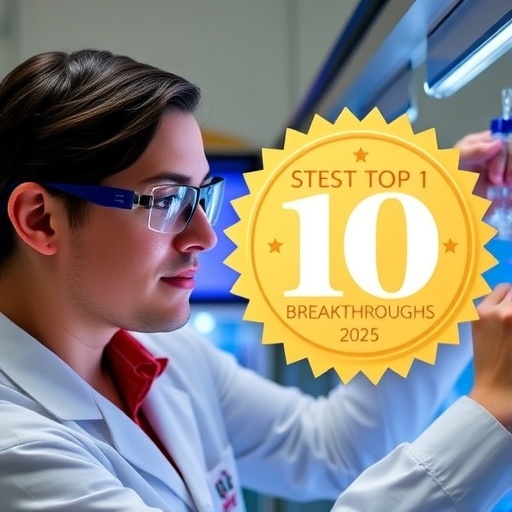
In a groundbreaking advancement poised to reshape our understanding of cancer biology, research conducted under the leadership of Dr. Simon Grelet at the University of South Alabama has been distinguished as one of Science magazine’s Top 10 Scientific Breakthroughs of 2025. This prestigious acknowledgment, published in the December 18, 2025 issue of Science, underscores a remarkable discovery concerning the role of nerve cells in the metabolic support and promotion of cancer metastasis. It highlights an unprecedented mechanism where neurons actively transfer mitochondria— the cell’s powerhouse organelles—directly to malignant cancer cells, thus enabling them to sustain their energy demands during metastatic progression.
Dr. Grelet, an assistant professor of biochemistry and molecular biology at the Frederick P. Whiddon College of Medicine and director of the Cancer Innervation and Neurobiology Laboratory at the Mitchell Cancer Institute, spearheaded this pioneering study that delves deeply into the intricacies of cancer neuroscience. This emergent field investigates the dynamic interactions between the nervous system and tumor biology, a relationship previously hypothesized but not yet elucidated at the level of mitochondrial trafficking and metabolic interdependence.
The team’s research unveils a sophisticated physiological process whereby neurons can physically transfer fully functional mitochondria to cancer cells in the tumor microenvironment. This mitochondrial donation enhances the bioenergetic capacity of cancer cells, effectively energizing their plasticity, invasiveness, and ability to colonize distant organ sites. Such a mechanism reveals that cancer cells do not merely rely on autonomous metabolic alterations but can co-opt neuronal functions to accelerate their metastatic spread, thus reframing our conceptual framework of tumor biology.
Cancer metastasis remains the leading cause of cancer-related mortality worldwide, and dissecting the cellular and molecular underpinnings behind the metastatic cascade is critical for therapeutic innovation. The discovery of nerve-to-cancer mitochondrial transfer adds a novel layer of complexity to tumor metabolism, suggesting that targeting this neurobiological crosstalk could interrupt the energy supply line critical for metastatic outgrowth. This insight offers promising avenues for the development of therapies that disrupt intercellular mitochondrial transfer or neuronal influence on cancer cells.
Dr. Grelet emphasizes the significance of this phenomenon by explaining that cancer seldom generates new biological processes but rather hijacks pre-existing physiological pathways. The identification of mitochondrial transfer at the nerve–cancer interface may expose a fundamental process exploited by malignant cells, which until now was concealed within the diverse communications of the tumor microenvironment. By tapping into normal neurobiological energy-sharing mechanisms, cancer gains a potent advantage in its pathophysiology.
The discovery, which garnered widespread recognition for both Dr. Grelet and the University of South Alabama, also elevates the stature of the Cancer Innervation and Neurobiology Laboratory as a leading center for innovative cancer research. Richard Honkanen, chair of biochemistry and molecular biology, noted the dual significance of the breakthrough: it not only exemplifies Dr. Grelet’s visionary scientific leadership but also reflects the institution’s expanding influence in high-impact biomedical investigations that transcend traditional oncology paradigms.
Further illustrating the transformative impact of this finding, associate dean of research Christopher Davies remarked that inclusion in Science’s Top 10 breakthroughs positions Dr. Grelet among an elite cadre of scientists whose contributions catalyze paradigm shifts in medicine. This distinction not only advances Dr. Grelet’s career trajectory but also amplifies the national and global visibility of his home institution and affiliated cancer research entities.
The mechanism by which neurons deliver mitochondria to cancer cells involves intimate cellular interactions and mitochondrial trafficking facilitated by nanotubular structures and vesicular pathways. These biological conduits allow the transfer of intact mitochondria, preserving their functionality post-transfer to enhance recipient cancer cell metabolism. This metabolic augmentation supports the elevated energy requirements associated with cellular motility, invasion, and survival during dissemination from primary sites.
The implications of this discovery reach beyond oncology, potentially impacting our understanding of intercellular mitochondrial transfer in both physiological and pathological contexts. Previous research has documented mitochondrial exchange in neural and immune systems, where such trafficking plays roles in tissue repair and cellular homeostasis. The extension of this phenomenon to cancer metastasis highlights the versatility of mitochondrial transfer as a fundamental biological process with dual roles depending on physiological context.
Dr. Grelet’s acknowledgment by Science magazine also includes an invitation to present this transformative work at the upcoming American Association for the Advancement of Science (AAAS) annual meeting in Phoenix, Arizona. This platform will provide critical exposure to a broad scientific audience, fostering interdisciplinary collaborations aimed at translating these findings into clinical interventions. Key discussions are expected to center on novel therapeutic strategies that inhibit nerve-to-cancer mitochondrial transfer and on developing biomarkers to assess tumor innervation status.
This discovery coincides with the broader surge in interest in cancer neuroscience, a burgeoning field probing the intersection of cancer biology and neurobiology. Tumor innervation, once a neglected aspect of tumor microenvironment studies, now emerges as a critical dimension influencing malignancy. With new methodologies enabling precise characterization of tumor-nerve interactions, researchers are poised to unravel complex signaling networks that govern tumor progression, immune evasion, and therapeutic resistance.
Dr. Grelet’s laboratory continues to push the boundaries of mitochondrial biology, focusing on the nuances of intercellular mitochondrial transfer and its implications for tumor pathophysiology. The lab’s interdisciplinary approach integrates molecular biology, imaging, bioenergetics, and neurobiology to map the spatial-temporal dynamics of mitochondria within cancer-nerve ecosystems. Their ongoing efforts aim to identify molecular targets suitable for pharmacological intervention, thus translating basic science discoveries into tangible clinical benefit.
In conclusion, this seminal research spearheaded by Dr. Simon Grelet redefines our understanding of cancer metastasis by revealing the critical role of neuronal mitochondrial transfer in fueling cancer cell energy metabolism. It spotlights the nervous system as an active contributor to tumor progression, representing an untapped frontier for therapeutic development. As this exciting line of inquiry continues to evolve, the integration of cancer neuroscience into mainstream oncological research promises to catalyze innovative treatments that could dramatically improve patient outcomes.
Subject of Research:
Article Title:
News Publication Date: December 18, 2025
Web References: https://doi.org/10.1126/science.aee8002
References:
Image Credits:
Keywords: Disease incidence, Cancer neuroscience, Tumor innervation, Mitochondrial transfer, Cancer metastasis, Bioenergetics, Neurobiology, Cancer metabolism
Tags: cancer innervation studiescancer neuroscience advancementsDr. Simon Grelet scientific breakthroughmalignant cell energy demandsmetabolic support in tumor biologymitochondria transfer in cancermitochondrial trafficking mechanismsnerve cells and cancer metastasisneurobiology and cancer relationshipsScience magazine recognitiontop scientific breakthroughs 2025University of South Alabama cancer research