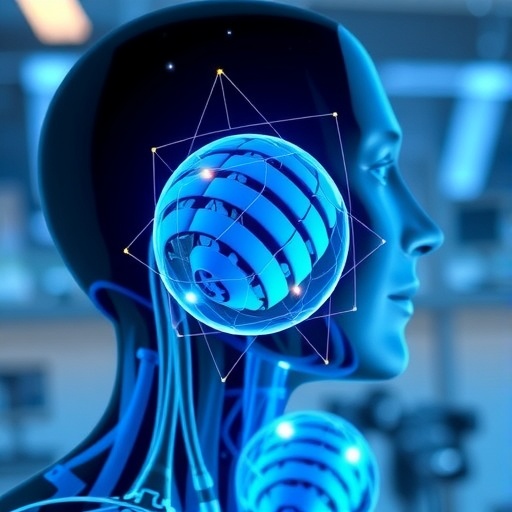
For over half a century, artificial intelligence has been modeled predominantly on the electrical signaling of neurons—the star performers of the human brain’s complex circuitry. These nerve cells, firing rapid-fire electrical pulses, have provided the foundational blueprint for digital neural networks powering today’s breakthroughs in facial recognition, language understanding, and numerous other AI-driven domains. Yet, this focus on neurons obscures an equally critical but historically overlooked player in brain function: the astrocytes. These star-shaped glial cells, making up roughly half the cells in the brain, are now emerging from the shadows to potentially redefine the future of machine learning.
Astrocytes were once thought to be mere support cells, passive caretakers providing structural and metabolic assistance to neurons. However, a groundbreaking initiative, funded by the U.S. Army’s Multi-University Research Initiative (MURI), is challenging this narrow view. Led by a multidisciplinary team from the University of Maryland and Claremont Colleges, the project seeks to unravel the computational secrets of astrocytes and integrate these insights into next-generation AI architectures. Their goal is nothing short of transformative: to engineer “hybrid AI” systems that blend conventional computing with bio-inspired mechanisms, thereby crafting machines that learn, adapt, and think more like the human brain.
The conceptual leap embraced by this initiative stems from a critical insight about the brain’s cellular makeup. While neurons transmit information at lightning speed—milliseconds or less—astrocytes operate on a much slower timescale, processing signals over seconds. This temporal distinction hints at complementary functional roles: neurons handle rapid, moment-to-moment computations, whereas astrocytes integrate information over longer windows, acting like a “slow-burn” memory system that stabilizes and modulates neural activity. By mimicking this duality, artificial neural networks could harness new dimensions of learning and resilience.
The team’s pioneering research began with the development of a hybrid AI network that explicitly models both artificial neurons and astrocytes wired together to emulate their interaction in the brain. Published in the journal Neurocomputing, this model revealed striking performance advantages. Networks containing approximately twice as many astrocytes as neurons—the same ratio found in human brains—outperformed those composed exclusively of either cell type alone. This synergy suggests that the collaboration between neurons and astrocytes is not just complementary but essential for efficient computation.
With the initial biological framework established, the researchers delved deeper into the intrinsic dynamics of astrocytes, particularly their characteristic slow oscillating waves. Unlike the steady, static connections commonly used in traditional AI, astrocyte communication entails rhythmic, pulsatile fluctuations that modulate synaptic strengths over time. Incorporating these rhythmic variations into their neural models led to the invention of a novel algorithm dubbed “rhythmic sharing,” in which AI network connections continuously pulse and shift. This rhythmic modulation challenges the AI status quo, where link strengths remain fixed after training, potentially unlocking adaptive capabilities that mirror the brain’s plasticity.
Remarkably, this rhythmic sharing algorithm transcended theory and demonstrated tangible superiority in applied scenarios. Tested against conventional AI systems on simulated anomaly detection tasks—such as monitoring water treatment facilities under cyberattack and predicting jet engine failures—the astrocyte-inspired network detected environmental shifts more quickly and reliably. These results, published in npj Unconventional Computing, underscore the potential of astrocyte-based AI to excel in dynamic, real-world environments where traditional models can fail silently when conditions drift subtly over time.
The rhythmic sharing network’s ability to synchronize continuous internal pulse patterns makes it exquisitely sensitive to early signs of change. Unlike standard AI systems that may overlook gradual deviations until damage becomes manifest, this novel algorithm “listens” to the internal rhythms and signals disturbances before they become problematic. This anticipatory capability is akin to a sentinel always on guard, offering a new paradigm for real-time monitoring, predictive maintenance, and anomaly detection across sectors ranging from industrial infrastructure to cybersecurity.
Beyond immediate applications, this research opens a treasure trove of possibilities for understanding how the brain’s hidden half contributes to cognition. Astrocytes participate actively in modulating synaptic transmission, regulating neurotransmitter levels, and managing blood flow—all vital for learning, memory formation, and adaptive behavior. By abstracting these biological functions into computational algorithms, hybrid AI systems can bridge the gap between rigid traditional models and fluid, context-aware problem-solving, paving the way for more organic machine intelligence.
Professor Wolfgang Losert, a physicist at the University of Maryland and co-leader of the project, emphasized the significance of this paradigm shift. “We’re harnessing algorithms rooted in biological computation hidden from view because they do not rely on electrical signaling like neurons do,” he said. “Astrocytes are dynamic participants in cognitive processes, and translating their mechanisms into AI can lead to more robust and efficient learning models that outperform today’s neural-network-based approaches.”
This work is the culmination of years of interdisciplinary collaboration, integrating principles from physics, chemistry, electrical engineering, and computer science. It reflects the growing recognition that innovation in AI will increasingly depend on insights gleaned from biology’s complexity and adaptability. Foundational studies of living astrocytes in the Losert lab, supported by the Air Force Office of Scientific Research’s biophysics program, provided the experimental backbone to inform and validate these groundbreaking computational frameworks.
Looking forward, the team envisions hybrid AI architectures that continuously adapt to fluctuating conditions by leveraging astrocyte-like modulation. Such systems could revolutionize not only anomaly detection but broader cognitive tasks by maintaining stable yet flexible representations of data over time, akin to human brain function. The ultimate ambition is to bridge human and machine intelligence more closely, bringing AI out of the narrow realm of static pattern recognition into an arena of dynamic understanding and real-time learning.
As these explorations continue, the implications ripple across numerous fields—from health monitoring, where early detection of physiological abnormalities could save lives, to communication technologies that adapt fluidly to changing signals, to autonomous systems functioning reliably in unpredictable environments. The astrocyte model enriches AI’s conceptual toolkit, introducing temporal layering and rhythmic dynamism as core computational ingredients.
In sum, the astrocyte-inspired hybrid AI initiative not only expands our understanding of the brain’s hidden half but also charts a promising pathway for advancing AI beyond its current neuron-centric paradigm. By embracing the rich interplay of slow and fast cellular processes, these hybrid networks could mark the dawn of a new era in which artificial intelligence learns, adapts, and senses the world in ways eerily reminiscent of the human mind.
Subject of Research: Artificial intelligence inspired by astrocyte-neuron interactions in the human brain.
Article Title: Emergent detection of concept drift within the glia-inspired ‘rhythmic sharing’ algorithm.
News Publication Date: June 3, 2026.
Web References:
Hybrid AI project: https://hybrid-ai.umd.edu/
University of Maryland Invention of the Year Award: https://cmns.umd.edu/news-events/news/2025-invention-year-awards
DOI link to npj Unconventional Computing article: http://dx.doi.org/10.1038/s44335-026-00067-3
References:
Yang et al., Neurocomputing (2026).
Losert et al., Physical Review Research.
Ian Whitehouse et al., npj Unconventional Computing (2026).
Image Credits: Yang et al., Neurocomputing (2026).
Keywords
Artificial intelligence, Artificial neural networks, Artificial consciousness, Quantum computing, Supercomputing, Brain, Brain structure, Gray matter, Human brain, Neural pathways
Tags: adaptive AI learning methodsastrocyte-inspired artificial intelligenceastrocytes in brain functionbio-inspired machine learning modelsbrain-inspired computing technologiescomputational role of glial cellshybrid AI systems developmentinterdisciplinary AI research projectsmulti-university AI research collaborationnext-generation neural network architecturesUniversity of Maryland AI initiativeUS Army MURI funding for AI