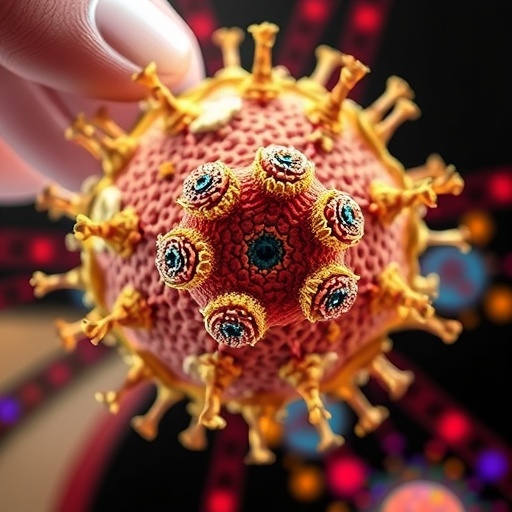
In a groundbreaking development poised to redefine the landscape of blood cancer treatment, the University of Colorado Anschutz Gates Institute has achieved Investigational New Drug (IND) clearance from the U.S. Food and Drug Administration (FDA) for a novel chimeric antigen receptor (CAR) T-cell therapy. This milestone marks the first CAR T-cell therapy developed entirely on the CU Anschutz campus to receive authorization for clinical testing within the United States. This innovative therapy specifically targets CD64, a critical protein expressed on aggressive leukemia cells, offering new hope for patients suffering from relapsed or refractory acute myeloid leukemia (AML).
The scientific basis for this therapy stems from pivotal insights in the laboratory of Craig Jordan, whose research elucidated the role of CD64 as a biomarker on leukemia cells that evade existing treatment modalities. Building on these findings, Dr. M. Eric Kohler, an assistant professor specializing in pediatric hematology, oncology, and bone marrow transplantation at the CU Anschutz School of Medicine and Children’s Hospital Colorado, spearheaded the development of the CD64-directed CAR T-cell therapy. His team, including clinical fellow Dr. Haley Simpson, engaged in comprehensive preclinical testing, intricate cellular engineering, and optimization studies, culminating in the current advancement to clinical trial readiness.
Dr. Kohler emphasizes the collaborative synergy that this project embodies, highlighting the integration between fundamental research departments, the translational science capabilities of the Gates Institute, and the clinical expertise in cellular therapies. This multidisciplinary approach exemplifies the cutting-edge ecosystem at CU Anschutz, where innovative therapies are nurtured from conception through to clinical application. The FDA clearance thus represents not only scientific achievement but also the institutional commitment to accelerating translational medicine.
The impending Phase 1 clinical trial, set to commence in the summer of 2026, targets adults diagnosed with relapsed or refractory AML. This trial is designed to rigorously evaluate the safety profile, tolerability, and optimal dosing regimen of the CD64 CAR T-cell product. The clinical intervention will be administered at the UCHealth University of Colorado Hospital, leveraging its state-of-the-art facilities and clinical expertise in hematologic malignancies. This trial phase will establish vital parameters that could underpin future therapeutic protocols.
In parallel, expansion of this breakthrough therapy into pediatric populations is underway. A separate clinical trial, led by Dr. Sanam Shahid at Children’s Hospital Colorado, aims to investigate the applicability and efficacy of CD64-directed CAR T-cell therapy in children and adolescents afflicted with resistant forms of AML. This expansion reflects a comprehensive strategy to address the unmet clinical needs across age demographics in leukemia treatment.
The clinical significance of this development cannot be overstated given the current therapeutic void for patients with relapsed or refractory AML. Traditional treatments often fall short, with limited efficacy and substantial toxicity, resulting in poor prognosis. The advent of a targeted cellular therapy against CD64 offers a promising therapeutic paradigm shift, potentially enabling more precise and effective targeting of malignant myeloid cells while sparing healthy tissues.
Dr. Terry Fry, executive director of the Gates Institute, lauds the multidisciplinary dedication that propelled the CD64 CAR T therapy from an experimental concept to an FDA-authorized clinical candidate. She underscores that this trial embodies a crucial first step toward revolutionizing treatment strategies for an aggressive leukemia subtype, with aspirations to transform clinical outcomes and expand the therapeutic arsenal.
Dr. Mathew Angelos, principal investigator of the adult clinical trial, underscores the rigorous collaborative effort underpinning this endeavor. He attributes the success to seamless cooperation among scientific innovators, clinical practitioners, and regulatory experts. Dr. Angelos expresses optimism that this therapy will contribute profoundly to patients facing the dire prognosis of advanced myeloid malignancies, where novel therapeutic avenues are desperately needed.
A critical element supporting this translational effort is the Gates Biomanufacturing Facility, where the CAR T-cell product for the clinical trials will be produced. This facility ensures that the transition from bench to bedside occurs with stringent quality control and scalable manufacturing capacities, safeguarding the integrity and reproducibility of the cell therapy product administered to patients.
The strategic positioning of the University of Colorado Anschutz campus as a global leader in academic medical science is reinforced by this achievement. Hosting a comprehensive spectrum of health professional schools, research centers, and two nationally recognized hospitals—UCHealth University of Colorado Hospital and Children’s Hospital Colorado—the campus integrates cutting-edge biomedical research with top-tier clinical care. Its robust funding portfolio, including significant federal grants and philanthropic support, underpins a vibrant environment for pioneering scientific discovery.
At the forefront, the Gates Institute functions as an epicenter for translational cell therapy research, focusing on regenerative medicine and gene therapies. Its mission to convert scientific discoveries into curative interventions is exemplified by the development and FDA clearance of the CD64-directed CAR T-cell therapy. This initiative highlights the growing cell and gene therapy ecosystem, showcasing how technical expertise across disciplines can accelerate the trajectory from novel molecular targets to real-world clinical solutions.
As this clinical trial series unfolds, the broader oncology and immunotherapy communities are watching closely, anticipating data that may validate a new class of therapies for myeloid leukemias—diseases historically resistant to conventional approaches. Positive trial outcomes could catalyze subsequent investigations, regulatory approvals, and ultimately, widespread clinical adoption, profoundly changing the treatment landscape for a devastating category of blood cancers.
In summary, the University of Colorado Anschutz Gates Institute’s FDA clearance for CD64-targeted CAR T-cell therapy represents a groundbreaking convergence of molecular biology, cellular engineering, clinical expertise, and manufacturing precision. This initiative exemplifies the power of integrated translational medicine to address unmet medical needs, holding transformative potential for patients with aggressive myeloid leukemia variants and advancing the frontier of personalized cancer immunotherapy.
Subject of Research: Investigational CD64-targeted CAR T-cell therapy for relapsed or refractory acute myeloid leukemia (AML)
Article Title: University of Colorado Anschutz Gates Institute Secures FDA Clearance for Novel CD64 CAR T-cell Therapy Targeting Aggressive AML
News Publication Date: (Information not provided)
Web References:
University of Colorado Anschutz Gates Institute: https://gates.cuanschutz.edu/
CU Anschutz campus: https://www.cuanschutz.edu/
CU Anschutz School of Medicine: https://medschool.cuanschutz.edu/
Children’s Hospital Colorado: https://www.childrenscolorado.org/
UCHealth University of Colorado Hospital: https://www.uchealth.org/
Gates Biomanufacturing Facility: https://gatesbiomanufacturing.com/
Keywords: myeloid leukemia, blood cancer, adoptive T cell therapy, chimeric antigen receptor therapy, CAR T-cell therapy, cell transfer therapy, cancer immunology, cancer immunotherapy, cancer immunoediting
Tags: acute myeloid leukemia novel therapiesbone marrow transplantation innovationsCD64 targeted leukemia treatmentcellular engineering in cancer therapychimeric antigen receptor T-cell therapy developmentclinical trials for blood cancerCU Anschutz Gates Institute cancer researchFDA approval for CAR T-cell therapypediatric hematology oncology researchpreclinical testing for leukemia therapiesrelapsed refractory AML treatmentUniversity of Colorado Anschutz CAR T-cell therapy