• HOME
  • NEWS
  • EXPLORE
    • CAREER
      • Companies
      • Jobs
    • EVENTS
    • iGEM
      • News
      • Team
    • PHOTOS
    • VIDEO
    • WIKI
  • BLOG
  • COMMUNITY
    • FACEBOOK
    • INSTAGRAM
    • TWITTER
Monday, May 18, 2026
BIOENGINEER.ORG
No Result
View All Result
  • Login
  • HOME
  • NEWS
  • EXPLORE
    • CAREER
      • Companies
      • Jobs
        • Lecturer
        • PhD Studentship
        • Postdoc
        • Research Assistant
    • EVENTS
    • iGEM
      • News
      • Team
    • PHOTOS
    • VIDEO
    • WIKI
  • BLOG
  • COMMUNITY
    • FACEBOOK
    • INSTAGRAM
    • TWITTER
  • HOME
  • NEWS
  • EXPLORE
    • CAREER
      • Companies
      • Jobs
        • Lecturer
        • PhD Studentship
        • Postdoc
        • Research Assistant
    • EVENTS
    • iGEM
      • News
      • Team
    • PHOTOS
    • VIDEO
    • WIKI
  • BLOG
  • COMMUNITY
    • FACEBOOK
    • INSTAGRAM
    • TWITTER
No Result
View All Result
Bioengineer.org
No Result
View All Result
Home NEWS Science News Biology

UNIST improves remote detection of hazardous radioactive substances

Bioengineer by Bioengineer
June 9, 2017
in Biology
Reading Time: 2 mins read
0
Share on FacebookShare on TwitterShare on LinkedinShare on RedditShare on Telegram
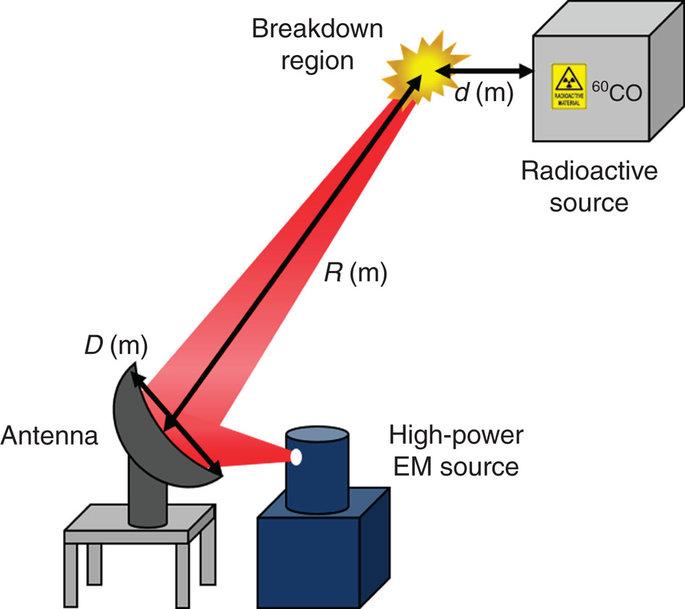
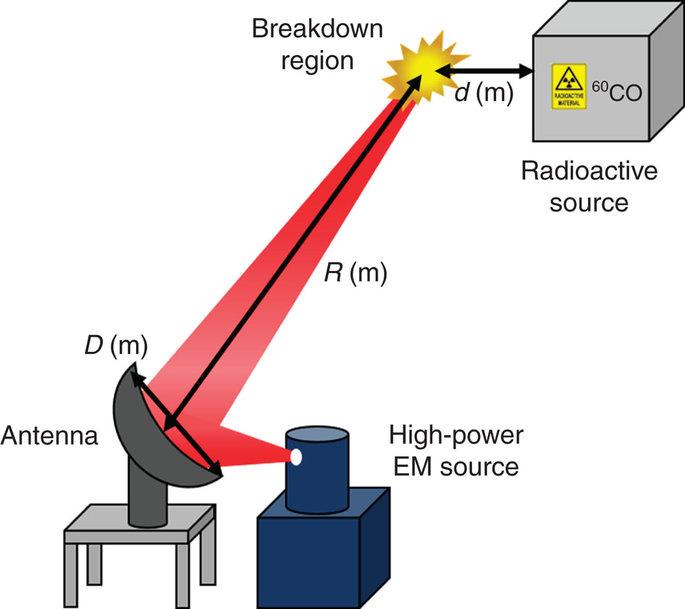
IMAGE

Credit: UNIST

A recent study, affiliated with UNIST has introduced a method for the remote detection of hazardous radioactive substances. With the help of this newly-developed detection device, the detection of various types of radioactive materials can be done from a remote distance.

In their study, published in the May issue of the prestigious journal, Nature Communications, Professor Eunmi Choi of Natural Science and her team demonstrated a method with higher sensitivity that uses high-power pulsed electromagnetic-waves to detect a radioactive source.

A substance is said to be radioactive if it contains atoms with unstable nuclei and gives out nuclear radiation in the form of alpha particles, beta particles or gamma rays. Uranium-235 (U-235) is an isotope of uranium widely used for nuclear power generation and, like all other radioactive isotopes used in medicine, it has been also employed for diagnosis and treatment of diseased organs and tumors. They are essential to mankind, but can have fatal consequences if it is accidentally leaked or used as a weapon.

Remote detection of radioactive materials is impossible when the measurement location is far from its source. Indeed, a typical radiation detectors, like Geiger-Muller counters have technical limitations in the remote detection of sources. For instance, they can detect 1 milli Curie (mCi) of Cobalt-60 (60Co) at a maximum distance of 3.5 metres, but are inefficient at measuring lower levels of radioactivity or at longer distances.

In the study, Professor Choi and her research team described the experimental demonstration of real-time radioactive material detection using a high-power pulsed millimetre-wave source. They demontrated the detection of 0.5 μg of cobalt-60 from 120 cm away, the maximum distance allowed by the laboratory setup.

"With the existing technologies, remote detection of radioactive materials is impossible when the measurement location is far from the radioactive source," says Dongsung Kim (Combined M.S./Ph.D. student of Physics), the first author of the study. "The detection sensitivity has been increased to 4,800 times, compared to the conventional theoretical sensitivity, enabling the detection of very small amounts of radiation."

"Depending on the equipment used, this method could scale to detect radioactivity at distances of at least tens of kilometers and possibly as far as 100 km," says Professor Choi.

###

This research has been supported by Basic Science Research Program through the National Research Foundation of Korea (NRF), the Korean Ministry of Education, and the Global Ph.D. Fellowship (GPF).

Journal Reference

Kim, D. et al., "Remote detection of radioactive material using high-power pulsed electromagnetic radiation", Nat. Commun. 8, (2017).

Media Contact

JooHyeon Heo
[email protected]
82-522-171-223

home

Original Source

http://news.unist.ac.kr/unist-improves-remote-detection-of-hazardous-radioactive-substances/ http://dx.doi.org/10.1038/ncomms15394

############

Story Source: Materials provided by Scienmag

Share12Tweet8Share2ShareShareShare2

Related Posts

In-Depth Analysis Reveals Advances in Multiple Sclerosis Research Models — Biology

In-Depth Analysis Reveals Advances in Multiple Sclerosis Research Models

May 18, 2026
Uncovering C. elegans Immunity via Genetic Screens — Biology

Uncovering C. elegans Immunity via Genetic Screens

May 16, 2026

Single mother must adapt swiftly — the survival of her colony depends on it

May 15, 2026

Why Are Nearly Everyone Right-Handed? It Might Be Linked to How We Learned to Walk

May 15, 2026
Please login to join discussion

POPULAR NEWS

  • Research Indicates Potential Connection Between Prenatal Medication Exposure and Elevated Autism Risk

    844 shares
    Share 338 Tweet 211
  • New Study Reveals Plants Can Detect the Sound of Rain

    731 shares
    Share 292 Tweet 182
  • Salmonella Haem Blocks Macrophages, Boosts Infection

    62 shares
    Share 25 Tweet 16
  • Breastmilk Balances E. coli and Beneficial Bacteria in Infant Gut Microbiomes

    58 shares
    Share 23 Tweet 15

About

We bring you the latest biotechnology news from best research centers and universities around the world. Check our website.

Follow us

Recent News

Elevated Epithelial Alarmins and Food Challenge Results

Brain’s Garbage Collectors Stop Working in Fatal Disease

Once-Nightly Pill Targets Airway Collapse to Control Sleep Apnea

Subscribe to Blog via Email

Enter your email address to subscribe to this blog and receive notifications of new posts by email.

Join 82 other subscribers
  • Contact Us

Bioengineer.org © Copyright 2023 All Rights Reserved.

Welcome Back!

Login to your account below

Forgotten Password?

Retrieve your password

Please enter your username or email address to reset your password.

Log In
No Result
View All Result
  • Homepages
    • Home Page 1
    • Home Page 2
  • News
  • National
  • Business
  • Health
  • Lifestyle
  • Science

Bioengineer.org © Copyright 2023 All Rights Reserved.