• HOME
  • NEWS
  • EXPLORE
    • CAREER
      • Companies
      • Jobs
    • EVENTS
    • iGEM
      • News
      • Team
    • PHOTOS
    • VIDEO
    • WIKI
  • BLOG
  • COMMUNITY
    • FACEBOOK
    • INSTAGRAM
    • TWITTER
Wednesday, January 14, 2026
BIOENGINEER.ORG
No Result
View All Result
  • Login
  • HOME
  • NEWS
  • EXPLORE
    • CAREER
      • Companies
      • Jobs
        • Lecturer
        • PhD Studentship
        • Postdoc
        • Research Assistant
    • EVENTS
    • iGEM
      • News
      • Team
    • PHOTOS
    • VIDEO
    • WIKI
  • BLOG
  • COMMUNITY
    • FACEBOOK
    • INSTAGRAM
    • TWITTER
  • HOME
  • NEWS
  • EXPLORE
    • CAREER
      • Companies
      • Jobs
        • Lecturer
        • PhD Studentship
        • Postdoc
        • Research Assistant
    • EVENTS
    • iGEM
      • News
      • Team
    • PHOTOS
    • VIDEO
    • WIKI
  • BLOG
  • COMMUNITY
    • FACEBOOK
    • INSTAGRAM
    • TWITTER
No Result
View All Result
Bioengineer.org
No Result
View All Result
Home NEWS Science News

UNIST and JDC sign MoU for research collaboration

Bioengineer by Bioengineer
March 9, 2020
in Science News
Reading Time: 2 mins read
0
IMAGE
Share on FacebookShare on TwitterShare on LinkedinShare on RedditShare on Telegram

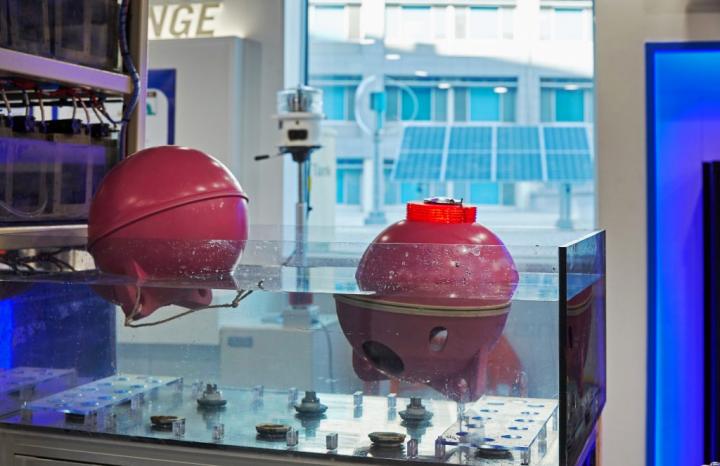
The signing ceremony of MoU between UNIST and Jeju Free International City Development Center took place on January 15, 2020.
IMAGE

Credit: Gyuho Bang (Office of President, UNIST)


On January 15, UNIST signed a Memorandum of Understanding (MoU) with the Jeju Free International City Development Center (JDC) to forge ahead toward achieving scientific excellence.

In the memorandum of understanding, the two organizations also promised to form a strategic partnerships for the purpose of realizing the practical applications of the source technologies for the world-first seawater batteries, developed by UNIST.

Under this partnership, both organizations have pledged mutual cooperation for the development of marine-friendly energy and resource technologies, aimed at promoting the value of Jeju Island’s clean ocean. The two sides also agreed to expand technological cooperation in developing, distributing, and commercializing seawater resource technologies.

UNIST and JDC will be promoting the demonstration and dissemination projects for seawater battery-based small marine equipment that can be commercialized in a relatively short period of time. Life-saving vests and fishing gear-type GPS buoys, capable of sending out rescue signals or guiding mariners at sea after contact with seawater, are top priority applications.

“Jeju Island has an environment that can lead the application of seawater resources technologies, as it is surrounded by the sea on the four sides,” says Director Youngsik Kim of Seawater Resources Technology Research Center at UNIST. “With the advancement of seawater battery technology, we plan to establish a mid-to-long term commercialization project for the Jeju Island.”

Seawater batteries use earth-abundant seawater (sodium) to generate electricity. Therefore, they are much cheaper and more environmentally friendly than lithium and will, therefore, offer a low-cost route to large-scale energy storage. This makes this system an attractive supplement to existing battery technologies, thus leading the energy storage system (ESS) market.

Since the successful development of world’s first seawater batteries in 2014, Professor Youngsik Kim (School of Energy and Chemical Engineering) at UNIST has been continuously carrying out relevant research to offer a low-cost energy storage system (ESS). Professor Kim and his research team have secured 5 billion KRW in funding from Korea Electric Power Corporation (KEPCO) and Korea East-West Power Company (EWP) and has been cooperating with the Korea Institute of Ocean Science & Technology (KIOST) to develop a range of application technologies for seawater batteries using UNIST’s seawater bettery technology. Besides, the recently-launched 10kWh energy storage system using seawater batteries has been put into test operation in December last year at Ulsan Thermal Power Plant.

###

Media Contact
JooHyeon Heo
[email protected]
82-522-171-223

Original Source

https://news.unist.ac.kr/unist-and-jdc-sign-mou-for-research-collaboration/

Tags: Atmospheric ScienceClimate ChangeClimate ScienceMechanical EngineeringResearch/DevelopmentTechnology TransferTemperature-Dependent Phenomena
Share12Tweet8Share2ShareShareShare2

Related Posts

Genetic Insights into Circadian Adaptation in Endangered Fish

Genetic Insights into Circadian Adaptation in Endangered Fish

January 13, 2026
blank

Brain Lesions Impact Postural Control in Spastic CP

January 13, 2026

Exploring Limited CT Scan Impact with Automated Models

January 13, 2026

New Insights into Oligoasthenozoospermia Research

January 13, 2026
Please login to join discussion

POPULAR NEWS

  • Enhancing Spiritual Care Education in Nursing Programs

    154 shares
    Share 62 Tweet 39
  • PTSD, Depression, Anxiety in Childhood Cancer Survivors, Parents

    147 shares
    Share 59 Tweet 37
  • Robotic Ureteral Reconstruction: A Novel Approach

    73 shares
    Share 29 Tweet 18
  • Study Reveals Lipid Accumulation in ME/CFS Cells

    52 shares
    Share 21 Tweet 13

About

We bring you the latest biotechnology news from best research centers and universities around the world. Check our website.

Follow us

Recent News

Genetic Insights into Circadian Adaptation in Endangered Fish

Brain Lesions Impact Postural Control in Spastic CP

Exploring Limited CT Scan Impact with Automated Models

Subscribe to Blog via Email

Enter your email address to subscribe to this blog and receive notifications of new posts by email.

Join 71 other subscribers
  • Contact Us

Bioengineer.org © Copyright 2023 All Rights Reserved.

Welcome Back!

Login to your account below

Forgotten Password?

Retrieve your password

Please enter your username or email address to reset your password.

Log In
No Result
View All Result
  • Homepages
    • Home Page 1
    • Home Page 2
  • News
  • National
  • Business
  • Health
  • Lifestyle
  • Science

Bioengineer.org © Copyright 2023 All Rights Reserved.