Shielding biological systems from Earth’s naturally occurring background radiation triggers measurable shifts in cellular growth, reproductive fitness, and embryonic development across diverse model organisms, according to a scientific review published in Frontiers in Public Health by researchers at Sichuan University. Investigating life under ultra-low background radiation conditions in deep underground laboratories, the review synthesizes findings showing that natural radiation may actively participate in cellular homeostasis rather than serving merely as an unavoidable physical hazard. While conventional radiobiology has centered on the toxic, mutagenic, and carcinogenic damage caused by ionizing radiation added above baseline terrestrial levels, underground deprivation studies reverse this experimental paradigm. By placing cells, invertebrates, and vertebrate embryos beneath hundreds of meters of shielding rock overburden, scientists can systematically assess whether the nearly complete absence of ambient radiation disrupts normal physiological balance.
Natural background radiation has continuously enveloped living organisms throughout terrestrial evolutionary history, generating a global average annual human effective dose of roughly 2.4 millisieverts according to assessments by the United Nations Scientific Committee on the Effects of Atomic Radiation. This ambient field arises from a persistent combination of primary cosmic rays, terrestrial radionuclides embedded in soils and rocks, airborne radon gas and its decay progeny, and internal radionuclides incorporated into food, drinking water, and structural materials. Over evolutionary epochs, constant exposure to this low-intensity environmental flux is thought to have helped sculpt cellular surveillance systems, establishing baseline enzymatic antioxidant defenses, modulating physiological reactive oxygen species signaling, and maintaining constitutive readiness in DNA repair pathways. Operating on the premise that biological homeostasis may have evolved to depend on these subtle environmental cues, modern investigators have sought facilities capable of attenuating ambient radiation to negligible fractions of surface intensity.
Executing these deprivation experiments requires specialized subterranean infrastructure provided by deep underground laboratories, including the Laboratori Nazionali del Gran Sasso in Italy, SNOLAB in Canada, and the China Jinping Underground Laboratory. In these deep facilities, thick rock overburdens reduce the cosmic-ray component by several orders of magnitude, generating environmental radiation fields far below those encountered at the Earth's surface. Unlike classical low-dose radiobiology, where defined radiation doses are experimentally added on top of existing natural backgrounds, ultra-low background research specifically isolates the biological outcomes of environmental radiation deprivation. However, researchers emphasize that operating underground experimental systems introduces critical non-radiation variables, including radon concentrations, atmospheric pressure, humidity, trace gas composition, ventilation differences, and geochemical background. These environmental discrepancies create substantial confounding challenges, requiring careful interpretation before observed phenotypes can be ascribed purely to the absence of radiation.
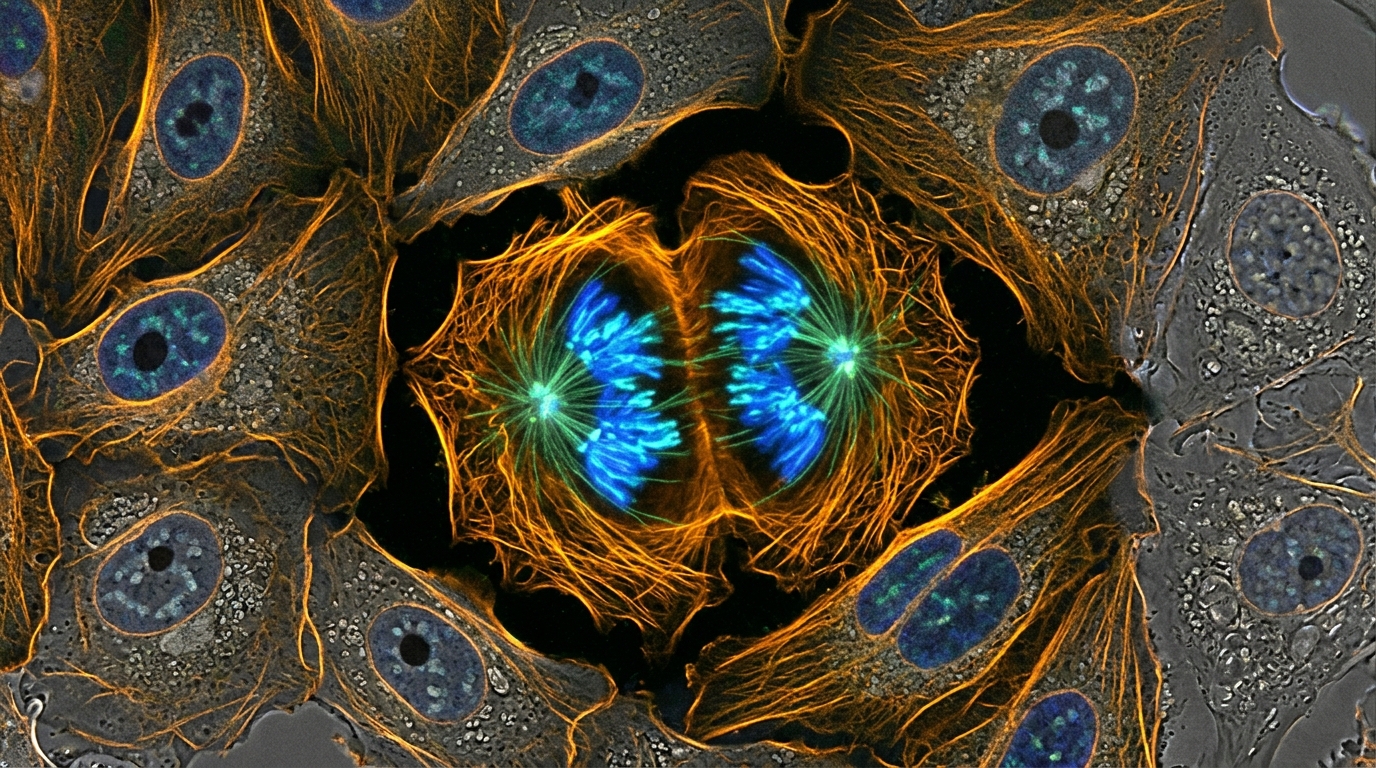
Altered cellular proliferation represents one of the earliest and most consistently documented responses observed when living tissues are shielded from background radiation. Historical experiments conducted in the Simplon tunnel demonstrated that the cyanobacterium Mastigocladus laminosus failed to survive when shielded from natural radiation, while subsequent cultivation trials by Planel and colleagues recorded diminished cell multiplication rates in shielded mammalian cell cultures compared to surface controls. In landmark mammalian studies by Kawanishi and colleagues, Paramecium and mouse lymphoma L5178Y cultures maintained under low-background conditions exhibited significant proliferation retardation that emerged only after forty to fifty days of continuous shielding. This multi-week delay indicated that proliferation arrest did not stem from acute cytotoxic injury, but rather reflected a slow, progressive homeostatic adjustment to radiation deprivation.
Subsequent laboratory work across multiple mammalian cell lines has expanded these cellular growth findings while detailing associated structural alterations. Chinese hamster V79 cells cultivated under below-background radiation conditions displayed a significantly reduced proliferation rate alongside altered cell-cycle distribution. Parallel investigations using human laryngeal squamous carcinoma FD-LSC-1 cells recorded comparable proliferative suppression, which was accompanied by pronounced organelle remodeling including mitochondrial swelling, disrupted cristae density, and endoplasmic reticulum hypertrophy. Recent experiments extending beyond malignant models to normal human nasopharyngeal epithelial NP69 cells similarly demonstrated significant inhibition of proliferation and cell migration in deep underground environments. Rather than establishing a single destructive pathway, these collective findings indicate that ambient radiation deprivation alters proliferative pacing across multiple cellular lineages.
Proliferative responses to subterranean shielding are not uniformly inhibitory across all taxonomic groups, revealing pronounced context dependence. In the nematode Caenorhabditis elegans, culture within below-background radiation environments accelerated larval development and increased early egg-laying activity, even though the chronological age at first reproduction remained unchanged from surface controls. Similarly, lake whitefish embryos of the species Coregonus clupeaformis reared in the deep underground facilities of SNOLAB grew up to ten percent greater in total body length and mass relative to surface controls. These divergent biological outcomes underscore that responses to radiation deprivation are heterogeneous, varying fundamentally according to species-specific metabolic rates, developmental plasticity, exposure timescales, and the physiological balance struck between cellular stress adaptation and energy reallocation.
Reproductive fitness and early developmental competence represent biological systems of exceptional sensitivity to ultra-low background conditions, because gametogenesis and embryonic cleavage depend on tight redox control, chromatin remodeling, and genomic stability. In the multi-generation Drosophila melanogaster FLYINGLOW project conducted at Gran Sasso, fruit flies subjected to chronic underground radiation shielding experienced substantial reductions in fertility that persisted across successive generations, despite maintaining overall individual viability. Such divergence between somatic survival and reproductive yield suggests that organisms facing environmental radiation deprivation may divert metabolic energy toward somatic protection at the expense of reproductive investment. Although transcriptomic profiles in Caenorhabditis elegans showed altered expression across reproductive and metabolic gene clusters, direct functional investigations examining mammalian gametogenesis, meiotic fidelity, and hormonal regulation under ultra-low background conditions remain almost entirely unconducted.
Embryonic development and early tissue morphogenesis display measurable phenotypic shifts when reared underground, as demonstrated by aquatic vertebrate models. Within the REPAIR project at SNOLAB, lake whitefish embryos exhibited accelerated somatic size alongside statistically significant reductions in yolk sac mass and yolk surface area across specific developmental stages, despite displaying no significant divergence in survival rates or median time to fifty percent hatching at five degrees Celsius. The simultaneous occurrence of increased structural growth and reduced yolk reserves strongly points toward altered bioenergetic partitioning and accelerated embryonic yolk utilization during early morphogenesis. Nevertheless, because atmospheric pressure and radon levels differed between the underground cavern and surface control incubators, separating the specific contribution of cosmic-ray attenuation from other subterranean physical factors remains a major interpretative challenge in early embryogenesis research.
At the mechanistic level, perturbation of intracellular oxidative homeostasis and physiological redox signaling represents the leading hypothesis explaining how radiation deprivation triggers downstream biological modifications. Although natural background radiation accounts for only a minor fraction of total cellular reactive oxygen species compared to internal mitochondrial respiration, chronic low-level ionization may sustain an essential basal redox signaling tone required for normal cellular function. In underground biological systems, cells exhibit altered expression of genes involved in oxidative stress regulation, while Chinese hamster V79 cells show altered catalase, superoxide dismutase, and glutathione peroxidase activity alongside enrichment of oxidoreductase-related proteins. Because tightly balanced reactive oxygen species concentrations act as essential second messengers directing cell differentiation, oocyte maturation, and blastocyst formation, dampening ambient oxidative triggers could directly destabilize delicate developmental cascades without causing classical oxidative tissue damage.
Mitochondrial ultrastructure and cellular metabolic pathways appear deeply intertwined with this altered redox state during prolonged radiation deprivation. Cultured mammalian cells maintained under below-background radiation conditions display ultrastructural remodeling, including mitochondrial enlargement or swelling, reduced mitochondrial cristae density, and endoplasmic reticulum dilation or hypertrophy. While these ultrastructural reorganizations are consistent with cellular bioenergetic stress, direct functional measurements of oxygen consumption rates, electron transport chain activity, and adenosine triphosphate synthesis in shielded cells remain scarce. Gametes and preimplantation embryos depend completely on precise mitochondrial Adenosine Triphosphate production and calcium buffering to support cleavage divisions, making bioenergetic remodeling a critical candidate pathway through which subterranean shielding may quietly reshape developmental trajectories and long-term metabolic programming.
Genomic maintenance mechanisms and cellular repair capabilities also undergo measurable modifications under reduced background radiation, raising questions regarding the maintenance of constitutive stress defenses. Experiments in Saccharomyces cerevisiae showed that yeast grown under subterranean shielding suffered increased genetic recombination when challenged with radiomimetic agents, pointing to an altered adaptive response to secondary genotoxic stress. In Drosophila neuroblasts cultured at Gran Sasso, underground cells displayed heightened sensitivity to radiation-induced chromosomal breaks, an effect that was specifically rescued when researchers introduced low-dose supplemental gamma irradiation to restore surface-equivalent dose rates. Furthermore, Chinese hamster V79 cells maintained underground for nine months developed elevated spontaneous hypoxanthine-guanine phosphoribosyltransferase mutation frequencies that persisted even after the cells were returned to normal surface environments, suggesting that protracted deprivation of environmental radiation can induce stable regulatory or epigenetic alterations in genome surveillance.
The biological changes documented across underground laboratories also bear on broader radiation protection assumptions and theoretical risk frameworks, such as the Linear No-Threshold model. The Linear No-Threshold model represents a regulatory construct designed to extrapolate stochastic radiation-induced cancer risks linearly from high exposures down to zero dose, and it does not evaluate whether low-level radiation provides physiological benefits. Biological adaptations in embryo size, reproductive schedules, and cell proliferation do not directly challenge cancer risk projections, but they highlight fundamental questions regarding whether ambient radiation acts as a biological requirement or merely as a tolerated source of ongoing damage. Whether a critical physiological threshold exists below which environmental shielding becomes detrimental to organismal fitness remains completely unknown, presenting profound unresolved questions for long-duration human habitation in deeply shielded subterranean habitats and future space environments.
Subject of Research: Biological consequences of ultra-low background radiation on reproduction and development
Article Title: Ultra-low background radiation and reproduction/development: biological homeostasis, developmental sensitivity, and emerging radiobiological questions
Article References: Bian, S., Wu, Y., Wan, X., & Liu, H. (2026). Ultra-low background radiation and reproduction/development: biological homeostasis, developmental sensitivity, and emerging radiobiological questions. Frontiers in Public Health, 14, Article 1997634. https://doi.org/10.3389/fpubh.2026.1997634
Image Credits: AI Generated
DOI: 10.3389/fpubh.2026.1997634
Keywords: ultra-low background radiation, deep underground laboratories, radiobiology, cellular proliferation, reproductive fitness, embryonic development, oxidative homeostasis, redox signaling, mitochondrial adaptation, DNA damage response, developmental programming, environmental confounding, Gran Sasso, SNOLAB, China Jinping Underground Laboratory, Drosophila melanogaster, Caenorhabditis elegans, Coregonus clupeaformis
News Source: Ophelia Keating. (November 14, 2026). Underground Low-Background Radiation Is Linked to Altered Cell Proliferation and Development. Scienmag.