• HOME
  • NEWS
  • EXPLORE
    • CAREER
      • Companies
      • Jobs
    • EVENTS
    • iGEM
      • News
      • Team
    • PHOTOS
    • VIDEO
    • WIKI
  • BLOG
  • COMMUNITY
    • FACEBOOK
    • INSTAGRAM
    • TWITTER
Monday, September 14, 2026
BIOENGINEER.ORG
No Result
View All Result
  • Login
  • HOME
  • NEWS
  • EXPLORE
    • CAREER
      • Companies
      • Jobs
        • Lecturer
        • PhD Studentship
        • Postdoc
        • Research Assistant
    • EVENTS
    • iGEM
      • News
      • Team
    • PHOTOS
    • VIDEO
    • WIKI
  • BLOG
  • COMMUNITY
    • FACEBOOK
    • INSTAGRAM
    • TWITTER
  • HOME
  • NEWS
  • EXPLORE
    • CAREER
      • Companies
      • Jobs
        • Lecturer
        • PhD Studentship
        • Postdoc
        • Research Assistant
    • EVENTS
    • iGEM
      • News
      • Team
    • PHOTOS
    • VIDEO
    • WIKI
  • BLOG
  • COMMUNITY
    • FACEBOOK
    • INSTAGRAM
    • TWITTER
No Result
View All Result
Bioengineer.org
No Result
View All Result
Home NEWS Science News Biology

Unconventional cell division in the Caribbean Sea

Bioengineer by Bioengineer
January 25, 2018
in Biology, Science News
Reading Time: 2 mins read
0
Share on FacebookShare on TwitterShare on LinkedinShare on RedditShare on Telegram
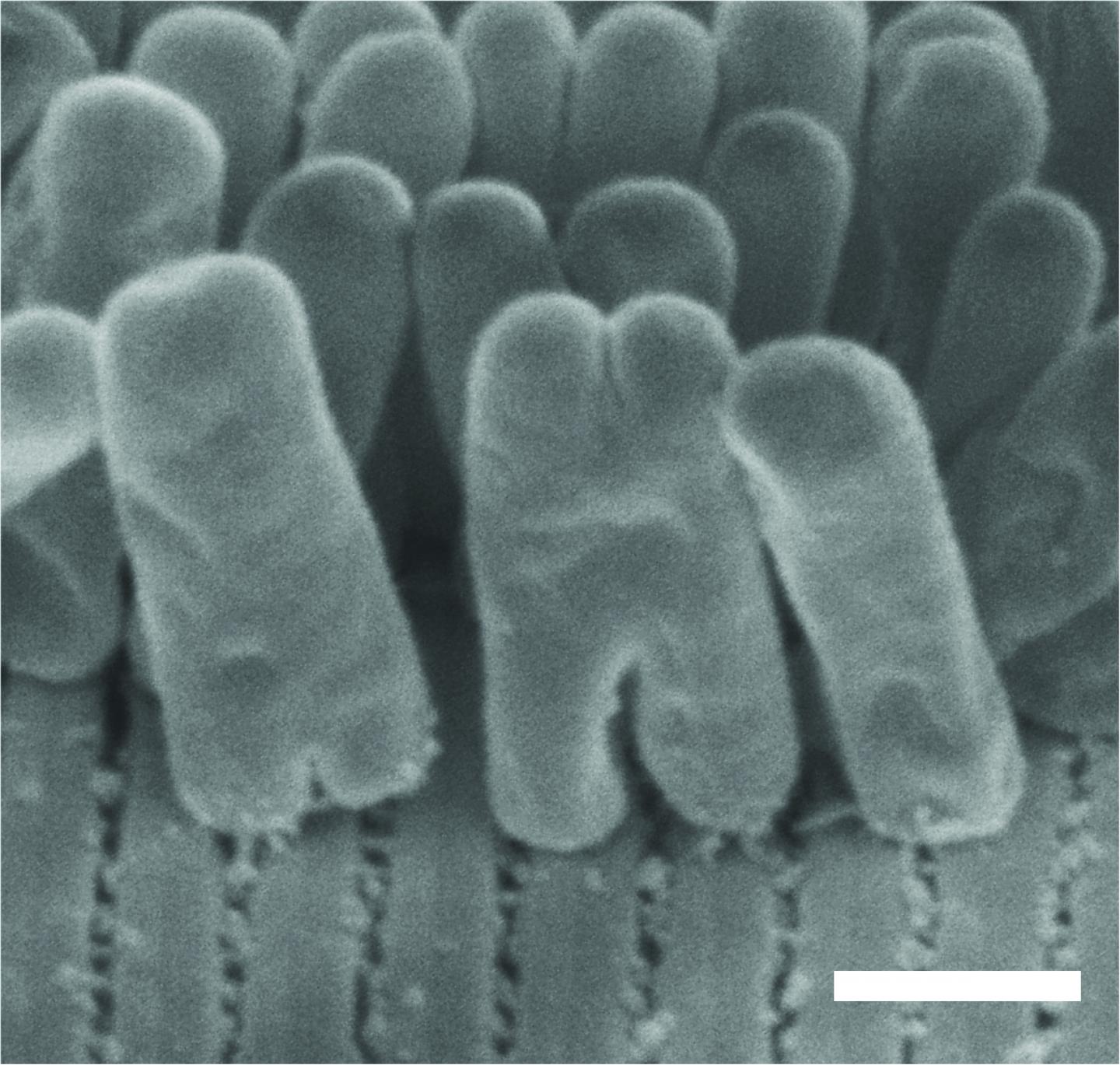
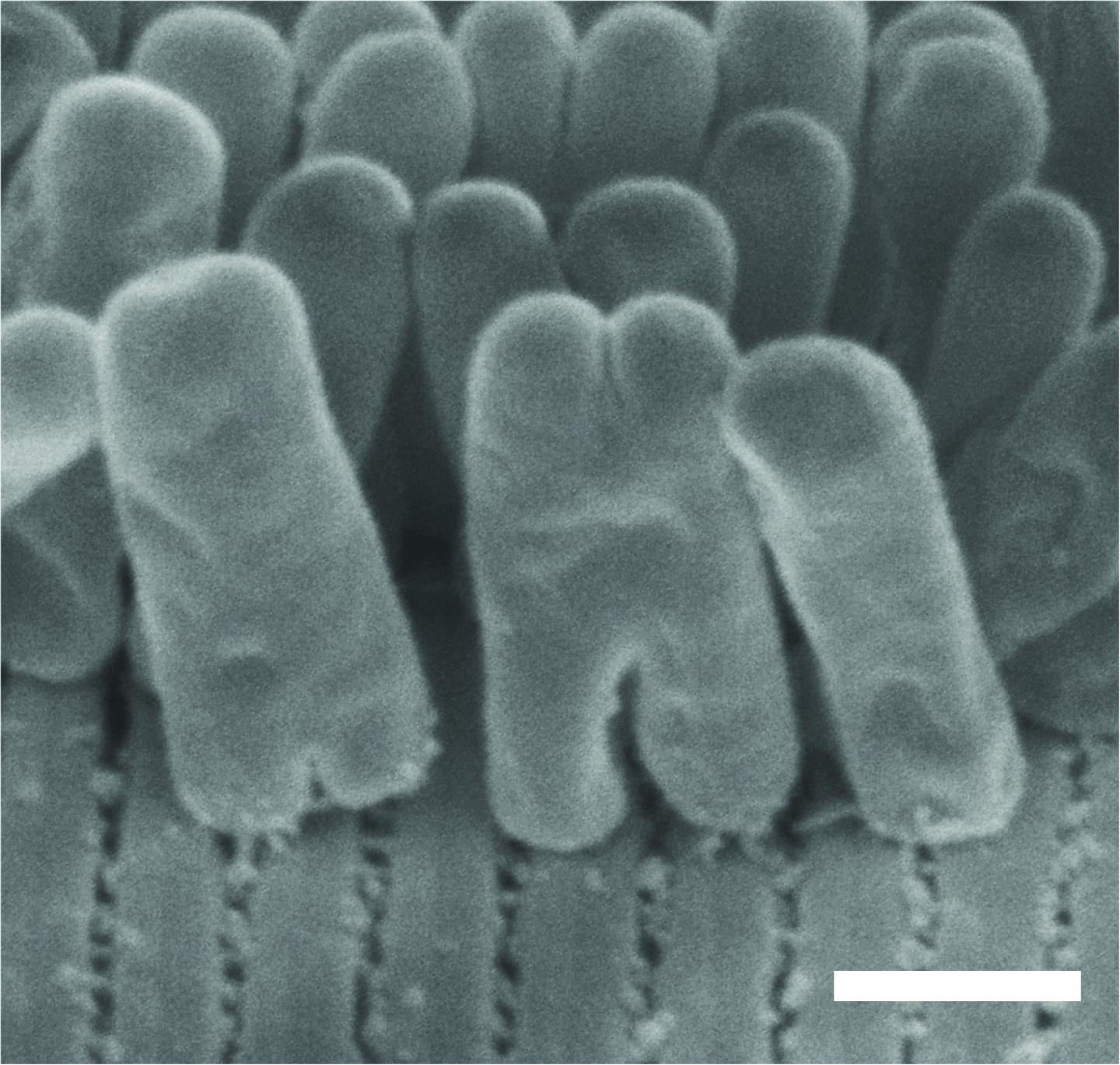
IMAGE

Credit: Copyright: Nikolaus Leisch, Nature Microbiology

Most bacteria divide by placing a protein called FtsZ at the division site. Traditionally, it was thought that FtsZ must organize into a ring in order to recruit a dozen of other proteins and together with them exert an homogeneous and simultaneous constricting force pinching the bacterium from side to side. Just as when one tries to squeeze a rod-shaped air-balloon with a thumb and a ring finger. Although it is still debated which one – among the division complex proteins – is generating the constricting force, it has never been debated that FtsZ forms a ring. Be it made by continuous FtsZ filaments or by short and partly overlapping ones, be it patchy, elliptic or toroid, a ring has been long believed to be sine qua non for cell division.

Bacterial cell biology textbooks have been written by studying microorganisms that can be grown in the laboratory. However, most microbes are not cultivable yet and can only be observed in their natural environment. This is the case of microbes engaging in intimate associations with multicellular organisms.

Silvia Bulgheresi and her team study the bacteria that grow and reproduce on the surface of a small family of marine nematodes, the Stilbonematinae. It is on those occurring around a tropical island in the middle of the Caribbean that the unconventional microbe was discovered. The analysis of this bacterium, the symbiont of the marine nematode Robbea hypermnestra reinvigorates the discussion about how the constrictive force that drives bacterial cell division is generated.

The symbiont is a roughly 1 x 3 μm rod-shaped bacterium attached with one pole to the surface of its nematode host. First weird thing it does, is to orient its division plane parallel to its long axis, which makes it divide longitudinally instead of transversally (like conventional rod-shaped bacteria do). But as if building a wall and pinching a membrane over an approximately three times longer distance were not challenging enough, this resourceful organism tops it up by dividing asynchronously. Namely: it first invaginates at the nematode-attached pole and then at its free pole. "But the biggest surprise came as we searched for the FtsZ ring and we found none" explains Nikolaus Leisch, first author of the paper and currently a Postdoc at the Max Plank Institute, Bremen.

The division of the R. hypermnestra symbiont leaves the dazzled scientists at a loss to know which kind of evolutionary advantage this quirky division might bring. One possible explanation is that this would allow the symbiont to remain faithful to its worm host. "Longitudinal division might have evolved to transmit host attachment to both daughter cells. In other words, to avoid that one daughter cell is lost to the sand or the sea", speculates Bulgheresi.

###

Publication in Nature Microbiology: Asynchronous division by non-ring FtsZ in the gammaproteobacterial symbiont of Robbea hypermnestra: Nikolaus Leisch, Nika Pende, Philipp M. Weber, Harald R. Gruber-Vodicka, Jolanda Verheul, Norbert O. E. Vischer, Sophie S. Abby, Benedikt Geier, Tanneke den Blaauwen and Silvia Bulgheresi in Nature Microbiology (2016)
DOI: 10.1038/nmicrobiol.2016.182

Media Contact

Silvia Bulgheresi
[email protected]
43-676-454-6061
@univienna

http://www.univie.ac.at/en/

Share12Tweet8Share2ShareShareShare2

Related Posts

Therapeutic Family Camps Bring Healing and Hope to Aboriginal Children in Remote Australia

September 13, 2026
AI Assistant That Reads Your Voice Makes Virtual Lab Work Feel More Human

AI Assistant That Reads Your Voice Makes Virtual Lab Work Feel More Human

September 13, 2026

Your Jawbone Could Reveal Your Sex With Over 90 Percent Accuracy, New Study Shows

September 13, 2026

Carbon Fibers and Graphite Particles Supercharge Dissolving Magnesium Composites

September 13, 2026
Please login to join discussion

POPULAR NEWS

  • Therapeutic Family Camps Bring Healing and Hope to Aboriginal Children in Remote Australia

    29 shares
    Share 12 Tweet 7
  • AI Assistant That Reads Your Voice Makes Virtual Lab Work Feel More Human

    29 shares
    Share 12 Tweet 7
  • Your Jawbone Could Reveal Your Sex With Over 90 Percent Accuracy, New Study Shows

    29 shares
    Share 12 Tweet 7
  • Carbon Fibers and Graphite Particles Supercharge Dissolving Magnesium Composites

    29 shares
    Share 12 Tweet 7

About

We bring you the latest biotechnology news from best research centers and universities around the world. Check our website.

Follow us

Recent News

Therapeutic Family Camps Bring Healing and Hope to Aboriginal Children in Remote Australia

AI Assistant That Reads Your Voice Makes Virtual Lab Work Feel More Human

Your Jawbone Could Reveal Your Sex With Over 90 Percent Accuracy, New Study Shows

Subscribe to Blog via Email

Success! An email was just sent to confirm your subscription. Please find the email now and click 'Confirm' to start subscribing.

Join 85 other subscribers
  • Contact Us

Bioengineer.org © Copyright 2023 All Rights Reserved.

Welcome Back!

Login to your account below

Forgotten Password?

Retrieve your password

Please enter your username or email address to reset your password.

Log In
No Result
View All Result
  • Homepages
    • Home Page 1
    • Home Page 2
  • News
  • National
  • Business
  • Health
  • Lifestyle
  • Science

Bioengineer.org © Copyright 2023 All Rights Reserved.