• HOME
  • NEWS
  • EXPLORE
    • CAREER
      • Companies
      • Jobs
    • EVENTS
    • iGEM
      • News
      • Team
    • PHOTOS
    • VIDEO
    • WIKI
  • BLOG
  • COMMUNITY
    • FACEBOOK
    • INSTAGRAM
    • TWITTER
Sunday, May 31, 2026
BIOENGINEER.ORG
No Result
View All Result
  • Login
  • HOME
  • NEWS
  • EXPLORE
    • CAREER
      • Companies
      • Jobs
        • Lecturer
        • PhD Studentship
        • Postdoc
        • Research Assistant
    • EVENTS
    • iGEM
      • News
      • Team
    • PHOTOS
    • VIDEO
    • WIKI
  • BLOG
  • COMMUNITY
    • FACEBOOK
    • INSTAGRAM
    • TWITTER
  • HOME
  • NEWS
  • EXPLORE
    • CAREER
      • Companies
      • Jobs
        • Lecturer
        • PhD Studentship
        • Postdoc
        • Research Assistant
    • EVENTS
    • iGEM
      • News
      • Team
    • PHOTOS
    • VIDEO
    • WIKI
  • BLOG
  • COMMUNITY
    • FACEBOOK
    • INSTAGRAM
    • TWITTER
No Result
View All Result
Bioengineer.org
No Result
View All Result
Home NEWS Science News Biology

UM researchers publish discoveries on antibiotic resistance

Bioengineer by Bioengineer
October 1, 2018
in Biology
Reading Time: 2 mins read
0
Share on FacebookShare on TwitterShare on LinkedinShare on RedditShare on Telegram
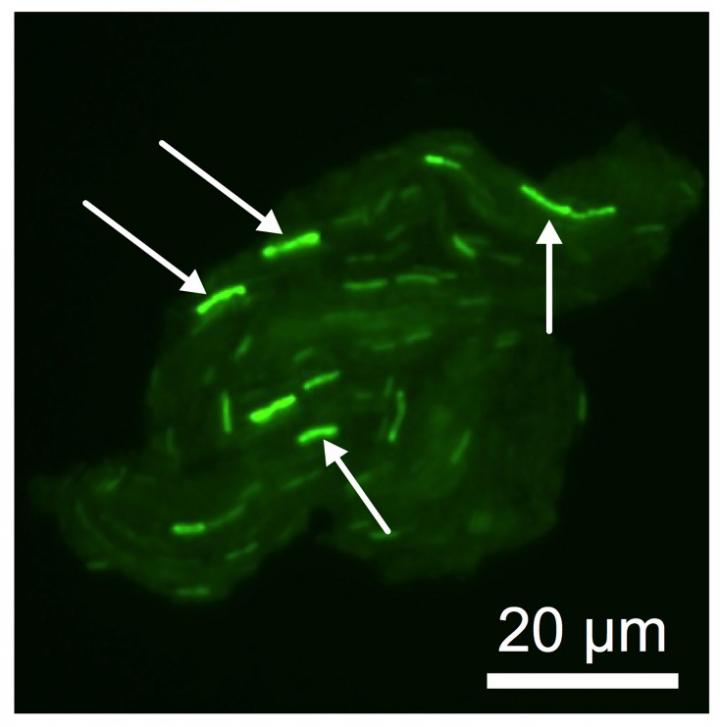
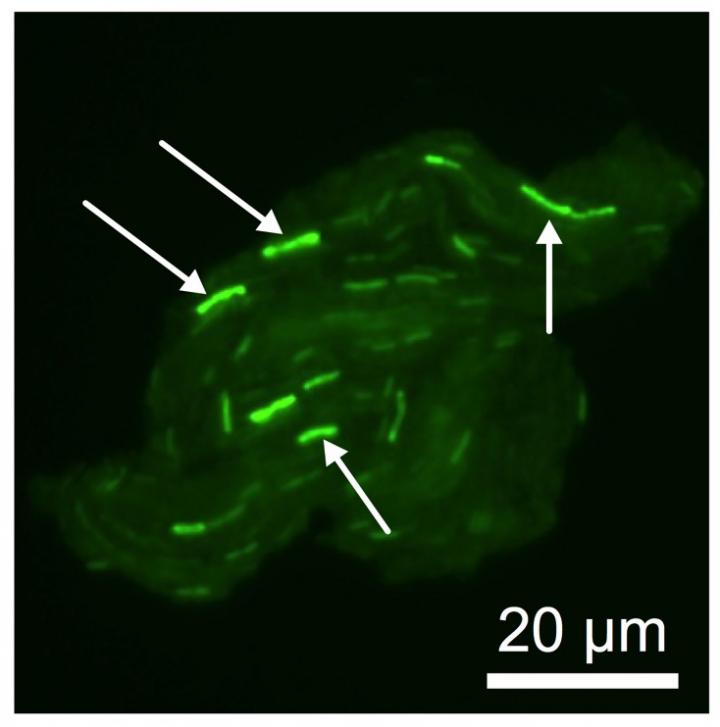
IMAGE

Credit: Courtesy of Patrick Secor

MISSOULA – University of Montana researchers recently published their new insights into how pathogenic bacteria resist antibiotic treatment in Proceedings of the Natural Academy of Sciences.

"Antibiotic resistance is a major problem," said Patrick Secor, assistant professor in UM's Division of Biological Sciences and lead researcher on the paper. "However, it is often the case that if you take bacteria that survive antibiotic treatment from someone's infected lungs and treat those same bacteria with antibiotics in the lab, the bacteria die. We wanted to understand why."

Secor and researchers at UM and the University of Washington discovered that polymers present in airway mucus physically push on bacterial cells.

"We found that bacteria living in high concentrations of polymers get a little stressed out," said Lia Michaels, a researcher at UM and co-author of the paper. "Basically, the polymer-rich environment activates stress responses in the bacteria, causing them to tolerate higher levels of antibiotics."

"I like to compare it to the stress our bodies undergo when we exercise," Secor said. "Exercising today allows you to run a little further or lift a little more weight later on. This is analogous to the stress responses turned on in bacteria living in airway mucus – exposure to stress today allows the bacteria to survive the stress of antibiotic exposure later on."

The researchers discovered that stress responses induced by mucus polymers pressing on the bacteria were a result of mild DNA damage in the bacterial cells.

"One thing that this DNA damage did was slow bacterial growth," said Laura Jennings, UM research assistant professor and co-author of the paper. "Because most antibiotics work best on rapidly dividing cells, these slow-growing bacteria were more difficult to kill with antibiotics."

The researchers speculate that the mechanisms by which polymers turn on bacterial stress responses could be targeted therapeutically to treat long-term bacterial infections.

"Our hope is that we could come up with new ways to treat bacterial infections or increase the efficacy of antibiotic treatment," Secor said.

###

The paper, "Entropically-driven aggregation of bacteria by host polymers promotes antibiotic tolerance in Pseudomonas aeruginosa," is online at http://www.pnas.org/content/early/2018/09/27/1806005115.

Media Contact

Patrick Secor
[email protected]
406-243-2614

http://www.umt.edu

Original Source

http://news.umt.edu/2018/10/100118anti.php

Share12Tweet8Share2ShareShareShare2

Related Posts

Ohio Wall Lizards Overcame Genetic Bottleneck Through Reproduction, Study Finds — Biology

Ohio Wall Lizards Overcame Genetic Bottleneck Through Reproduction, Study Finds

May 29, 2026
Double Agent Unveils Unexpected Revelations — Biology

Double Agent Unveils Unexpected Revelations

May 29, 2026

University of Toronto Scientists Work to Enhance Access to Advanced Research and Biomanufacturing Tools in Resource-Limited Areas

May 29, 2026

CLPTM1L Alters Lipid Rafts to Drive Glioblastoma Progression

May 29, 2026
Please login to join discussion

POPULAR NEWS

  • ESMO 2025: mRNA COVID Vaccines Enhance Efficacy of Cancer Immunotherapy

    319 shares
    Share 128 Tweet 80
  • Multi-Hospital Study Reveals Long Covid Burden Is Twice as High as Current Estimates

    81 shares
    Share 32 Tweet 20
  • Common Food Preservatives Associated with Elevated Blood Pressure and Increased Heart Disease Risk

    56 shares
    Share 22 Tweet 14
  • AI-Powered Atlas Uncovers Extensive Whole-Body Damage Linked to Obesity

    53 shares
    Share 21 Tweet 13

About

We bring you the latest biotechnology news from best research centers and universities around the world. Check our website.

Follow us

Recent News

Impact of Immigration Restrictions on the US Healthcare Workforce

Study Reveals Cancer Diagnostic Delays Linked to Population-Based Screening Using Cell-Free DNA Multicancer Early Detection Test

Innovative AI Technique Predicts Radiation Dosage Prior to Treatment in Advanced Prostate Cancer

Subscribe to Blog via Email

Success! An email was just sent to confirm your subscription. Please find the email now and click 'Confirm' to start subscribing.

Join 82 other subscribers
  • Contact Us

Bioengineer.org © Copyright 2023 All Rights Reserved.

Welcome Back!

Login to your account below

Forgotten Password?

Retrieve your password

Please enter your username or email address to reset your password.

Log In
No Result
View All Result
  • Homepages
    • Home Page 1
    • Home Page 2
  • News
  • National
  • Business
  • Health
  • Lifestyle
  • Science

Bioengineer.org © Copyright 2023 All Rights Reserved.