Researchers at Dongguk University have developed an ultrathin anode-less thin-film battery architecture designed to enhance operational stability and volumetric energy density while maintaining an overall cell thickness of only 2.77 micrometers. The experimental study introduces an engineered tin and carbon bilayer on the current collector alongside an integrated prelithiation step, establishing a structural framework that guides uniform lithium deposition and mitigates degradation during continuous electrochemical cycling.
All-solid-state batteries have emerged as prominent candidates for next-generation energy storage applications because replacing conventional liquid electrolytes with solid counterparts offers substantial theoretical improvements in device safety and energy density. Despite these intrinsic benefits, solid-state systems that utilize lithium metal anodes frequently suffer from severe operational instabilities arising from non-uniform lithium plating and stripping across the solid interface.
In this operational format, the battery is assembled without an active anode layer; instead, lithium ions stored within the cathode migrate across the solid electrolyte during the initial charge cycle and plate directly onto the bare current collector to create the negative electrode in situ. This design substantially elevates volumetric energy density and simplifies device fabrication, presenting particular utility for micro-scale and thin-film form factors.
Standard anode-less configurations remain highly susceptible to rapid capacity decay caused by cumulative lithium loss. Non-uniform nucleation frequently induces uneven lithium morphology, yielding electrically isolated fragments of inactive metal commonly described as dead lithium. Furthermore, the repeated stripping of metallic lithium during discharge can trigger mechanical delamination and loss of physical contact with the rigid solid electrolyte, severely compromising cycling reversibility and overall battery life.
To overcome these interfacial failure modes, an engineering team led by Professor Hyun-Suk Kim from the Department of Energy and Materials Engineering at Dongguk University in South Korea investigated surface modification strategies for the metallic substrate. Their work, published in Advanced Energy Materials following initial online availability on May 7, 2026, focused on regulating early-stage nucleation dynamics through targeted material coatings applied directly to current collectors.
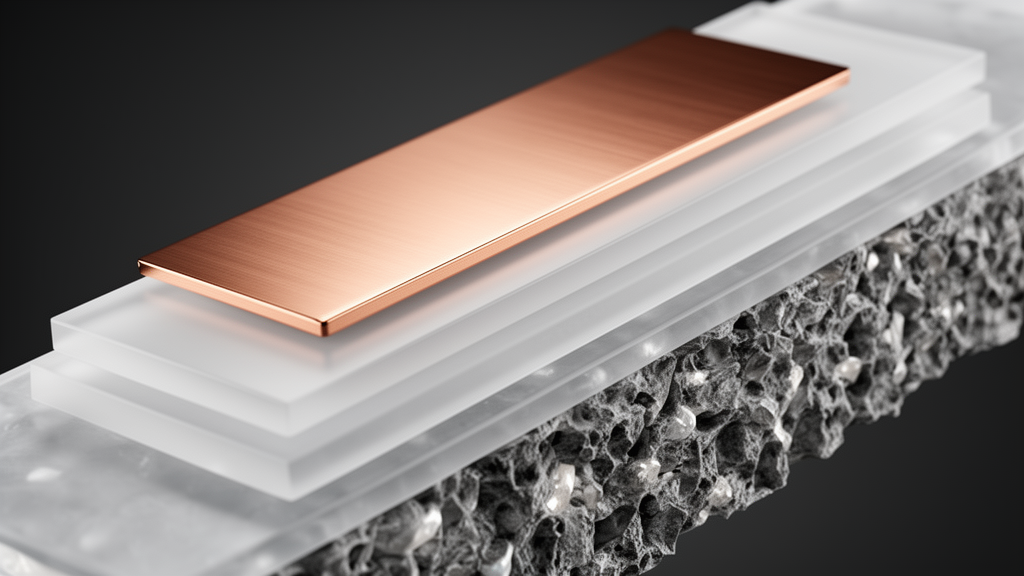
The researchers conducted a systematic screening evaluation comparing carbon-only coatings, metal-only coatings, and combined metal-and-carbon hybrid bilayers applied to substrate surfaces. Through this experimental analysis, the team determined that introducing an active seed interlayer effectively promoted homogeneous lithium nucleation under rigorous anode-less conditions. Among all tested formulations, a tin and carbon bilayer applied to a bare copper current collector demonstrated the most favorable deposition behavior, nucleation kinetics, and interfacial stability.
Detailed mechanistic investigations revealed complementary functional roles for the individual components of the tin and carbon bilayer. The underlying tin layer facilitates lithium nucleation by substantially lowering the energetic barrier and enhancing interfacial alloy formation. Concurrently, the carbon overlayer governs subsequent lithium crystal growth, mitigating irregular dendrite-like morphology and physically stabilizing the dynamic interfacial region formed between tin and metallic lithium.
To further reinforce electrochemical stability, the team incorporated a precise prelithiation step immediately following the synthesis of the tin-and-carbon-coated copper current collector. During this stage, an ultrathin metallic lithium layer was deposited onto the modified collector surface to serve as an internal lithium reservoir.
The complete thin-film solid-state cell was constructed by combining an amorphous lithium vanadium oxide cathode, an inorganic lithium phosphorus oxynitride solid electrolyte, and the modified copper current collector. When subjected to electrochemical testing at a cycling rate of 0.01 C, the resulting microbattery attained a volumetric energy density of 235.13 watt-hours per liter at its 100th cycle, demonstrating sustained energy delivery across extended charge and discharge operations.
Structural analysis of the working electrodes revealed that during the initial plating process, a three-dimensionally textured tin-lithium alloy phase developed within the seed interlayer. This textured matrix possessed the mechanical resilience necessary to accommodate dynamic volume swings and morphological adjustments during subsequent stripping and plating cycles, preventing interfacial detachment from the solid electrolyte.
The engineered current collector platform illustrates how combining interfacial surface chemistry with targeted lithium-inventory management can address fundamental degradation modes in anode-less solid-state systems.
The peer-reviewed investigation, formally titled “Pushing Energy Density Limits: Anode-Less Solid-State Battery Integrated with Amorphous Lithium Vanadium Oxide Thin-Film Cathode,” was documented in Volume 16, Issue 31 of Advanced Energy Materials on August 19, 2026, following its initial online release on May 7, 2026. Registered under digital object identifier 10.1002/aenm.71042, the experimental study details an architectural breakthrough in energy storage that reconciles the severe mechanical and interfacial challenges inherent to solid-state systems.
Corresponding author Dr. Hyun-Suk Kim, who currently serves as a Professor in the Department of Energy and Materials Engineering at Dongguk University in the Republic of Korea, earned his master’s degree in 2003 and his doctorate in 2006 from the Korea Advanced Institute of Science and Technology. Throughout his academic career, Professor Kim has directed research programs centered on advanced thin-film materials, nanoscale electronic components, and solid-state microbatteries.
The investigation was conducted within the interdisciplinary research ecosystem of Dongguk University. Founded in 1906 and based in Seoul, South Korea, Dongguk University encompasses 13 distinct academic colleges alongside regional campuses located in Gyeongju, Goyang, and Los Angeles. Supporting approximately 1,300 professors who direct independent research initiatives and more than 18,000 enrolled students, the university maintains a strategic academic focus on fostering cross-disciplinary collaboration across Information Technology, Bio Technology, Cultural Technology, and Buddhist studies. According to the published documentation in Advanced Energy Materials, the research authors declared that they possess no competing financial or personal conflicts of interest regarding the reported experimental study and its technological findings.
Subject of Research: Ultrathin anode-less all-solid-state thin-film battery architecture with a tin-carbon interlayer
Article Title: Dongguk University researchers develop new ultrathin battery platform with enhanced energy density
Article References: Dongguk University researchers develop new ultrathin battery platform with enhanced energy density. Original publication (Bibliographic details unavailable.)
Image Credits: AI Generated
DOI: Not provided
Keywords: anode-less battery, all-solid-state batteries, thin-film battery, lithium vanadium oxide, lithium phosphorus oxynitride, tin carbon interlayer, copper current collector, prelithiation, lithium nucleation, volumetric energy density, Dongguk University, Hyun-Suk Kim, solid electrolyte, interfacial stability, wearable electronics, Advanced Energy Materials
News Source: Faith Mcneil. (November 12, 2026). Ultrathin Anode-Less Solid-State Battery Architecture Enhances Energy Density and Cycling Stability. Scienmag.