


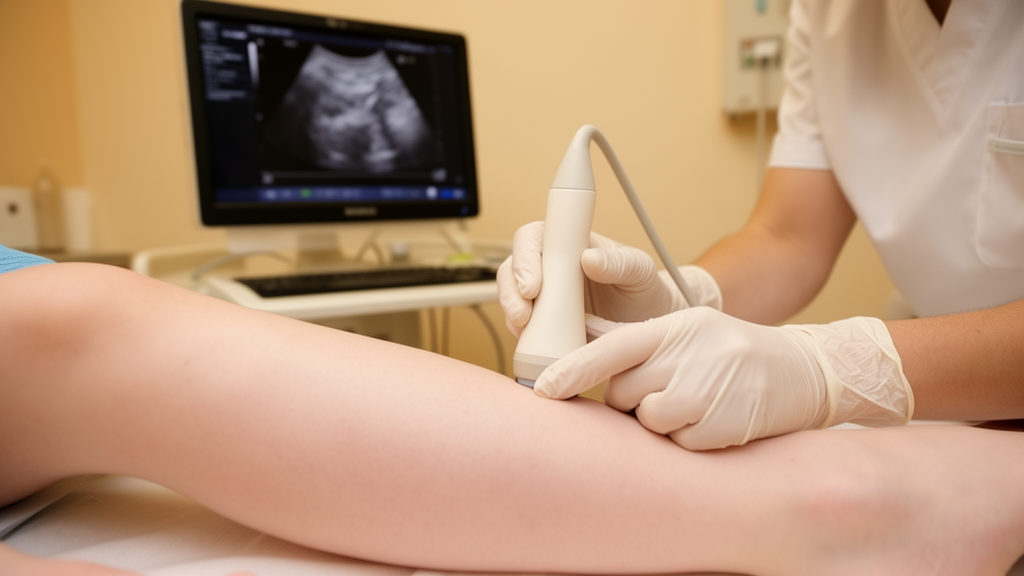
Children with lower extremity lymphatic malformations who received ultrasound-guided bleomycin sclerotherapy showed substantial lesion shrinkage in a retrospective cohort study published in BMC Medical Imaging, though residual disease, recurrence, and repeat treatments remained common enough that the authors urge caution about overinterpreting the results.
The reported shrinkage was considerable on average. The median recorded dimensional reduction across the cohort was 74.7 percent. By the final assessment, seven patients had complete resolution of their lesions, nine had an excellent response, ten a moderate response, four a poor response, and six showed no response, while three patients experienced recurrence after treatment. Taken together, 26 of 39 children, or 66.7 percent, achieved at least a moderate response without subsequent recurrence. The three recurrences all followed an initial resolution and were managed with observation rather than further intervention.
Treatment burden was a central focus of the analysis, since sclerotherapy for these malformations often requires multiple sessions. The median number of bleomycin sessions was three, with a range extending from one to eight sessions, and seventeen of the 39 patients needed more than three sessions.
That anatomical comparison yielded a suggestive but statistically inconclusive pattern. Median session counts were two for superficial or subcutaneous lesions, three for deep fascial or intramuscular lesions, and four for multicompartment lesions, but the difference between depth groups did not reach statistical significance, with a p value of 0.111. The authors explicitly label these anatomical comparisons as exploratory and caution that imaging availability differed between the depth groups, so the apparent gradient in treatment burden should be interpreted carefully rather than treated as an established effect of lesion depth.
All 39 children underwent ultrasonography, but pretreatment magnetic resonance imaging was available for only 19 patients.
Safety findings were limited but reassuring within the scope of what was documented. Two self-limited local reactions were recorded, and no major adverse events appeared in the study documentation. Seven patients ultimately underwent surgery, underscoring that sclerotherapy did not eliminate the need for operative management in a minority of cases.
The study’s age profile highlights how early these malformations present and are treated. Mean age at treatment was 36.2 months, with a standard deviation of 35.1 months and a range spanning from newborns to a 173-month-old child. Site-specific evidence for bleomycin sclerotherapy in lower extremity lymphatic malformations has been limited, the authors note, which motivated their effort to link treatment response, recurrence, treatment burden, surgery, and adverse events to lesion morphology and anatomical depth in a single pediatric cohort.
The overall conclusion the authors draw is measured: bleomycin sclerotherapy was associated with meaningful dimensional reduction in many children, but residual disease, recurrence, and the need for additional treatment remained relevant outcomes. For families and clinicians, the practical message is that a majority of treated children in this cohort achieved at least a moderate radiological response without recurrence, yet a substantial minority required multiple sessions, additional surgery, or experienced recurrence after initial improvement. As a retrospective, single-cohort analysis with exploratory anatomical comparisons and uneven imaging availability, the study provides a detailed description of real-world radiological outcomes rather than proof of comparative efficacy, and the authors recommend cautious interpretation of the depth-related findings until they can be confirmed in more uniformly imaged populations.
Subject of Research: Radiological outcomes of ultrasound-guided bleomycin sclerotherapy for pediatric lower extremity lymphatic malformations
Article Title: Radiological outcomes of ultrasound-guided bleomycin sclerotherapy for pediatric lower extremity lymphatic malformations: a retrospective cohort study
Article References: Ly, D. B., Dang, T. H., Tran, D. L. D., Dang, K. N., Nguyen, V. H. K., Nguyen, H. V., & Nguyen, Q. T. (2026). Radiological outcomes of ultrasound-guided bleomycin sclerotherapy for pediatric lower extremity lymphatic malformations: a retrospective cohort study. BMC Medical Imaging. https://doi.org/10.1186/s12880-026-03021-8
Image Credits: AI Generated
DOI: 10.1186/s12880-026-03021-8
Keywords: bleomycin sclerotherapy, lymphatic malformations, pediatric vascular anomalies, ultrasound-guided intervention, lower extremity, retrospective cohort, radiological outcomes, recurrence, treatment burden, BMC Medical Imaging, Radiological, outcomes
News Source: Harold Sullivan. (October 30, 2026). Ultrasound-Guided Bleomycin Sclerotherapy Shrinks Many Pediatric Leg Lymphatic Malformations. Scienmag.



