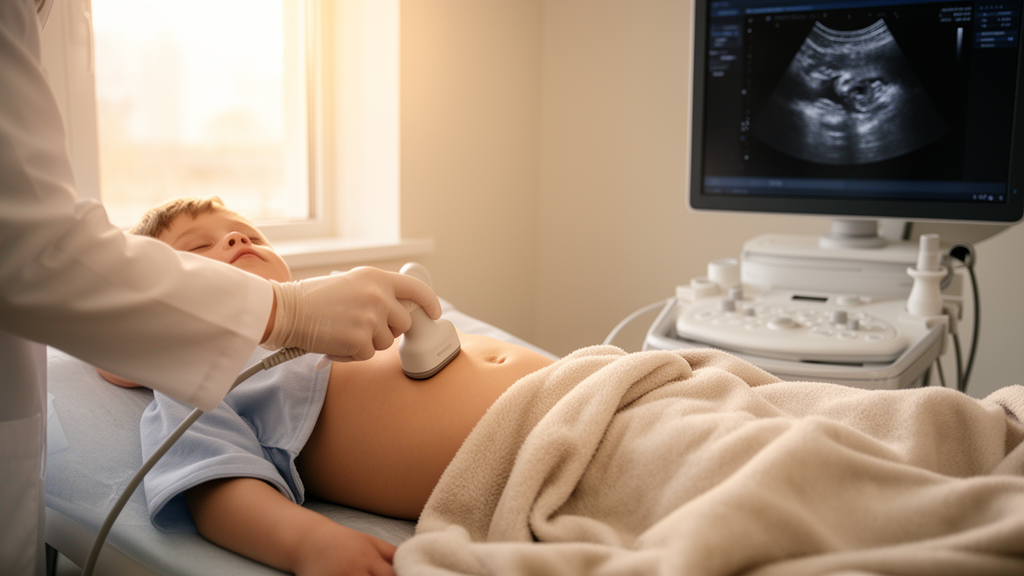
Researchers at a tertiary children’s hospital in Shenzhen, China, have developed a new predictive tool aimed at improving clinical decision-making for children recovering from acute appendicitis without surgery. By analyzing a large, retrospective cohort of 2,536 pediatric patients treated conservatively between January 2000 and August 2025, the team sought to determine whether specific ultrasound findings and standard laboratory markers could accurately forecast the risk of recurrence within one year of discharge. This study, which included 1,016 children selected through outcome-dependent sampling, highlights the potential for non-invasive imaging markers to serve as a reliable rule-out aid for patients at low risk of needing follow-up care for recurrent symptoms.
The study design utilized a rigorous approach to variable selection, employing LASSO (Least Absolute Shrinkage and Selection Operator) across five imputed datasets to identify the most significant predictors. The investigators focused on three primary variables: age, the presence of a fecalith, and evidence of intraluminal fluid or debris on initial ultrasound examinations. The final multivariable model demonstrated that these ultrasound features independently correlate with recurrence risk. Specifically, each year of age was associated with an odds ratio of 1.07 (95% CI 1.03–1.12), while the presence of a fecalith and intraluminal fluid or debris yielded odds ratios of 1.48 (95% CI 1.04–2.10) and 2.66 (95% CI 1.95–3.64), respectively. Conversely, common laboratory markers, including white blood cell count and C-reactive protein levels at admission, were found to have no predictive value for recurrence.
To assess the model’s performance, the researchers utilized the area under the receiver operating characteristic curve (AUC) supported by bootstrap internal validation. The bootstrap-corrected AUC was calculated at 0.655 (95% CI 0.623–0.687), suggesting a moderate level of discriminative ability. Calibration of the model was noted as being close to ideal following weighting, with an intercept of −0.06, a slope of 0.97, and an observed-to-expected ratio of 0.99. When applying a 10% risk threshold, the model successfully identified a low-risk group representing 44.7% of the cohort, which experienced a recurrence rate of 6.7%, compared to an 18.2% recurrence rate observed in children categorized above this risk cutoff.
The study also evaluated the clinical utility of the model through correction for source-population prevalence. Under these conditions, the model achieved a negative predictive value of 93.3% while successfully flagging 74.1% of all actual recurrences within the study period. Further testing of the model’s robustness was conducted via bidirectional temporal validation, which produced discrimination values of 0.645 and 0.650 in the held-out cohorts.
Despite the promise of these findings, the study authors acknowledged certain limitations inherent in their research. The retrospective nature of the analysis meant that antibiotic regimens were not uniformly recorded across the diverse patient group, preventing the researchers from adjusting their model to account for variations in medical treatment protocols. The investigators emphasize that the current model is primarily intended as a rule-out aid rather than a definitive diagnostic tool, designed to support, rather than replace, clinical judgment during the shared decision-making process.
In response to these findings, the team has introduced a nomogram and an interactive, web-based calculator to facilitate clinical use.
Subject of Research: Predictive modeling for pediatric appendicitis recurrence using ultrasound features
Article Title: Predicting 1-year recurrence after conservative treatment of pediatric acute appendicitis using ultrasound features: a retrospective cohort study
Article References: Guo, J.-J., Wang, B., & Liu, Y.-D. (2026). Predicting 1-year recurrence after conservative treatment of pediatric acute appendicitis using ultrasound features: a retrospective cohort study. Frontiers in Pediatrics, 14, Article 2003771. https://doi.org/10.3389/fped.2026.2003771
Image Credits: AI Generated
DOI: 10.3389/fped.2026.2003771
Keywords: Pediatric appendicitis, Conservative treatment, Non-operative management, Recurrence risk, Ultrasound imaging, Predictive modeling, Fecalith, Intraluminal fluid, Clinical decision support, Retrospective cohort study, Pediatric surgery, Risk assessment, Medical informatics, Shared decision-making, Pediatric gastroenterology
News Source: Harold Sullivan. (November 17, 2026). Ultrasound Features Predict Pediatric Appendicitis Recurrence After Conservative Management. Scienmag.