• HOME
  • NEWS
  • EXPLORE
    • CAREER
      • Companies
      • Jobs
    • EVENTS
    • iGEM
      • News
      • Team
    • PHOTOS
    • VIDEO
    • WIKI
  • BLOG
  • COMMUNITY
    • FACEBOOK
    • INSTAGRAM
    • TWITTER
Saturday, July 4, 2026
BIOENGINEER.ORG
No Result
View All Result
  • Login
  • HOME
  • NEWS
  • EXPLORE
    • CAREER
      • Companies
      • Jobs
        • Lecturer
        • PhD Studentship
        • Postdoc
        • Research Assistant
    • EVENTS
    • iGEM
      • News
      • Team
    • PHOTOS
    • VIDEO
    • WIKI
  • BLOG
  • COMMUNITY
    • FACEBOOK
    • INSTAGRAM
    • TWITTER
  • HOME
  • NEWS
  • EXPLORE
    • CAREER
      • Companies
      • Jobs
        • Lecturer
        • PhD Studentship
        • Postdoc
        • Research Assistant
    • EVENTS
    • iGEM
      • News
      • Team
    • PHOTOS
    • VIDEO
    • WIKI
  • BLOG
  • COMMUNITY
    • FACEBOOK
    • INSTAGRAM
    • TWITTER
No Result
View All Result
Bioengineer.org
No Result
View All Result
Home Headlines

Ultrasound detects heart dysfunction after successful repair of aortic narrowing

Bioengineer.org by Bioengineer.org
January 26, 2018
in Headlines, Health, Science News
Reading Time: 2 mins read
0
Share on FacebookShare on TwitterShare on LinkedinShare on RedditShare on Telegram
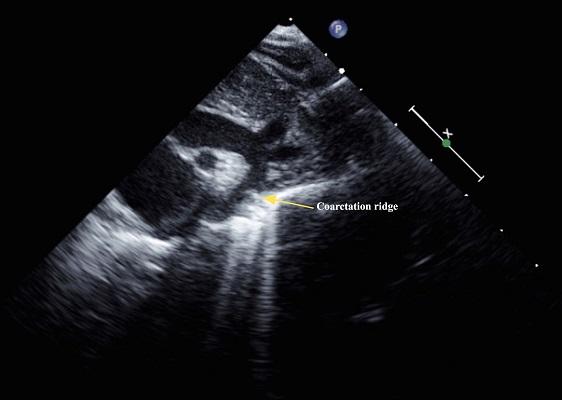
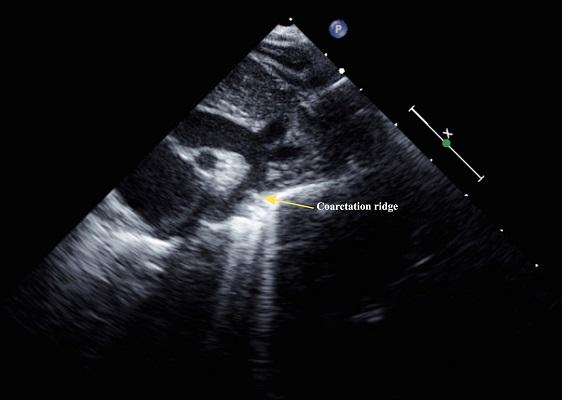
IMAGE

Credit: Haki Jashari

New echocardiographic ultrasound methods can non-invasively evaluate deformation of the heart muscle in order to identify abnormal function in children who were operated for coarctation (narrowing) of the aorta. Surgical intervention in infants is a worldwide and often vital procedure, but new research from Umeå University reveals that echocardiography post-surgery can and should be used to detect early and asymptomatic heart dysfunction.

"Our research suggest that patients who have been operated for aortic coarctation should receive lifelong follow-up," says Haki Jashari, doctoral student at the Department of Public Health and Clinical Medicine.

"It is well established that delayed intervention is associated with undesirable consequences on heart function. But our findings show that even in the absence of symptoms, disturbed heart function was still evident two years after being operated within the first month of life, irrespective of infrequent post-operative hypertension."

According to Haki Jashari, the best method to assess the impact of aortic coarctation on heart function post-surgery is the non-invasive ultrasound method, equipped with recent echocardiographic modalities. This widely used method is radiation free, inexpensive and patient-friendly.

Coarctation of the aorta is a congenital heart disease, where the main artery coming out of the heart is narrowed just after it branches for the upper body. The narrowing results in high blood pressure in the upper body and low pressure in the lower body. Severe cases presented in the neonatal period can lead to heart failure, while mild narrowing may go unnoticed and is often first diagnosed in childhood or even later. Usually by then, the heart has already responded to the increased pressure with wall thickening. However, the recent data suggest that aortic coarctation represents a much more complicated stiffness of the vasculature rather than just a simple narrowing of the aorta.

###

Haki Jashari comes from Pristina, Kosovo, where he works as resident doctor in Pediatrics. He is a doctoral student in the Department of Public Health and Clinical Medicine, Umeå University.

For more information, please contact:

Haki Jashari, Department of Public Health and Clinical Medicine, Umeå University.
Phone: +46 90 785 26 52, +377 44 630 629
E-mail: [email protected]

Media Contact

Daniel Harju
[email protected]
46-725-522-918
@UmeaUniversity

http://www.umu.se/umu/index_eng.html

Share12Tweet7Share2ShareShareShare1

Related Posts

Steatosis Drives Liver Metastasis Diversity in CRC — Medicine

Steatosis Drives Liver Metastasis Diversity in CRC

July 2, 2026

Unlocking the Mysteries of Alzheimer’s Disease

July 2, 2026

Pensoft Introduces New Peer-Reviewed Journal of Regeneration to Advance Restorative Biology Across Species

July 2, 2026

Evolution-Inspired Biosensors Revolutionize Lipid Tracking in Real Time

July 2, 2026
Please login to join discussion

POPULAR NEWS

  • Detection of EDCs in Breast Milk and Infant Urine Up to Six Months Highlights Early Exposure Risks

    77 shares
    Share 31 Tweet 19
  • Saying Goodbye to PGY-6: Pediatric Fellowship Realities

    103 shares
    Share 41 Tweet 26
  • New Drug Candidate Developed at McMaster Shows Potential for Treating Brain Cancer

    58 shares
    Share 23 Tweet 15
  • KTU Researchers Explore Ultrasound’s Role in Enhancing Blood Flow Beyond Diagnostics

    53 shares
    Share 21 Tweet 13

About

BIOENGINEER.ORG

We bring you the latest biotechnology news from best research centers and universities around the world. Check our website.

Follow us

Recent News

Steatosis Drives Liver Metastasis Diversity in CRC

Unlocking the Mysteries of Alzheimer’s Disease

Pensoft Introduces New Peer-Reviewed Journal of Regeneration to Advance Restorative Biology Across Species

Subscribe to Blog via Email

Enter your email address to subscribe to this blog and receive notifications of new posts by email.

Join 83 other subscribers
  • Contact Us

Bioengineer.org © Copyright 2023 All Rights Reserved.

Welcome Back!

Login to your account below

Forgotten Password?

Retrieve your password

Please enter your username or email address to reset your password.

Log In
No Result
View All Result
  • Homepages
    • Home Page 1
    • Home Page 2
  • News
  • National
  • Business
  • Health
  • Lifestyle
  • Science

Bioengineer.org © Copyright 2023 All Rights Reserved.