

• HOME
  • NEWS
  • EXPLORE
    • CAREER
      • Companies
      • Jobs
    • EVENTS
    • iGEM
      • News
      • Team
    • PHOTOS
    • VIDEO
    • WIKI
  • BLOG
  • COMMUNITY
    • FACEBOOK
    • INSTAGRAM
    • TWITTER
Monday, April 27, 2026
BIOENGINEER.ORG
No Result
View All Result
  • Login
  • HOME
  • NEWS
  • EXPLORE
    • CAREER
      • Companies
      • Jobs
        • Lecturer
        • PhD Studentship
        • Postdoc
        • Research Assistant
    • EVENTS
    • iGEM
      • News
      • Team
    • PHOTOS
    • VIDEO
    • WIKI
  • BLOG
  • COMMUNITY
    • FACEBOOK
    • INSTAGRAM
    • TWITTER
  • HOME
  • NEWS
  • EXPLORE
    • CAREER
      • Companies
      • Jobs
        • Lecturer
        • PhD Studentship
        • Postdoc
        • Research Assistant
    • EVENTS
    • iGEM
      • News
      • Team
    • PHOTOS
    • VIDEO
    • WIKI
  • BLOG
  • COMMUNITY
    • FACEBOOK
    • INSTAGRAM
    • TWITTER
No Result
View All Result
Bioengineer.org
No Result
View All Result
Home NEWS Science News

Ultra-thin transparent silver films for solar cells

Bioengineer by Bioengineer
November 12, 2018
in Science News
Reading Time: 2 mins read
0
Share on FacebookShare on TwitterShare on LinkedinShare on RedditShare on Telegram
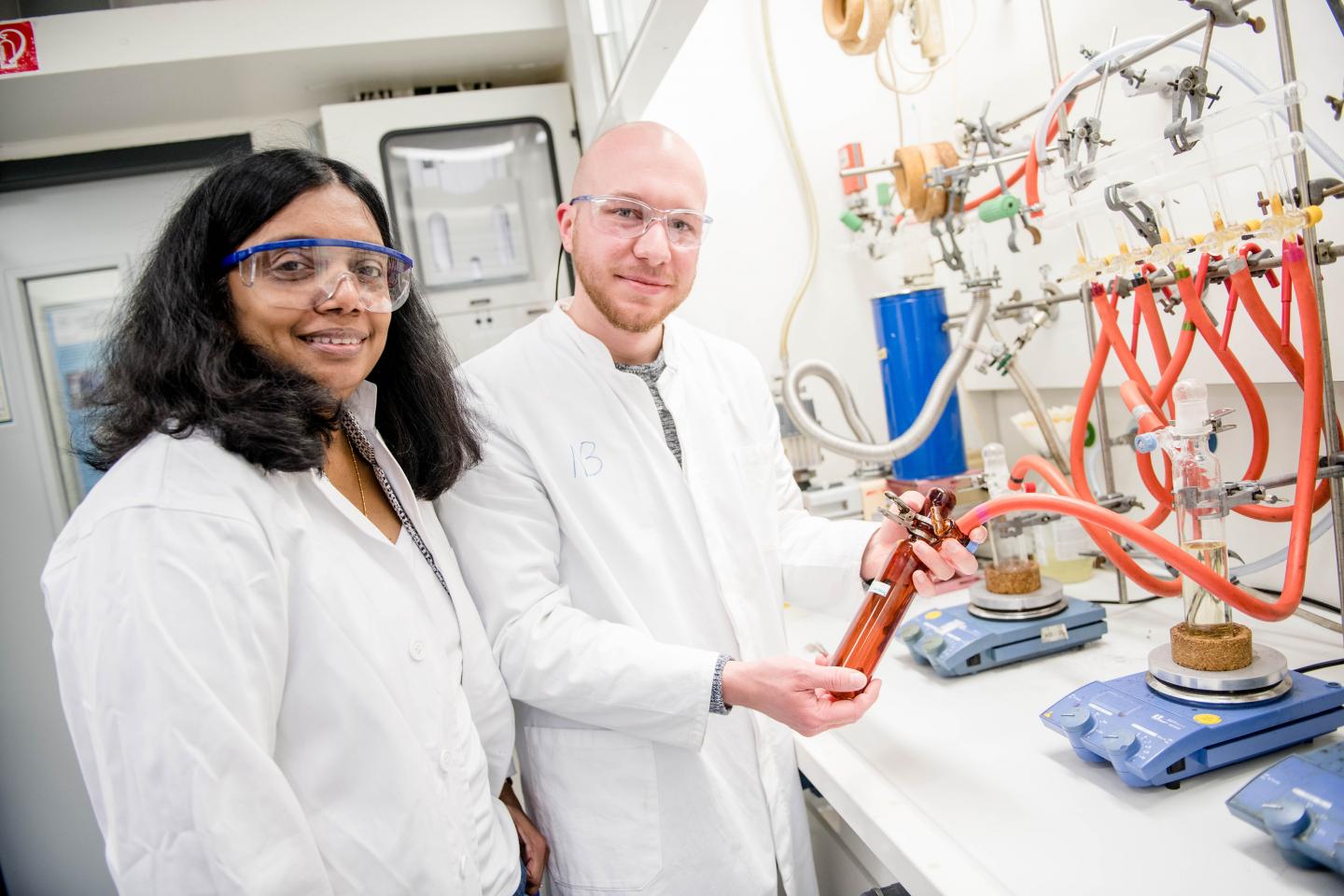
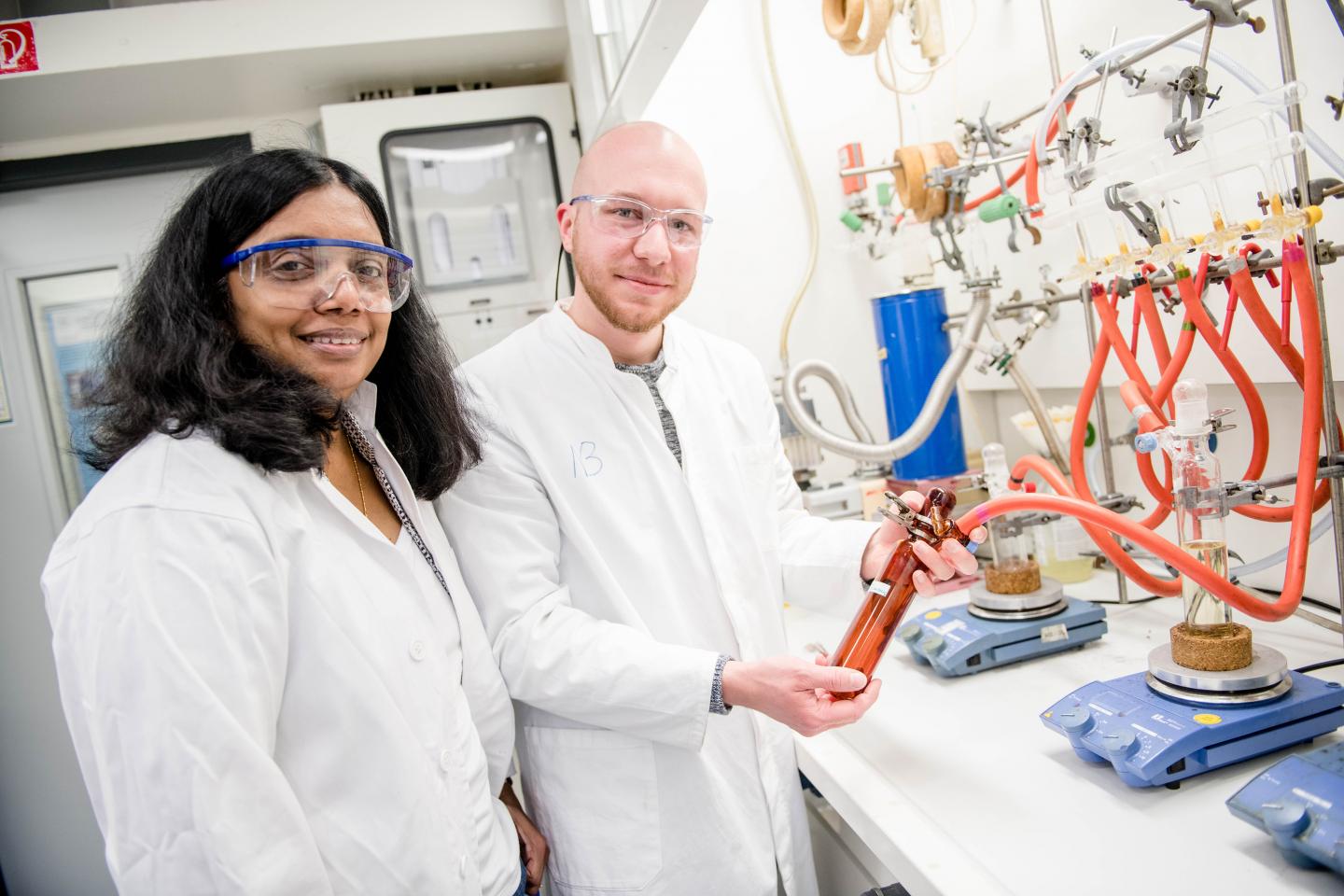
IMAGE

Credit: RUB, Marquard

A new fabrication process for transparent ultra-thin silver films has been developed by researchers at Ruhr-Universität Bochum and the University of Wuppertal. The material may help build highly efficient solar cells and light-emitting diodes. However, traditional chemical methods have not been able to produce ultra-thin and pure silver films. A team headed by Professor Anjana Devi and Nils Boysen from the Bochum-based research group Inorganic Materials Chemistry, in collaboration with the group of Professor Thomas Riedl from the Chair of Electronic Devices in Wuppertal, published an article on a new synthesis method in the journal Angewandte Chemie. The article was published online on 27 September 2018.

New precursor chemistry

"Precursors for the fabrication of ultra-thin silver films are highly sensitive to air and light," explains Nils Boysen. The silver precursors can be stabilised with fluorine, phosphorus or oxygen. "However, these elements contaminate the thin films as well as the equipment used for the production," continues the researcher. In the course of his Master thesis, Boysen and his colleagues developed an alternative solution to tackle the problems associated with common silver precursors.

The researchers created a chemical silver precursor, where the silver is surrounded by an amide and a carbene, which is even stable without elements like fluorine, phosphorous or oxygen. They demonstrated that a silver thin film can be applied to an electrode with the new precursor by atomic layer deposition. In the process, the gaseous precursor is transported to the electrode and a silver film is deposited there as a layer with a thickness of merely a few atoms. Because it is so thin, the silver film is transparent.

"As the process can be operated under atmospheric pressure and at low temperatures, the conditions for industrial production are quite favourable," says Anjana Devi.

A chance for highly efficient solar cells and lights

Following a series of tests, the researchers showed that the thin silver films manufactured using this method are pure and electrically conductive. "As far as process technology is concerned, the successful synthesis of the new precursor paves the way for the development of ultra-thin silver films," concludes Thomas Riedl. "It constitutes a first step towards the production of novel electrodes for highly efficient solar cells and lights."

"The collaboration between the chemists from Bochum and the engineers from Wuppertal was the key to success," stresses Anjana Devi.

###

Media Contact

Anjana Devi
[email protected]
49-234-322-4150
@ruhrunibochum

http://www.ruhr-uni-bochum.de

Original Source

http://news.rub.de/english/press-releases/2018-11-12-chemistry-ultra-thin-transparent-silver-films-solar-cells http://dx.doi.org/10.1002/anie.201808586

Share12Tweet8Share2ShareShareShare2

Related Posts

Endocrine Disruptors in U.S. Infant Breast Milk

April 27, 2026
Harnessing Hermes: Neonatal Transport’s Hidden Alchemy — Technology and Engineering

Harnessing Hermes: Neonatal Transport’s Hidden Alchemy

April 27, 2026

FAU Study Reveals Underlying Causes Driving the Rise in US Pedestrian Fatalities

April 27, 2026

Engineering Metals Atom-by-Atom to Propel Future Technologies

April 27, 2026
Please login to join discussion

POPULAR NEWS

  • Research Indicates Potential Connection Between Prenatal Medication Exposure and Elevated Autism Risk

    824 shares
    Share 330 Tweet 206
  • New Study Reveals Plants Can Detect the Sound of Rain

    693 shares
    Share 277 Tweet 173
  • Scientists Investigate Possible Connection Between COVID-19 and Increased Lung Cancer Risk

    66 shares
    Share 26 Tweet 17
  • Salmonella Haem Blocks Macrophages, Boosts Infection

    60 shares
    Share 24 Tweet 15

About

We bring you the latest biotechnology news from best research centers and universities around the world. Check our website.

Follow us

Recent News

Endocrine Disruptors in U.S. Infant Breast Milk

Harnessing Hermes: Neonatal Transport’s Hidden Alchemy

FAU Study Reveals Underlying Causes Driving the Rise in US Pedestrian Fatalities

Subscribe to Blog via Email

Enter your email address to subscribe to this blog and receive notifications of new posts by email.

Join 81 other subscribers
  • Contact Us

Bioengineer.org © Copyright 2023 All Rights Reserved.

Welcome Back!

Login to your account below

Forgotten Password?

Retrieve your password

Please enter your username or email address to reset your password.

Log In
No Result
View All Result
  • Homepages
    • Home Page 1
    • Home Page 2
  • News
  • National
  • Business
  • Health
  • Lifestyle
  • Science

Bioengineer.org © Copyright 2023 All Rights Reserved.