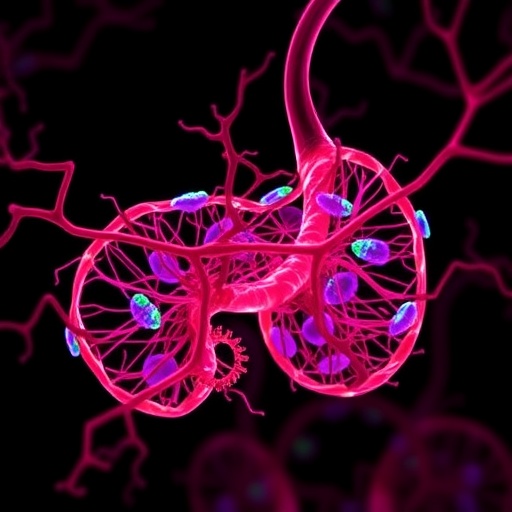
In a groundbreaking advancement for the treatment of advanced kidney cancer, researchers at University Hospitals Seidman Cancer Center have initiated the S2419 BioFront study, marking the first Phase III clinical trial to integrate a gut microbiome intervention within a cancer therapy regimen. This innovative approach investigates the role of the microbiome in modulating cancer response, specifically targeting renal cell carcinoma, by introducing a beneficial bacterial strain alongside established immunotherapy protocols.
The S2419 BioFront trial, under the leadership of Dr. Pedro Barata, a recognized expert in medical oncology and the Miggo Family Chair in Cancer Research, represents a pivotal step toward harnessing the gut microbiome’s potential to enhance therapeutic outcomes in oncology. The trial’s development received support from the prestigious 2023 Coltman Fellowship awarded by The Hope Foundation for Cancer Research, underscoring its scientific significance.
At the core of this study is an investigational agent, a stable, once-daily oral capsule containing Clostridium butyricum strain CBM588. This bacterium, characterized by its ability to produce butyrate, a short-chain fatty acid involved in gut homeostasis and immune modulation, has shown promising preliminary results. Early phase studies demonstrated that when combined with immunotherapeutic agents, CBM588 enhanced patient response rates and improved survival metrics without increasing toxicity, setting the stage for a larger randomized investigation.
Mechanistically, it is hypothesized that CBM588 modulates the intestinal microenvironment, fostering an immunologically receptive milieu that synergizes with checkpoint inhibitors commonly employed in renal cell carcinoma treatment. This intersection of microbiology and immuno-oncology reflects an emerging paradigm in cancer therapeutics, where host-microbe interactions are leveraged to overcome therapeutic resistance and improve durability of response.
The trial aims to enroll over 700 patients with advanced clear cell renal carcinoma, employing a randomized, placebo-controlled design. All participants receive a physician-selected, standard-of-care immunotherapy regimen, followed by randomization to receive either the CBM588 capsule or a placebo. This design allows for the isolation of CBM588’s effect on progression-free survival, the primary endpoint, while also assessing secondary outcomes such as objective response rate and overall survival.
Importantly, the trial incorporates comprehensive safety measures, including an initial safety run-in phase with rigorous toxicity monitoring for the first 50 patients. This ensures that the combination of CBM588 with immunotherapy is not only efficacious but also maintains an acceptable safety profile, a critical consideration in therapeutic innovation.
Further, patient-reported outcomes are integrated into the study design to assess quality of life, with a focus on gastrointestinal symptoms and dietary fiber intake. This holistic approach recognizes the gut microbiome’s sensitivity to dietary factors and its potential impact on treatment tolerability and efficacy, facilitating a nuanced understanding of patient experience and mechanistic pathways.
The investigational capsule’s formulation, which requires neither refrigeration nor special handling, enhances its practicality and scalability, potentially streamlining implementation in diverse clinical settings upon successful trial completion and regulatory approval. This feature is particularly advantageous for widespread patient access and adherence.
S2419 BioFront is conducted through the SWOG Cancer Research Network, a leading global cancer research consortium with extensive experience in late-phase trials. SWOG’s infrastructure, coupled with funding from the National Cancer Institute, positions the study to generate robust, high-quality data capable of influencing clinical practice guidelines and FDA regulatory pathways.
This trial exemplifies the translational research continuum, moving from early-phase exploratory studies that identified CBM588’s immunomodulatory potential, through rigorous clinical validation, to the prospect of establishing a novel adjunctive therapy in kidney cancer. The integration of microbiome science into oncology heralds a sophisticated therapeutic frontier, with the promise of personalized interventions that optimize the tumor microenvironment.
Moreover, the research emphasizes the interdisciplinary nature of modern cancer care, uniting microbiologists, oncologists, pharmacologists, and patient advocates to redefine treatment paradigms. Should the trial meet its endpoints, it will validate the hypothesis that gut microbiota manipulation is a viable strategy for enhancing immunotherapy efficacy, potentially extending beyond renal cell carcinoma to other malignancies.
In summary, the S2419 BioFront study stands at the nexus of microbiome research and oncology, testing a novel, well-tolerated microbial intervention alongside immunotherapy to improve clinical outcomes in advanced kidney cancer. The rigorous design, extensive safety monitoring, and comprehensive secondary analyses underscore its potential to deliver pivotal insights and therapeutic innovations for patients confronting this challenging disease.
Subject of Research: Gut microbiome intervention as an adjunct to immunotherapy in advanced renal cell carcinoma
Article Title: First Phase III Trial to Evaluate Microbial Therapy Combined with Immunotherapy in Kidney Cancer Launched by University Hospitals Seidman Cancer Center
News Publication Date: Not specified (article based on information available as of mid-2024)
Web References: Information sourced from University Hospitals Seidman Cancer Center press release and SWOG Cancer Research Network resources
Keywords: kidney cancer, renal cell carcinoma, gut microbiome, Clostridium butyricum, CBM588, immunotherapy, Phase III clinical trial, SWOG, microbiome intervention, progression-free survival, cancer therapy innovation
Tags: advanced kidney cancer therapeutic researchbutyrate producing bacteria cancer therapyClostridium butyricum CBM588 oral capsuleColtman Fellowship Hope Foundation cancer researchDr. Pedro Barata cancer immunotherapygut microbiome immune response enhancementgut microbiome intervention in cancer treatmentimmunotherapy and microbiome combinationmicrobiome modulation immunotherapy synergyPhase III clinical trial renal cell carcinomaS2419 BioFront study oncologyUniversity Hospitals Seidman Cancer Center research