• HOME
  • NEWS
  • EXPLORE
    • CAREER
      • Companies
      • Jobs
    • EVENTS
    • iGEM
      • News
      • Team
    • PHOTOS
    • VIDEO
    • WIKI
  • BLOG
  • COMMUNITY
    • FACEBOOK
    • INSTAGRAM
    • TWITTER
Tuesday, December 30, 2025
BIOENGINEER.ORG
No Result
View All Result
  • Login
  • HOME
  • NEWS
  • EXPLORE
    • CAREER
      • Companies
      • Jobs
        • Lecturer
        • PhD Studentship
        • Postdoc
        • Research Assistant
    • EVENTS
    • iGEM
      • News
      • Team
    • PHOTOS
    • VIDEO
    • WIKI
  • BLOG
  • COMMUNITY
    • FACEBOOK
    • INSTAGRAM
    • TWITTER
  • HOME
  • NEWS
  • EXPLORE
    • CAREER
      • Companies
      • Jobs
        • Lecturer
        • PhD Studentship
        • Postdoc
        • Research Assistant
    • EVENTS
    • iGEM
      • News
      • Team
    • PHOTOS
    • VIDEO
    • WIKI
  • BLOG
  • COMMUNITY
    • FACEBOOK
    • INSTAGRAM
    • TWITTER
No Result
View All Result
Bioengineer.org
No Result
View All Result
Home NEWS Science News Chemistry

UC Davis Health tests monoclonal antibodies as potential COVID-19 treatment

Bioengineer by Bioengineer
July 20, 2020
in Chemistry
Reading Time: 2 mins read
0
IMAGE
Share on FacebookShare on TwitterShare on LinkedinShare on RedditShare on Telegram

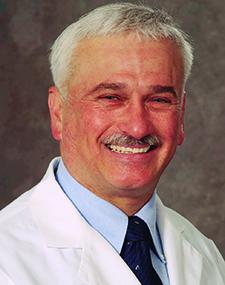
Timothy Albertson was awarded BARDA grant to run the clinical trial
IMAGE

Credit: UC Davis Health

Timothy Albertson, chair of internal medicine and specialist in pulmonary and critical care, is leading efforts at UC Davis Health to test a new antibody cocktail (REGN-COV2) as a prevention and treatment for COVID-19.

Albertson was awarded a grant to run the clinical trial at UC Davis Health. The grant comes from the Biomedical Advanced Research and Development Authority (BARDA), part of the office of the Assistant Secretary for Preparedness and Response at the U.S. Department of Health and Human Services.

The clinical trial is sponsored by Regeneron Pharmaceuticals. It is an adaptive phase I, II and III randomized, double-blinded, placebo-controlled study. It seeks to evaluate the efficacy and safety of REGN-COV2 (a combination of REGN10933+REGN10987 antibodies) in hospitalized adult patients with COVID-19. It builds on encouraging findings from a set of studies that showed the neutralizing impact of REGN10933 and REGN10987.

“We are very excited to test this antibody combination as a possible treatment to COVID-19,” Albertson said. “We are all up and running on this clinical trial and will start patient recruitment soon.”

At this time, there is no approved treatment that specifically targets SARS-CoV-2.

Disabling the SARS-CoV-2 Spike protein

The spike proteins on the outer envelope of coronaviruses allow entry and bind to the host cells. They appear to be central to why SARS-CoV-2 is so infectious. Previous studies have found that the viral infectivity of coronaviruses such as SARS-CoV and MERS-CoV was reduced when neutralizing antibodies were used against spike protein, blocking the host cell entry.

Currently, there are multiple efforts to develop antibodies that target the spike protein. Regeneron is developing and testing fully human, neutralizing monoclonal antibodies (mAbs) directed against the spike protein of SARS-CoV-2 for the treatment and prevention of COVID-19.

Regeneron antibody cocktail as potential COVID-19 treatment

To this end, Regeneron developed the REGN-COV2 antibodies to bind to the SARS-CoV-2 spike protein and block its interaction with the host receptor, which is expected to neutralize the virus.

The clinical trial will test the safety, tolerability and efficacy of REGN-COV2 as a promising therapeutic strategy to reduce SARS-CoV-2 viral shedding and COVID-19 disease progression.

###

Information on the clinical study (# NCT04426695), titled Safety, Tolerability, and Efficacy of Anti-Spike (S) SARS-CoV-2 Monoclonal Antibodies for Hospitalized Adult Patients With COVID-19, can be found online. The clinical trial launched June 11.

Media Contact
Nadine Yehya
[email protected]

Original Source

https://health.ucdavis.edu/health-news/contenthub/uc-davis-health-tests-monoclonal-antibodies-as-potential-covid-19-treatment-/2020/07

Tags: Clinical TrialsMedicine/HealthPharmaceutical ScienceVaccines
Share12Tweet8Share2ShareShareShare2

Related Posts

Cutting Electrolyte Reduction Boosts High-Energy Battery Performance

Cutting Electrolyte Reduction Boosts High-Energy Battery Performance

December 19, 2025
Microenvironment Shapes Gold-Catalysed CO2 Electroreduction

Microenvironment Shapes Gold-Catalysed CO2 Electroreduction

December 11, 2025

Photoswitchable Olefins Enable Controlled Polymerization

December 11, 2025

Cation Hydration Entropy Controls Chloride Ion Diffusion

December 10, 2025
Please login to join discussion

POPULAR NEWS

  • blank

    PTSD, Depression, Anxiety in Childhood Cancer Survivors, Parents

    65 shares
    Share 26 Tweet 16
  • NSF funds machine-learning research at UNO and UNL to study energy requirements of walking in older adults

    71 shares
    Share 28 Tweet 18
  • Exploring Audiology Accessibility in Johannesburg, South Africa

    52 shares
    Share 21 Tweet 13
  • Nurses’ Views on Online Learning: Effects on Performance

    71 shares
    Share 28 Tweet 18

About

We bring you the latest biotechnology news from best research centers and universities around the world. Check our website.

Follow us

Recent News

Assessing AI Toolchains for Literature Reviews: A Rubric Approach

Infinite Hidden Markov Models Decode Learning Complexities

UCHL1 Boosts Twist1 Stability, Fuels Lung Cancer Metastasis

Subscribe to Blog via Email

Enter your email address to subscribe to this blog and receive notifications of new posts by email.

Join 71 other subscribers
  • Contact Us

Bioengineer.org © Copyright 2023 All Rights Reserved.

Welcome Back!

Login to your account below

Forgotten Password?

Retrieve your password

Please enter your username or email address to reset your password.

Log In
No Result
View All Result
  • Homepages
    • Home Page 1
    • Home Page 2
  • News
  • National
  • Business
  • Health
  • Lifestyle
  • Science

Bioengineer.org © Copyright 2023 All Rights Reserved.