• HOME
  • NEWS
  • EXPLORE
    • CAREER
      • Companies
      • Jobs
    • EVENTS
    • iGEM
      • News
      • Team
    • PHOTOS
    • VIDEO
    • WIKI
  • BLOG
  • COMMUNITY
    • FACEBOOK
    • INSTAGRAM
    • TWITTER
Sunday, June 28, 2026
BIOENGINEER.ORG
No Result
View All Result
  • Login
  • HOME
  • NEWS
  • EXPLORE
    • CAREER
      • Companies
      • Jobs
        • Lecturer
        • PhD Studentship
        • Postdoc
        • Research Assistant
    • EVENTS
    • iGEM
      • News
      • Team
    • PHOTOS
    • VIDEO
    • WIKI
  • BLOG
  • COMMUNITY
    • FACEBOOK
    • INSTAGRAM
    • TWITTER
  • HOME
  • NEWS
  • EXPLORE
    • CAREER
      • Companies
      • Jobs
        • Lecturer
        • PhD Studentship
        • Postdoc
        • Research Assistant
    • EVENTS
    • iGEM
      • News
      • Team
    • PHOTOS
    • VIDEO
    • WIKI
  • BLOG
  • COMMUNITY
    • FACEBOOK
    • INSTAGRAM
    • TWITTER
No Result
View All Result
Bioengineer.org
No Result
View All Result
Home NEWS Science News

UBC invention uses bacteria to purify water

Bioengineer by Bioengineer
April 4, 2017
in Science News
Reading Time: 2 mins read
0
Share on FacebookShare on TwitterShare on LinkedinShare on RedditShare on Telegram
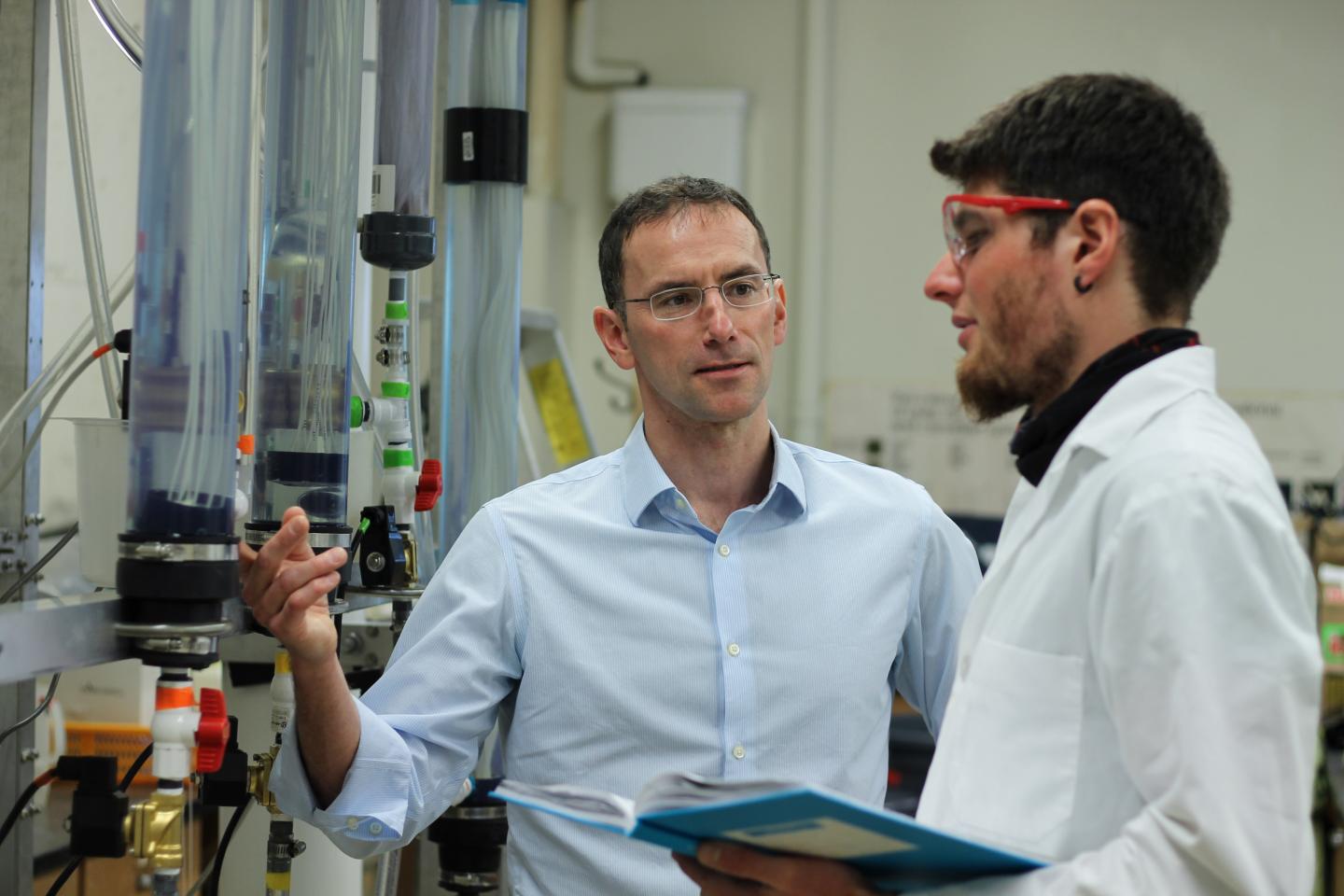
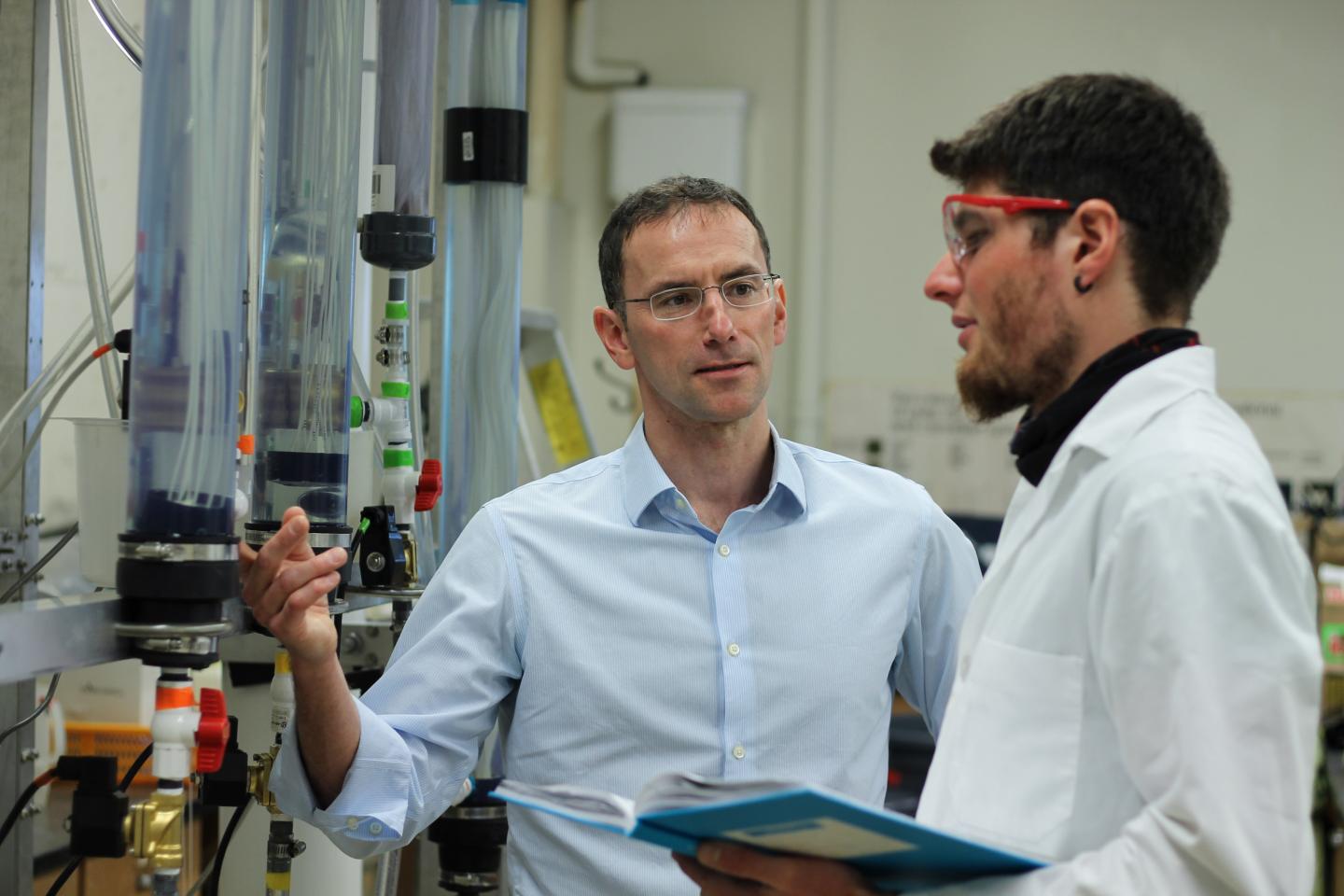
IMAGE

Credit: Clare Kiernan/University of British Columbia

A University of British Columbia-developed system that uses bacteria to turn non-potable water into drinking water will be tested next week in West Vancouver prior to being installed in remote communities in Canada and beyond.

The system consists of tanks of fibre membranes that catch and hold contaminants–dirt, organic particles, bacteria and viruses–while letting water filter through. A community of beneficial bacteria, or biofilm, functions as the second line of defence, working in concert to break down pollutants.

"Membrane treatment can remove over 99.99 per cent of contaminants, making them ideal for making drinking water," said project lead Pierre Bérubé, a UBC civil engineering professor who developed the system with support from the federally funded Canada-India research organization IC-IMPACTS.

Membrane water treatment is not new, but Bérubé says the modifications developed by his team, described recently in Water Research, produce an even more effective solution.

"Our system is the first to use gravity to scour and remove captured contaminants, which otherwise accumulate and clog the membrane. It's low-maintenance and as efficient as conventional approaches that need chemicals and complex mechanical systems to keep the membranes clean," said Bérubé. "The biofilm also helps by essentially eating away at the captured contaminants. You just open and close a few valves every 24 hours in order to 'lift' the water and let gravity and biology do their thing. This means significant savings in time and money over the lifetime of the system."

West Vancouver was chosen for pilot testing because of its proximity, but the eventual goal is to install similar systems for communities where clean drinking water is hard to come by.

"Access to clean drinking water is a constant challenge for millions of people around the world. Our goal is to provide a model for low-cost, effective water treatment for communities, and to help locals help themselves as they build, operate and even expand their water treatment plants," said Bérubé.

###

Watch video: https://youtu.be/gNnxiN3g1Bs

Flickr gallery: https://www.flickr.com/photos/ubcpublicaffairs/albums/72157678671920604

"Operation of passive membrane systems for drinking water treatment" was published February 2017 in Water Research. To download a copy, visit http://www.sciencedirect.com/science/article/pii/S0043135417301641

Media Contact

Lou Bosshart
[email protected]
604-999-0473
@UBCnews

http://www.ubc.ca

############

Story Source: Materials provided by Scienmag

Share12Tweet8Share2ShareShareShare2

Related Posts

Tracking Lanthanide-Labeled Microplastics in Plants

June 25, 2026

POSTECH Researchers Slash Cost of Reconstituted Cell-Free Systems by 95%

June 25, 2026

AI and Physics Collaborate to Design Advanced Hydrogen Storage Materials

June 25, 2026

Natural Hallucinogens: Evolution’s Ecological Tools, Not Mere Chemical Byproducts

June 25, 2026
Please login to join discussion

POPULAR NEWS

  • Saying Goodbye to PGY-6: Pediatric Fellowship Realities

    103 shares
    Share 41 Tweet 26
  • Multi-Hospital Study Reveals Long Covid Burden Is Twice as High as Current Estimates

    92 shares
    Share 36 Tweet 23
  • Detection of EDCs in Breast Milk and Infant Urine Up to Six Months Highlights Early Exposure Risks

    77 shares
    Share 31 Tweet 19
  • New Drug Candidate Developed at McMaster Shows Potential for Treating Brain Cancer

    58 shares
    Share 23 Tweet 15

About

We bring you the latest biotechnology news from best research centers and universities around the world. Check our website.

Follow us

Recent News

Tracking Lanthanide-Labeled Microplastics in Plants

POSTECH Researchers Slash Cost of Reconstituted Cell-Free Systems by 95%

AI and Physics Collaborate to Design Advanced Hydrogen Storage Materials

Subscribe to Blog via Email

Success! An email was just sent to confirm your subscription. Please find the email now and click 'Confirm' to start subscribing.

Join 82 other subscribers
  • Contact Us

Bioengineer.org © Copyright 2023 All Rights Reserved.

Welcome Back!

Login to your account below

Forgotten Password?

Retrieve your password

Please enter your username or email address to reset your password.

Log In
No Result
View All Result
  • Homepages
    • Home Page 1
    • Home Page 2
  • News
  • National
  • Business
  • Health
  • Lifestyle
  • Science

Bioengineer.org © Copyright 2023 All Rights Reserved.