• HOME
  • NEWS
  • EXPLORE
    • CAREER
      • Companies
      • Jobs
    • EVENTS
    • iGEM
      • News
      • Team
    • PHOTOS
    • VIDEO
    • WIKI
  • BLOG
  • COMMUNITY
    • FACEBOOK
    • INSTAGRAM
    • TWITTER
Saturday, May 23, 2026
BIOENGINEER.ORG
No Result
View All Result
  • Login
  • HOME
  • NEWS
  • EXPLORE
    • CAREER
      • Companies
      • Jobs
        • Lecturer
        • PhD Studentship
        • Postdoc
        • Research Assistant
    • EVENTS
    • iGEM
      • News
      • Team
    • PHOTOS
    • VIDEO
    • WIKI
  • BLOG
  • COMMUNITY
    • FACEBOOK
    • INSTAGRAM
    • TWITTER
  • HOME
  • NEWS
  • EXPLORE
    • CAREER
      • Companies
      • Jobs
        • Lecturer
        • PhD Studentship
        • Postdoc
        • Research Assistant
    • EVENTS
    • iGEM
      • News
      • Team
    • PHOTOS
    • VIDEO
    • WIKI
  • BLOG
  • COMMUNITY
    • FACEBOOK
    • INSTAGRAM
    • TWITTER
No Result
View All Result
Bioengineer.org
No Result
View All Result
Home NEWS Science News Biology

UAlberta and McGill scientists uncover a hidden calcium cholesterol connection

Bioengineer by Bioengineer
July 26, 2017
in Biology
Reading Time: 2 mins read
0
Share on FacebookShare on TwitterShare on LinkedinShare on RedditShare on Telegram
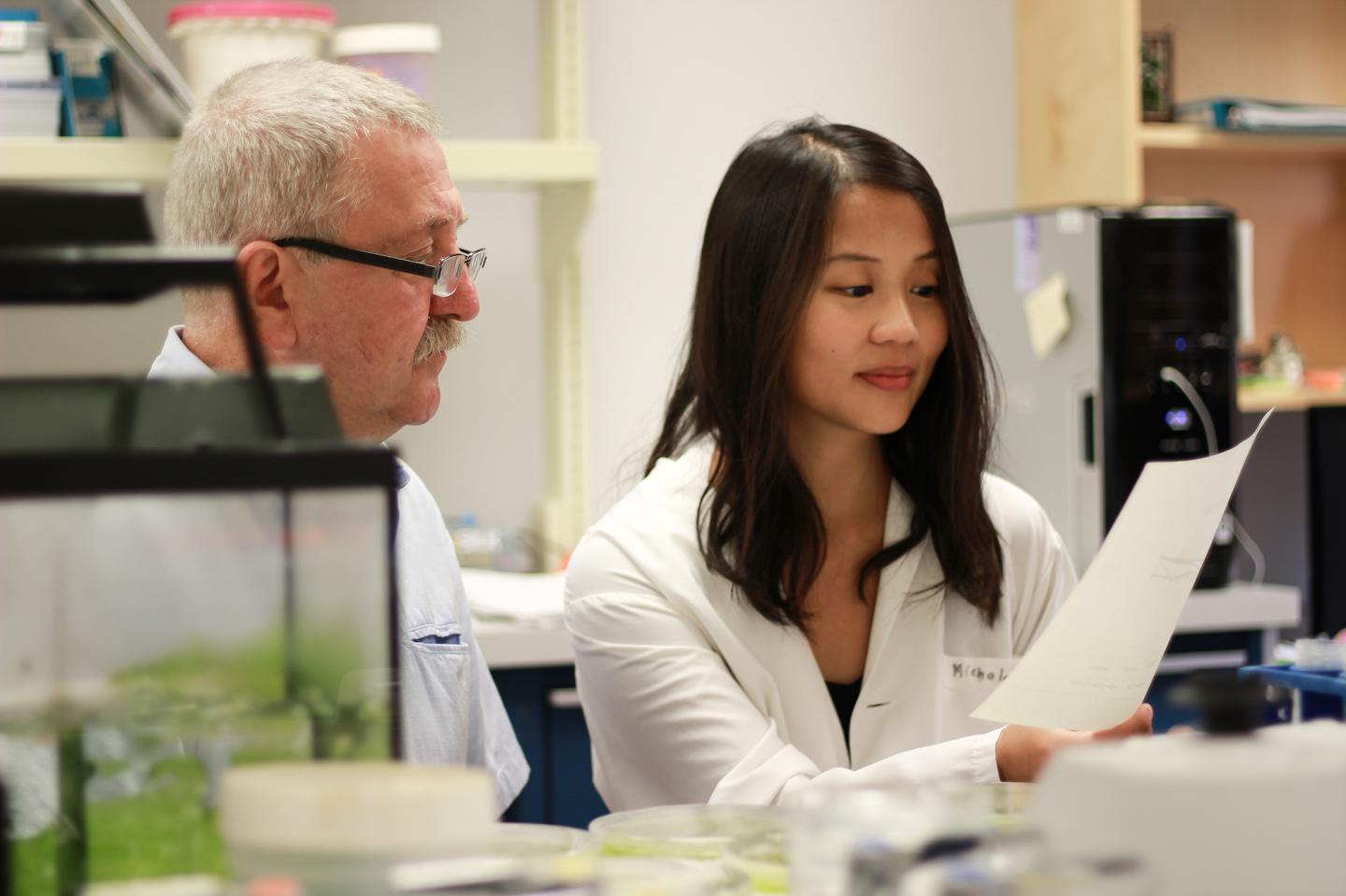
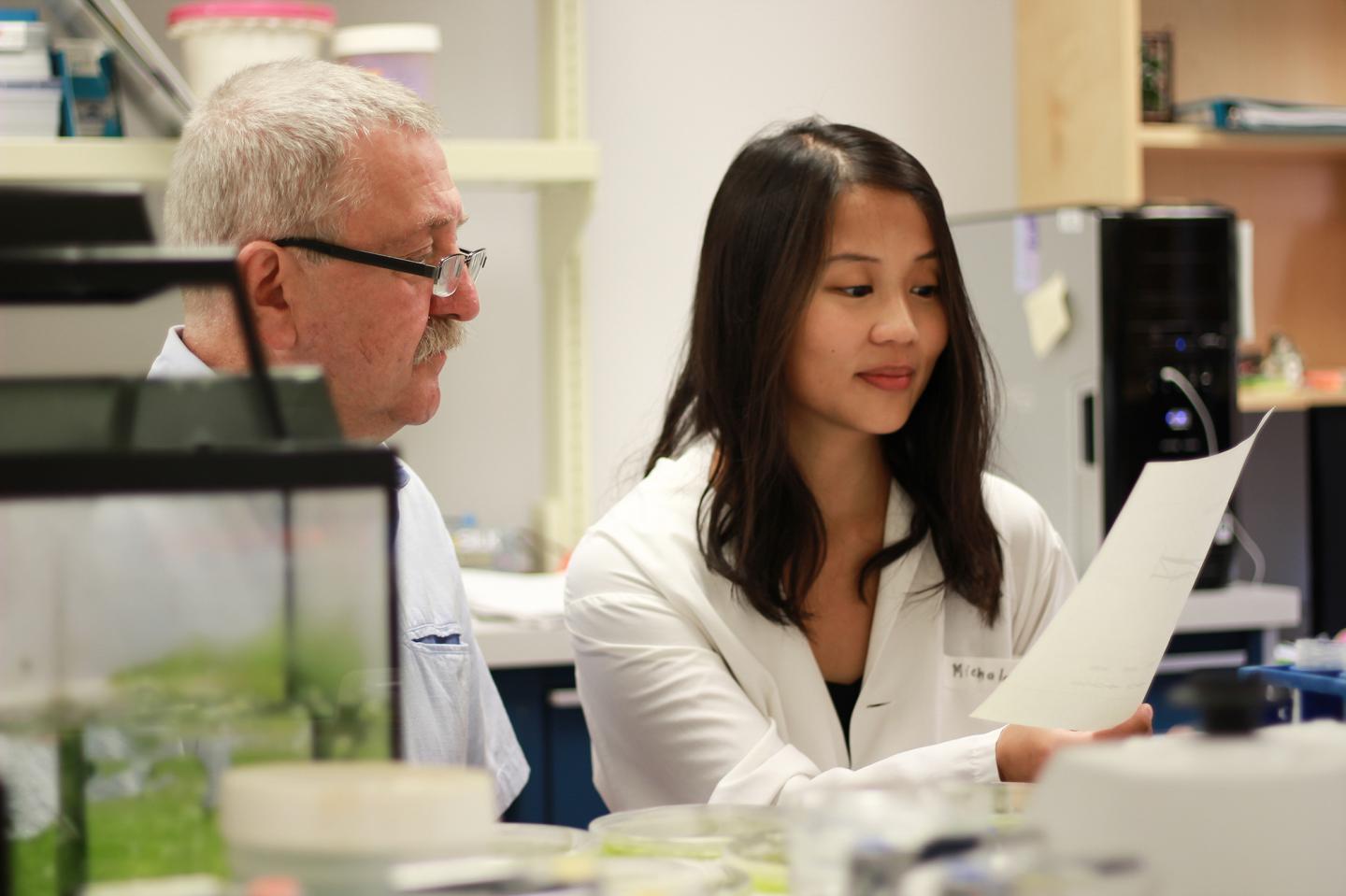
IMAGE

Credit: Melissa Fabrizio

(Edmonton) It's well known that calcium is essential for strong bones and teeth, but new research shows it also plays a key role in moderating another important aspect of health–cholesterol.

Scientists at the University of Alberta and McGill University have discovered a direct link between calcium and cholesterol, a discovery that could pave the way for new ways of treating high blood cholesterol.

The researchers began the work after having their curiosity piqued while studying the role of a calcium-binding protein. They noticed an extreme rise of blood cholesterol concentration in mice when the protein was not present. To follow up on this observation, Marek Michalak with graduate student Wen-An Wang (University of Alberta) and Luis Agellon (McGill University) teamed up with geneticist Joohong Ahnn (Hanyang University, Korea) and discovered that the physiological link between calcium and cholesterol is also preserved in worms.

"There is a mechanism inside the cell that senses when there is not enough cholesterol present and turns on the machinery to make more," said Michalak, a distinguished university professor in the University of Alberta's Department of Biochemistry. "What we found is that a lack of calcium can hide cholesterol from this machinery. If you lose calcium, your synthetic machinery thinks there's no cholesterol and it starts making more even if there is already enough."

High blood cholesterol is a known risk factor for developing heart disease. "Factors that affect blood cholesterol concentration have been studied for a long time," said Agellon, a professor at McGill's School of Human Nutrition. "The general belief was that cholesterol controlled its own synthesis inside of cells, and then we discovered in our labs that calcium can control that function too. Finding this link potentially opens a door to developing new ways of controlling cholesterol metabolism."

The researchers consider their finding a significant step toward developing different approaches to patient care in the future, but there is more work to be done. They are now looking to discover the common factor that allows calcium and cholesterol to communicate with each other in the cell and have received a four-year grant worth $456,000 from the Canadian Institutes of Health Research to continue their work.

###

This work was supported by the Canadian Institutes of Health Research grants MOP-15291, MOP-15415, MOP-53050 to M.M. ; MOP-15291 and MOP-86750 to L.B.A.; MOP-69043 to R.L.; and by the Basic Science Research Program from the National Research Foundation of Korea (NRF) (no. 2015R1D1A1A01059062 to S-K.L. and no. 2015R1D1A1A01058179 to J.A.). C. elegans strains were obtained from Caenorhabditis Genetics Center, which is funded by NIH Office of Research Infrastructure Program (P40 OD010440).

Loss of Calreticulin Uncovers a Critical Role for Calcium in Regulating Cellular Lipid Homeostasis, by Wen-An Wang et al., Scientific Reports

Media Contact

Laura Vega
[email protected]
587-873-9439
@ualberta_fomd

http://www.med.ualberta.ca

Related Journal Article

http://dx.doi.org/10.1038/s41598-017-05734-x

Share12Tweet8Share2ShareShareShare2

Related Posts

New Maps Reveal How European Landscapes Can Simultaneously Promote Climate Action and Biodiversity Conservation — Biology

New Maps Reveal How European Landscapes Can Simultaneously Promote Climate Action and Biodiversity Conservation

May 22, 2026
University of Cincinnati Structural Biologists Achieve World First in Visualizing Crucial Cell Protein — Biology

University of Cincinnati Structural Biologists Achieve World First in Visualizing Crucial Cell Protein

May 22, 2026

Reducing Fertilizer Use Through Strategic Scientific Partnerships

May 22, 2026

How the Gut Reprograms the Brain to Crave Essential Nutrients

May 22, 2026
Please login to join discussion

POPULAR NEWS

  • blank

    New Study Reveals Plants Can Detect the Sound of Rain

    734 shares
    Share 293 Tweet 183
  • ESMO 2025: mRNA COVID Vaccines Enhance Efficacy of Cancer Immunotherapy

    310 shares
    Share 124 Tweet 78
  • Research Indicates Potential Connection Between Prenatal Medication Exposure and Elevated Autism Risk

    847 shares
    Share 339 Tweet 212
  • Breastmilk Balances E. coli and Beneficial Bacteria in Infant Gut Microbiomes

    58 shares
    Share 23 Tweet 15

About

We bring you the latest biotechnology news from best research centers and universities around the world. Check our website.

Follow us

Recent News

New Maps Reveal How European Landscapes Can Simultaneously Promote Climate Action and Biodiversity Conservation

Stress Exposure Linked to Discomfort in Preterm Infants

Brain-Inspired Navigation Revolutionizes Robot Mobility

Subscribe to Blog via Email

Enter your email address to subscribe to this blog and receive notifications of new posts by email.

Join 82 other subscribers
  • Contact Us

Bioengineer.org © Copyright 2023 All Rights Reserved.

Welcome Back!

Login to your account below

Forgotten Password?

Retrieve your password

Please enter your username or email address to reset your password.

Log In
No Result
View All Result
  • Homepages
    • Home Page 1
    • Home Page 2
  • News
  • National
  • Business
  • Health
  • Lifestyle
  • Science

Bioengineer.org © Copyright 2023 All Rights Reserved.