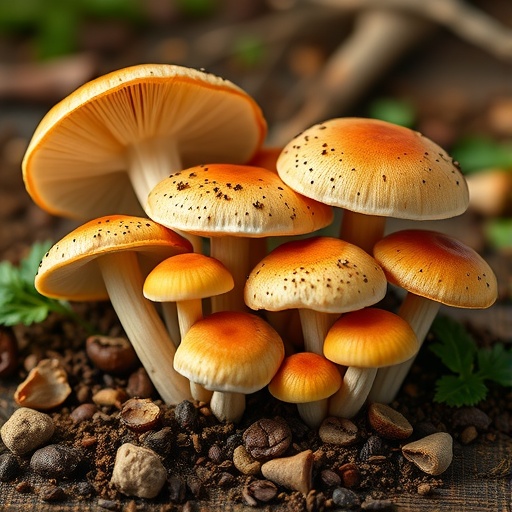
Europe’s budding fascination with fungi as food is met with a striking level of confusion among the public, a newly published study reveals. Despite the rising interest in sustainable dietary alternatives, large swathes of people across three major European Union countries — Germany, Spain, and Sweden — struggle to understand what mycoprotein really is. This fungal protein source, hailed for its nutritional benefits and environmental potential, remains misunderstood, with two-thirds of survey respondents failing to identify it correctly. The findings highlight a critical disconnect between food innovation and consumer awareness that could influence future acceptance and market success.
Mycoprotein, a protein derived from filamentous fungi, stands at the forefront of next-generation sustainable foods. Its cultivation involves fermenting fungal spores, primarily from Fusarium venenatum, under controlled conditions to produce a dense, nutritious biomass rich in protein and fiber. Despite its commercial availability for decades, including as a meat substitute in popular products, public knowledge about mycoprotein’s biological origin and nutritional profile remains limited. This recent survey portrays a landscape where familiarity with fungal food exists but with pervasive misconceptions regarding its classification and cultivation.
The survey exposed that nearly half of respondents erroneously categorize mushrooms, a visually familiar fungal organism, as plants. This fundamental misclassification reflects broader gaps in biological literacy, potentially muddling the conversation about fungi’s role within the food ecosystem. Mushrooms, like mycoprotein fungi, belong to an entirely distinct kingdom apart from plants, possessing unique growth cycles, metabolic pathways, and nutritional values. The study underlines the necessity for more targeted public education campaigns to clarify these distinctions and amplify fungi’s position as a sustainable protein source.
Delving deeper into cultivation timelines, the research contrasts fungal food production with traditional livestock and plant-based agriculture. Mycoprotein production cycles happen on a dramatically shorter scale, often completing within a matter of days to weeks under fermentative conditions, bypassing the extensive land, water, and feed requirements synonymous with animal husbandry. This rapid turnover not only enhances food production efficiency but also mitigates environmental footprints, offering compelling reasons to elevate fungal proteins within future food systems. Yet, the knowledge gap among consumers means these advantages remain underappreciated in everyday purchasing decisions.
Sustainability emerges as a central theme in the study’s evaluation of fungi-based foods. Unlike conventional protein sources, fungi cultivation generates remarkably low greenhouse gas emissions and requires minimal agricultural inputs. This characteristic aligns with pressing global imperatives to reduce agriculture-driven climate impacts. However, public uncertainty clouds recognition of these benefits, often overshadowed by skepticism regarding novel foods. The results advocate for integrating sustainability metrics into consumer education, framing fungi not merely as alternative proteins but as pivotal contributors to planetary health.
On the nutritional front, mycoprotein boasts a complete amino acid profile, dietary fiber, and low levels of saturated fats, positioning it as an excellent dietary substitute for meat. The study reveals inconsistent or incorrect perceptions about these nutritional attributes among the surveyed populations, with many unaware of mycoprotein’s health benefits. The misunderstanding extends into broader dietary narratives, where fungal foods are sometimes lumped together with fungi like mushrooms without nuance. Scientifically accurate communication is essential to bridge this knowledge divide, ensuring consumers appreciate the full spectrum of nutritional advantages fungi-based foods offer.
The cross-country comparison reveals variations in terminology and awareness linked to linguistic and cultural contexts. For instance, the way mycoprotein or fungal food items are described in different EU languages influences recognition and acceptance rates. This aspect draws attention to the critical role of language in shaping food norms and market behavior. Policymakers and marketers must factor in localized communication strategies to harness the full potential of fungi-based proteins across diverse European contexts.
This study, funded by the Swedish Research Council FORMAS and published in PLOS One, carries authoritative weight, with no competing interests declared by the authors. Its rigorous methodological approach involved extensive surveys and analytical scrutiny, providing a data-driven blueprint for addressing public misconceptions. The authors emphasize that resolving these knowledge gaps will be essential not only for consumer acceptance but also for scaling up fungi-based food production sustainably and ethically across Europe.
Science has extensively documented fungi’s biotechnological promise, yet this investigation spotlights the lag in assimilating scientific knowledge into public consciousness. Closing this divide demands collaborative efforts involving educators, food scientists, policymakers, and the food industry. Innovative outreach, including immersive experiences, transparent labeling, and educational curricula incorporating fungal biology and sustainability, could transform public perception and catalyze a fungi food revolution.
Moreover, the study’s insights have implications reaching beyond Europe. As global demand for sustainable protein soars, fungi-based foods offer a scalable solution adaptable to varying climatic and economic conditions worldwide. The documented misconceptions underscore a universal need for clear, accessible science communication that can foster global acceptance and integration of fungal proteins into mainstream diets.
Ultimately, pioneering foods like mycoprotein encapsulate both great promise and profound challenges. While their environmental and nutritional virtues are well-supported in the scientific literature, the quest to embed new food paradigms into cultural habits is intricate and necessitates patience, precision, and persistence. This study serves as a critical checkpoint, reminding scientists and food innovators that consumer knowledge and trust are indispensable partners in advancing sustainable food futures.
In conclusion, as the world pursues climate-resilient and nutrition-sensitive food solutions, fungi-based foods rise as an unsung hero blessed with extraordinary potential. Yet, unlocking this potential fully demands confronting and overcoming public misunderstandings. Empowering consumers with clear, accurate information about what mycoprotein really is, how it is cultivated, and its benefits can transform hesitation into enthusiasm. Thus, fungi are not just food’s future but a beacon of sustainable innovation demanding deserved recognition in the public eye.
Subject of Research: Public perceptions and knowledge of fungi-based foods, including mycoprotein, across Germany, Spain, and Sweden with focus on terminology, cultivation cycles, sustainability, and nutritional understanding.
Article Title: Fungi-based food in the public eye: Terminology, cultivation timelines, sustainability, and nutrition across three EU countries
News Publication Date: 15-Apr-2026
Web References: http://dx.doi.org/10.1371/journal.pone.0345657
Image Credits: Hellwig, Taherzadeh, 2026, PLOS One, CC-BY 4.0
Keywords: mycoprotein, fungi-based foods, public perception, sustainability, nutrition, cultivation timelines, Europe, food innovation, fungal proteins
Tags: classification of mushrooms as plantsedible fungi in European dietsEuropean consumer confusion about fungifungal protein market acceptanceFusarium venenatum fermentationmeat substitutes from fungimisconceptions about mushroomsmycoprotein awareness in Europemycoprotein nutritional benefitspublic knowledge of fungal foodssustainability of fungal proteinsustainable fungal protein sources