• HOME
  • NEWS
  • EXPLORE
    • CAREER
      • Companies
      • Jobs
    • EVENTS
    • iGEM
      • News
      • Team
    • PHOTOS
    • VIDEO
    • WIKI
  • BLOG
  • COMMUNITY
    • FACEBOOK
    • INSTAGRAM
    • TWITTER
Thursday, October 29, 2026
BIOENGINEER.ORG
No Result
View All Result
  • Login
  • HOME
  • NEWS
  • EXPLORE
    • CAREER
      • Companies
      • Jobs
        • Lecturer
        • PhD Studentship
        • Postdoc
        • Research Assistant
    • EVENTS
    • iGEM
      • News
      • Team
    • PHOTOS
    • VIDEO
    • WIKI
  • BLOG
  • COMMUNITY
    • FACEBOOK
    • INSTAGRAM
    • TWITTER
No Result
View All Result
Bioengineer.org
No Result
View All Result
Home NEWS Science News Health

Two teenage case reports expose the diagnostic maze of adolescent delusional disorder

by
October 28, 2026
in Health
Reading Time: 2 mins read
0
Two teenage case reports expose the diagnostic maze of adolescent delusional disorder

Two teenage case reports expose the diagnostic maze of adolescent delusional disorder

Share on FacebookShare on TwitterShare on LinkedinShare on RedditShare on Telegram

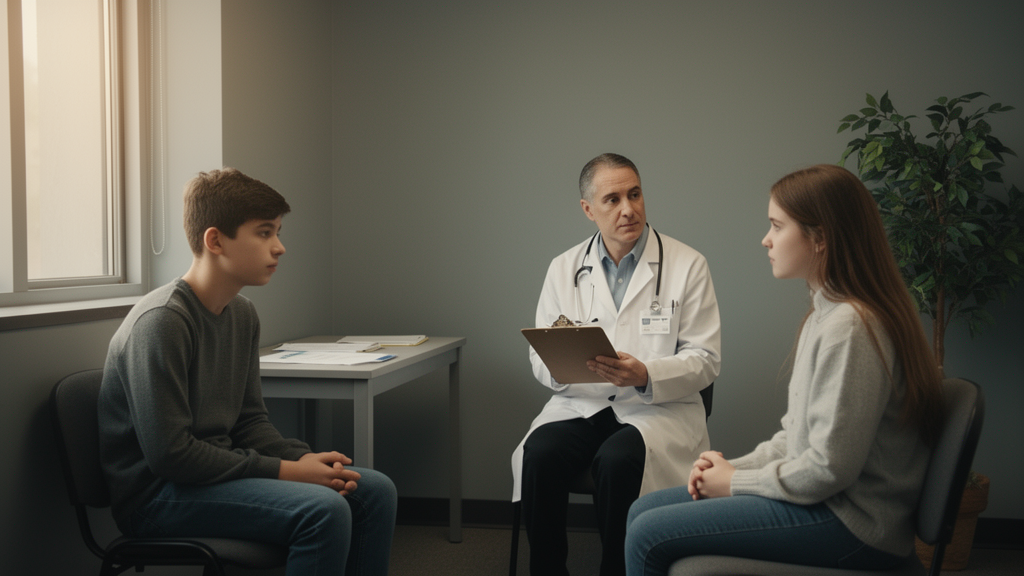
Delusional disorder is rare in adolescence and unusually easy to miss. Two case reports from a Child and Adolescent Psychiatry Unit, published in BMC Psychiatry, illustrate why: both teenagers presented with prominent delusional or delusion-like beliefs, yet neither showed the core features of schizophrenia, and both functioned relatively well outside the narrow circle of their delusions. The authors, led by Sarolta Dósa and Györgyi Csábi, argue that such cases deserve wider reporting to sharpen clinical awareness of how differently psychosis-spectrum phenomena can appear during adolescent development.

The first case involved a 14-year-old girl with erotomanic delusions centred on a former teacher — the fixed conviction of a special romantic connection — accompanied by secondary persecutory and referential ideas and delusional misidentification phenomena. The second concerned a 15-year-old boy whose fixed somatic beliefs about his skin colour emerged against a backdrop of prominent body dysmorphic symptoms and severe anxiety, ultimately culminating in a suicide attempt. In both patients, functioning outside the delusional context remained relatively preserved, a hallmark that often delays recognition because the non-bizarre content of the beliefs can appear plausible in everyday settings.

Treatment combined second-generation antipsychotics with psychotherapeutic and family-based approaches. Clinical improvement was observed in both adolescents, although the authors note that treatment response and clinical course differed markedly between the two — a reminder that a shared diagnostic label can conceal very different trajectories. The boy’s case in particular highlights the phenomenological overlap between delusional disorder and body dysmorphic disorder, where an overvalued belief about appearance can sit on a continuum from intrusive worry to fixed, unshakeable conviction.

The central lesson the authors draw is methodological rather than pharmacological: careful phenomenological assessment of the content, conviction, insight and functional impact of a patient’s beliefs is essential for accurate diagnosis, alongside attention to comorbidities and the developmental context. Because diagnosis is often delayed and initial clinical contact frequently happens outside psychiatric settings, they argue that increased awareness among clinicians — and willingness to report adolescent cases — may support earlier recognition, improve therapeutic engagement and help preserve psychosocial functioning during a critical developmental window. As case reports, the findings describe individual patients and cannot establish treatment guidelines, but they offer a concrete template for the diagnostic reasoning that adolescent-onset delusional presentations demand.

Subject of Research: Adolescent-onset delusional disorder and its diagnostic overlap with other psychiatric conditions

Article Title: Adolescent-onset delusional disorder: two case reports illustrating diagnostic complexity and phenomenological overlap

Article References: Dósa, S., Sándor-Bajusz, K. A., Pahocsa, J., Csáki, M., Tényi, T., & Csábi, G. (2026). Adolescent-onset delusional disorder: two case reports illustrating diagnostic complexity and phenomenological overlap. BMC Psychiatry. https://doi.org/10.1186/s12888-026-08774-8

Image Credits: AI Generated

DOI: 10.1186/s12888-026-08774-8

Keywords: delusional disorder, adolescence, case reports, erotomanic delusions, body dysmorphic disorder, psychiatry, diagnosis, antipsychotics, phenomenology, BMC Psychiatry, Adolescent-onset, delusional

News Source: Ophelia Keating. (October 28, 2026). Two teenage case reports expose the diagnostic maze of adolescent delusional disorder. Scienmag.


Tags: adolescenceAdolescent-onsetantipsychoticsBMC PsychiatryBody dysmorphic disordercase reportsdelusionaldelusional disorderdiagnosiserotomanic delusionsphenomenologyPsychiatry
Share12Tweet7Share2ShareShareShare1

Related Posts

Nursing decision support tool linked to lower neonatal hypoglycemia rates in hospital study

Nursing decision support tool linked to lower neonatal hypoglycemia rates in hospital study

October 29, 2026
IVF Study Finds Progesterone-to-Oocyte Ratio Adds Little Beyond Its Parts

IVF Study Finds Progesterone-to-Oocyte Ratio Adds Little Beyond Its Parts

October 29, 2026

Mitochondrial Cleanup and a DNA Sensor May Team Up to Drive Stroke Inflammation

October 29, 2026

Smartphones, Glucose Sensors and Voice May Reveal Diabetic Minds, Review Finds

October 29, 2026

POPULAR NEWS

  • Nursing decision support tool linked to lower neonatal hypoglycemia rates in hospital study

    Nursing decision support tool linked to lower neonatal hypoglycemia rates in hospital study

    29 shares
    Share 12 Tweet 7
  • IVF Study Finds Progesterone-to-Oocyte Ratio Adds Little Beyond Its Parts

    29 shares
    Share 12 Tweet 7
  • Mitochondrial Cleanup and a DNA Sensor May Team Up to Drive Stroke Inflammation

    29 shares
    Share 12 Tweet 7
  • Smartphones, Glucose Sensors and Voice May Reveal Diabetic Minds, Review Finds

    29 shares
    Share 12 Tweet 7

About

We bring you the latest biotechnology news from best research centers and universities around the world. Check our website.

Follow us

Recent News

Nursing decision support tool linked to lower neonatal hypoglycemia rates in hospital study

IVF Study Finds Progesterone-to-Oocyte Ratio Adds Little Beyond Its Parts

Mitochondrial Cleanup and a DNA Sensor May Team Up to Drive Stroke Inflammation

Subscribe to Blog via Email

Enter your email address to subscribe to this blog and receive notifications of new posts by email.

Join 85 other subscribers
  • Contact Us

Bioengineer.org © Copyright 2023 All Rights Reserved.

Welcome Back!

Login to your account below

Forgotten Password?

Retrieve your password

Please enter your username or email address to reset your password.

Log In
No Result
View All Result
  • Homepages
    • Home Page 1
    • Home Page 2
  • News
  • National
  • Business
  • Health
  • Lifestyle
  • Science

Bioengineer.org © Copyright 2023 All Rights Reserved.