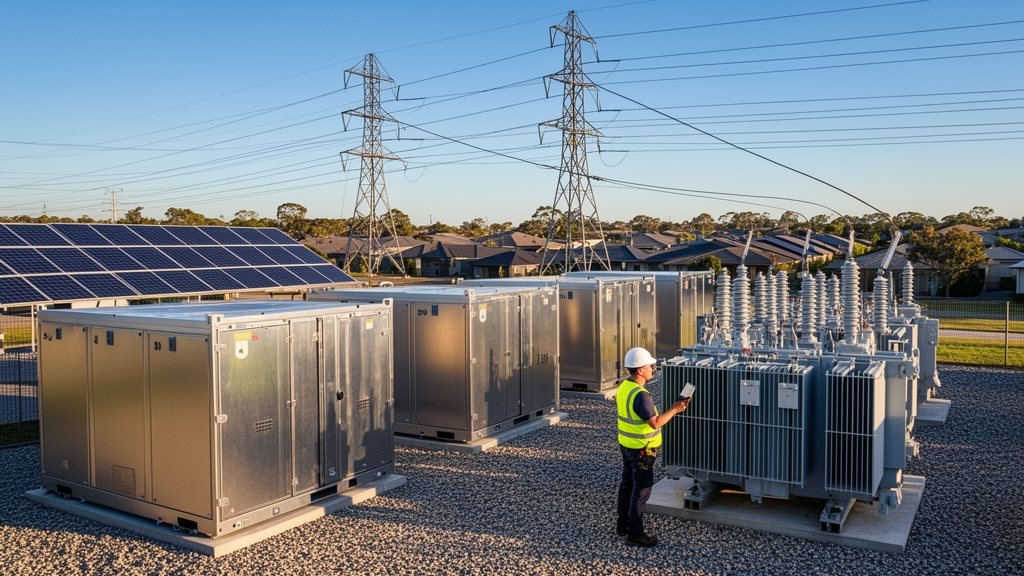
A semi-centralized energy management architecture for post-disaster distribution networks reduces the total value of lost load by 8.64 percent relative to decentralized management while ensuring microgrids suffer no increase in unserved load penalties. In a numerical study on a modified IEEE 123-bus network, researchers evaluated restoration after severe damage disconnected the distribution grid from upstream transmission supplies. Under fully decentralized operation, independent microgrids prioritized internal loads, yielding a total lost-load cost of $16,658.24. When managed through the proposed two-level sequential framework, coordinated power exchanges lowered total network outage costs to $15,219.41. Crucially, the mathematical model enforced explicit regional protection constraints transferring Level-1 aggregate lost-load benchmarks into Level-2 system optimization, ensuring that the lost-load value within each microgrid remained identical to its isolated performance while concentrating all restoration gains on vulnerable utility-owned distribution feeders.
The development of advanced operational restoration frameworks responds directly to infrastructural vulnerabilities caused by high-impact low-probability extreme weather events and natural hazards. Historical analyses show that natural disasters caused approximately 31 percent of worldwide power outages between 1965 and 2012, representing the second largest cause of electrical failures after equipment breakdowns. Between 2003 and 2012, 679 major power outages across the United States were attributed to natural disasters, causing severe disruptions and billions of dollars in economic damages. Notable international blackout events, including Hurricane Sandy, regional flooding in Australia, severe ice storms in China, the nationwide Turkish blackout in 2015, and destructive earthquakes in Bam and Kermanshah, demonstrate that conventional reliability planning cannot withstand extreme disturbances. Because prolonged outages can propagate catastrophic cascading failures through municipal water systems, telecommunications, healthcare facilities, and transportation networks, modern power engineering increasingly prioritizes resilience, defined as the capacity of a system to withstand, adapt to, and rapidly recover from severe structural disruptions.
Historically, utility resilience initiatives have emphasized physical reinforcement and capital-intensive hardening measures, including elevating substations above anticipated floodwaters, burying lines underground, reinforcing utility poles with protective wires, and executing extensive vegetation management. While physical retrofits provide substantial protection against high winds and storms, they require enormous capital expenditures; for instance, burying lines underground often costs several times more than constructing overhead lines at identical operating voltages. Furthermore, hardening against one hazard category can inadvertently amplify vulnerability to another, as seen when underground cables face severe water ingress during coastal flooding. Compounding this challenge, approximately 90 percent of weather-related outages originate within distribution networks rather than meshed transmission systems. Because distribution networks typically feature radial structures, conventional transmission resilience models cannot be applied directly. Consequently, operational post-disaster recovery solutions, specifically the interconnection of smart microgrids containing distributed generators, energy storage units, and controllable loads, have emerged as indispensable complements to physical infrastructure reinforcement.
To resolve operational trade-offs between centralized coordination and uncoordinated local autonomy, the researchers formulated a semi-centralized two-level sequential optimization framework based on mixed-integer linear programming. Rather than constructing a nested leader-follower bi-level problem, the model solves two distinct mathematical optimization stages successively. In Level 1, each microgrid and the remaining distribution network area independently executes local energy management using internal generation and storage assets, minimizing its local value of lost load. The resulting scalar objective values are then passed to Level 2 as binding upper bounds through an explicit protection constraint designated as Equation 35. At Level 2, the distribution network operator coordinates integrated dispatch across the entire network to minimize total system-wide value of lost load while guaranteeing that no microgrid suffers an aggregate penalty exceeding its Level-1 benchmark. Because only scalar loss values transfer between levels, individual dispatch decisions are not rigidly fixed, affording the central coordinator flexibility to adjust power flows while respecting regional operating interests.
The core optimization problem is formulated as a deterministic mixed-integer linear program where the primary objective minimizes the total duration-weighted value of lost load across a ten-hour post-event restoration horizon using one-hour scheduling intervals. To maintain computational tractability, physical network equations incorporate linearized steady-state power flows, branch-flow limits, and bus voltage bounds maintaining voltages within a plus-or-minus ten percent tolerance band. Distributed microturbines operate under active and reactive output limits, hourly ramp-rate limits, and cumulative fuel energy budgets. Electrical loads are mathematically partitioned into controllable and uncontrollable classifications. Controllable loads represent low-priority demands that can undergo continuous partial curtailment, assigned an importance weighting factor of one. Conversely, uncontrollable loads encompass critical, high-priority, and medium-priority services treated as discrete binary variables—either fully energized or completely disconnected—with relative importance weights determining their restoration preference during acute generation deficits.
The authors validated their sequential formulation on a modified IEEE 123-bus test network partitioned into four distinct microgrids and a residual distribution grid area. The computational model incorporated 10,270 decision variables, including 3,540 binary variables, and 20,940 operational constraints, solved within the GAMS software environment utilizing the CPLEX solver in 77.97 seconds. Across the system, generation resources included ten controllable microturbines distributed across key network nodes, rooftop solar photovoltaic installations, and wind turbine units. Renewable solar and wind sources operated exclusively with active power generation, requiring controllable microturbines to supply all network reactive power requirements. Stationary energy storage units with three hundred kilowatt-hour capacities and one hundred kilowatt charge and discharge ratings were deployed in Microgrids 2, 3, and 4. The post-disaster simulation modeled a severe three-hour storm commencing at 10:00 that severed the substation interconnection to the upstream transmission grid and inflicted physical damage on distribution lines 13–18, 25–26, and 53–54, necessitating islanded management until line repairs concluded ten hours later.
Simulations comparing centralized, decentralized, and semi-centralized architectures demonstrated clear operational distinctions across the post-disaster horizon. The fully centralized approach achieved the lowest system-wide value of lost load at $12,389.35 by pooling all resources unconditionally, but shifted heavy curtailment onto localized microgrids, raising lost-load costs in Microgrid 1 to $2,398.26 and in Microgrid 4 to $1,093.40. Conversely, the decentralized strategy insulated microgrids, achieving lost-load costs of $57.45 in Microgrid 1, $668.25 in Microgrid 2, $128.65 in Microgrid 3, and $0.00 in Microgrid 4, but caused severe unserved energy in the distribution system, yielding a municipal loss of $15,803.89 and a global total of $16,658.24. The proposed semi-centralized framework effectively harmonized these competing extremes. By enforcing Equation 35, the semi-centralized solution preserved microgrid lost-load totals exactly at their decentralized benchmarks—$57.45, $668.25, $128.65, and $0.00—while coordinated power transfers reduced distribution system losses to $14,365.06. This 9.10 percent reduction in distribution sector damage lowered the global objective to $15,219.41, capturing substantial system-wide benefits without compromising local microgrid protections.
The physical routing of electricity through the network was governed by seven strategic maneuvering tie-lines that adjusted switching states while preserving radial topology. Following the damage of feeder lines 13–18, 25–26, and 53–54, buses 18 through 33 were severed from the main distribution circuit. In both centralized and semi-centralized regimes, maneuvering line 135–18 remained continuously closed, restoring power to this isolated pocket from adjacent microgrid resources, whereas under decentralized management, line 135–18 remained open, causing complete blackout across those isolated buses. Similarly, maneuvering line 152–13 was closed at 13:00 in centralized operation and at 18:00 in semi-centralized operation to supply bus 52, while bus 53 remained unserved under all approaches. Analysis of stationary storage units revealed that all three batteries discharged steadily from their initial ninety percent state of charge down to their permissible twenty percent floor of sixty kilowatt-hours without recharging. Notably, controllable load shedding totaled 419.82 kilowatt-hours in the semi-centralized model, nearly identical to the decentralized outcome of 419.84 kilowatt-hours, showing that system gains stemmed from recovering high-priority uncontrollable loads.
To evaluate model stability under varying post-disaster circumstances, the researchers performed sensitivity analyses examining damage topologies, repair timelines, and load-weighting structures. Introducing mild additional damage through the failure of line 91–92 had minimal impact, edging total unserved energy from 6,087.284 to 6,087.517 kilowatt-hours and preserving overall restored energy at 68.45 percent. In sharp contrast, simulating severe topological disruption through the supplemental loss of line 44–47 elevated total unserved energy to 6,254.353 kilowatt-hours and caused critical-load unserved energy to surge from zero to 1,907.251 kilowatt-hours, driving the weighted penalty from 15,968.039 to 29,814.863. Accelerating emergency repairs from ten hours to five hours permitted damaged circuits to reclose at 18:00, expanding energy restoration from 68.453 to 70.768 percent and lowering weighted losses to 14,622.946. Furthermore, assessing load-weighting ratios across lower-contrast scales of 3:2:1 and higher-contrast scales of 20:5:1 confirmed algorithmic robustness, as baseline dispatch configurations remained within 0.1 percent of certified optimality bounds while maintaining zero unserved critical load.
To confirm that dynamic reconfiguration did not produce illegal disconnected sub-islands lacking local voltage references, the authors executed post-optimization topological verifications across all 168 identified energized island-time intervals. Every energized island across the centralized, decentralized, and semi-centralized solutions contained at least one eligible root bus equipped with a controllable microturbine, resulting in zero topological root-bus violations. Nonetheless, the research team emphasized several critical modeling boundaries. The mathematical formulation utilized a linearized steady-state power flow that omitted non-linear alternating-current transmission losses, reactive voltage coupling effects, and dynamic transient behavior. Furthermore, the baseline optimization assumed deterministic fault locations, known repair schedules, and reliable telecommunications between microgrid controllers and the distribution network operator. The authors concluded that while the semi-centralized sequential framework establishes a computationally tractable method to coordinate interconnected microgrids without infringing upon local loss benchmarks, future research must incorporate full alternating-current non-linearities, dynamic frequency and transient stability constraints, communication delays, and stochastic disaster forecasting into emergency restoration planning.
Subject of Research: Post-disaster energy management and load restoration in distribution networks with interconnected microgrids
Article Title: Energy management in microgrids after natural disasters
Article References: Madani, M., Izadfar, H., & Akbari Foroud, A. (2026). Energy management in microgrids after natural disasters. Results in Engineering, 32, Article 114048. https://doi.org/10.1016/j.rineng.2026.114048
Image Credits: AI Generated
DOI: 10.1016/j.rineng.2026.114048
Keywords: microgrid energy management, distribution network resilience, value of lost load, post-disaster restoration, mixed-integer linear programming, two-level sequential optimization, interconnected microgrids, network reconfiguration, load shedding coordination, distributed generation, energy storage systems, microturbines, IEEE 123-bus network, high-impact low-probability events, power system resilience, controllable load curtailment, radiality constraints, energy not served
News Source: Denise Maddox. (November 19, 2026). Two-Level Microgrid Framework Cuts Distribution Outage Costs by 8.64 Percent. Scienmag.