
• HOME
  • NEWS
  • EXPLORE
    • CAREER
      • Companies
      • Jobs
    • EVENTS
    • iGEM
      • News
      • Team
    • PHOTOS
    • VIDEO
    • WIKI
  • BLOG
  • COMMUNITY
    • FACEBOOK
    • INSTAGRAM
    • TWITTER
Thursday, October 22, 2026
BIOENGINEER.ORG
No Result
View All Result
  • Login
  • HOME
  • NEWS
  • EXPLORE
    • CAREER
      • Companies
      • Jobs
        • Lecturer
        • PhD Studentship
        • Postdoc
        • Research Assistant
    • EVENTS
    • iGEM
      • News
      • Team
    • PHOTOS
    • VIDEO
    • WIKI
  • BLOG
  • COMMUNITY
    • FACEBOOK
    • INSTAGRAM
    • TWITTER
No Result
View All Result
Bioengineer.org
No Result
View All Result
Home NEWS Science News Technology

Two-layer quantum-dot films show reversible ratiometric temperature sensing

by
October 22, 2026
in Technology
Reading Time: 2 mins read
0
Two-layer quantum-dot films show reversible ratiometric temperature sensing

Two-layer quantum-dot films show reversible ratiometric temperature sensing

Share on FacebookShare on TwitterShare on LinkedinShare on RedditShare on Telegram

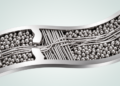
Two-layer polymer films containing different types of quantum dots can serve as reversible ratiometric luminescent temperature sensors, according to a materials study in the Journal of Nanoparticle Research . The researchers prepared and evaluated optically transparent films containing chalcogenide quantum dots alone or both chalcogenide and lead-halide quantum dots. Their luminescence intensity ratios followed predictable mathematical relationships with temperature, and the films retained stable luminescence during repeated heating and cooling cycles.

The investigated design placed different quantum-dot materials in two polymer matrix layers. By varying the mass ratios of the components, the researchers obtained clearly distinguishable individual luminescence peaks in the two-layer films. These separately identifiable peaks supplied the signals used to calculate a luminescence intensity ratio, or LIR, for the different quantum-dot components.

For films containing only chalcogenide quantum dots, the temperature dependence of the LIR was well described by second-order polynomial functions. Across the investigated range of 298–373 K, the reported correlation coefficients for these fits were greater than 0.99. In other words, the measured ratios closely followed the reported mathematical descriptions under the study conditions.

The researchers did not report sensitivity, uncertainty, or response-time values in the available study summary. Films containing both chalcogenide and perovskite quantum dots showed a different response: their LIR had a linear dependence on temperature from 298 to 353 K. That result applies to the specified interval and does not establish that the same relationship continued at higher temperatures. The contrast between the two material combinations indicates that the form of the observed temperature response depended on the quantum-dot composition used in the films.

Repeated heating-and-cooling cycles also revealed temperature stability in the studied films, supporting their use as reusable sensing materials. The available summary does not specify the number of cycles, cycling rate, temperature limits, or the magnitude of any signal changes, so the extent of long-term stability cannot be assessed from it. Overall, the study demonstrates a film-level sensing approach in which temperature is associated with the ratio of separately resolved luminescence signals, with reversible behavior observed under repeated thermal cycling.

Subject of Research: Ratiometric temperature sensing with two-layer quantum-dot-doped polymer films

Article Title: Ratiometric luminescent temperature sensors based on two-layer quantum dot‑doped polymer films

Article References: Sagdeev, D. O., Nizameev, I. R., & Galyametdinov, Y. G. (2026). Ratiometric luminescent temperature sensors based on two-layer quantum dot‑doped polymer films. Journal of Nanoparticle Research, 28(11), Article 276. https://doi.org/10.1007/s11051-026-06797-6

Image Credits: AI Generated

DOI: 10.1007/s11051-026-06797-6

Keywords: quantum dots, temperature sensors, ratiometric luminescence, polymer films, chalcogenide quantum dots, lead-halide quantum dots, perovskite quantum dots, reversible sensing, thermal cycling, Ratiometric, luminescent, temperature

News Source: Katie Riggs. (October 22, 2026). Two-layer quantum-dot films show reversible ratiometric temperature sensing. Scienmag.

Tags: chalcogenide quantum dotslead-halide quantum dotsluminescentperovskite quantum dotspolymer filmsquantum dotsRatiometricratiometric luminescencereversible sensingtemperaturetemperature sensorsthermal cycling
Share12Tweet7Share2ShareShareShare1

Related Posts

mGluR1 inhibition partially improves Purkinje-cell abnormalities in an SCA14 mouse model

mGluR1 inhibition partially improves Purkinje-cell abnormalities in an SCA14 mouse model

October 22, 2026
Ultrafine titanium retains ductility through a slip-system transition

Ultrafine titanium retains ductility through a slip-system transition

October 22, 2026

Free-grid sediment budget traces sand starvation across Pierpont Bay

October 22, 2026

Technology adoption could reshape U.S. peak electricity demand by 2060

October 22, 2026

POPULAR NEWS

  • Two-Step Bedside Frailty Screen Spared Assessments in Liver Disease Study

    Two-Step Bedside Frailty Screen Spared Assessments in Liver Disease Study

    29 shares
    Share 12 Tweet 7
  • mGluR1 inhibition partially improves Purkinje-cell abnormalities in an SCA14 mouse model

    29 shares
    Share 12 Tweet 7
  • Ultrafine titanium retains ductility through a slip-system transition

    29 shares
    Share 12 Tweet 7
  • BDNF markers linked to cognitive impairment in kidney disease

    29 shares
    Share 12 Tweet 7

About

We bring you the latest biotechnology news from best research centers and universities around the world. Check our website.

Follow us

Recent News

Two-Step Bedside Frailty Screen Spared Assessments in Liver Disease Study

mGluR1 inhibition partially improves Purkinje-cell abnormalities in an SCA14 mouse model

Ultrafine titanium retains ductility through a slip-system transition

Subscribe to Blog via Email

Enter your email address to subscribe to this blog and receive notifications of new posts by email.

Join 85 other subscribers
  • Contact Us

Bioengineer.org © Copyright 2023 All Rights Reserved.

Welcome Back!

Login to your account below

Forgotten Password?

Retrieve your password

Please enter your username or email address to reset your password.

Log In
No Result
View All Result
  • Homepages
    • Home Page 1
    • Home Page 2
  • News
  • National
  • Business
  • Health
  • Lifestyle
  • Science

Bioengineer.org © Copyright 2023 All Rights Reserved.