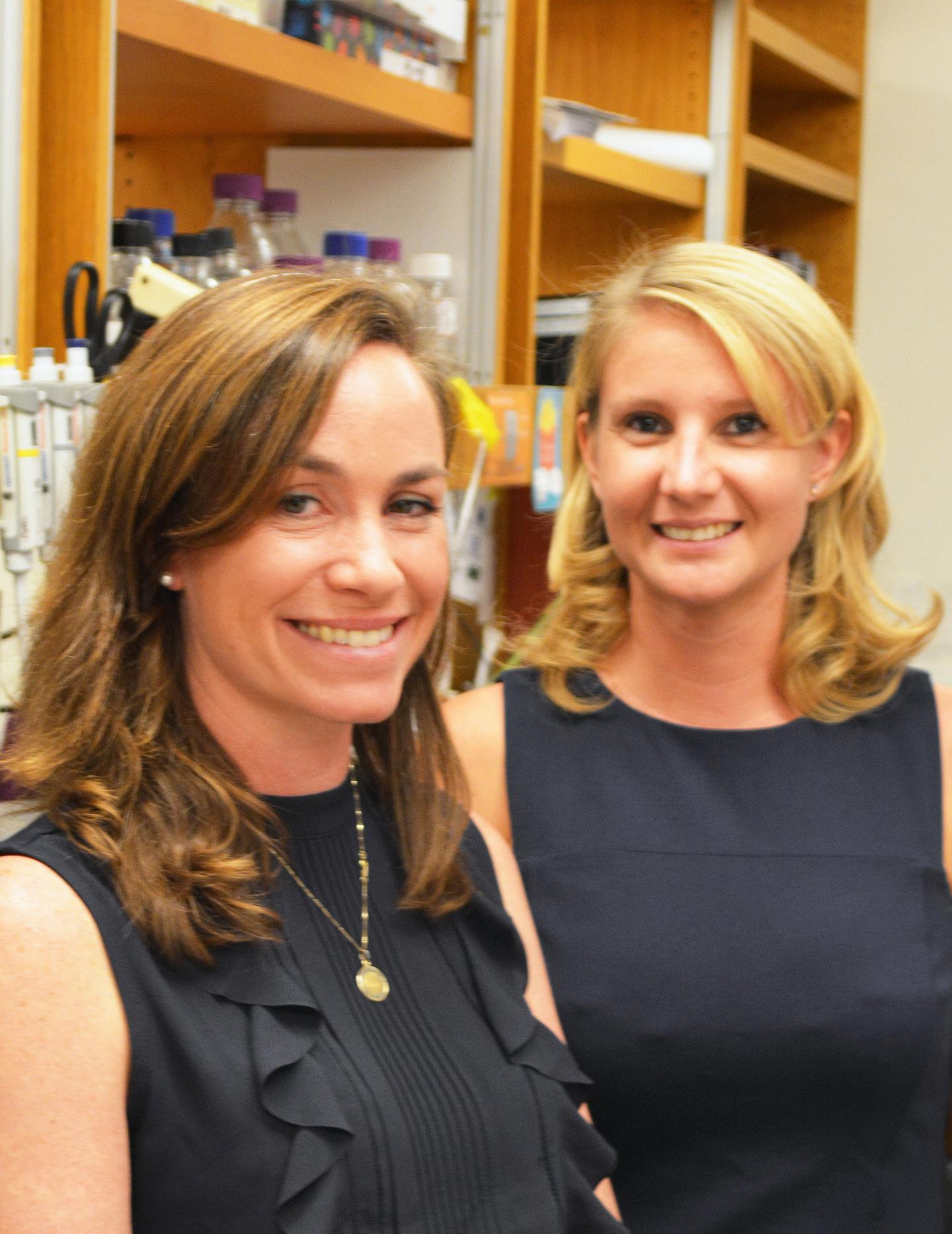
Credit: Madeline McCurry-Schmidt
LA JOLLA, CA – November 16, 2016 – A new study led by scientists at The Scripps Research Institute (TSRI) describes an unexpected role for proteins involved with our daily "circadian" clocks in influencing cancer growth.
The research, published recently in the journal Molecular Cell, suggests that disruptions in circadian rhythms might leave levels of an important cancer-linked protein, called cMYC, unchecked.
"This appears to have big implications for the connection between circadian rhythms and cancer," said TSRI biologist Katja Lamia, senior author of the study.
There is growing evidence that shift work and frequent jet lag can raise a person's risk of cancer, suggesting a link between daily rhythms and cell growth. "We know this connection exists, but we haven't known why," said Lamia.
The researchers focused on proteins called cryptochromes, which evolved from bacterial proteins that sense light and repair DNA damage caused by sunlight. In humans, these proteins, called CRY1 and CRY2, regulate our circadian clocks, which influence what times of day we become tired, hungry and much more.
Using cells from mouse models, the researchers demonstrated that deleting the gene that expresses CRY2 reduced the cells' ability to degrade a protein called cMYC. Without CRY2 keeping cMYC at normal levels, the researchers saw increased cell proliferation–similar to the abnormal growth seen in cancers.
Further studies of protein structures suggested that CRY2 is a key player in a process to "mark" cMYC for degradation. The researchers said it is significant that this process occurs after gene transcription–once the proteins are already produced–rather than during transcription, as in many other cryptochrome functions.
"This is a function of a circadian protein that has never been seen before," said TSRI Research Associate Anne-Laure Huber, who served as first author of the study.
The researchers say more studies are needed to confirm this connection between circadian clocks and cancer in human tissues.
###
In addition to Lamia and Huber, authors of the study, "CRY2 and FBXL3 Cooperatively Degrade c-MYC," were Stephanie J. Papp, Alanna B. Chan, Sabine D. Jordan, Anna Kriebs and Madelena Nguyen of TSRI; Emma Henriksson of TSRI and Lund University; Martina Wallace and Christian M. Metallo of the University of California, San Diego; and Zhizhong Li of the Genomics Institute of the Novartis Research Foundation and Novartis Institutes for Biomedical Research.
This study was supported by the National Institutes of Health (grants DK090188, DK097164, CA188652 and NIGMS P41-GM103311), the Searle Scholars Program through the Kinship Foundation, the Sidney Kimmel Foundation, the Lung Cancer Research Foundation, the Swedish Research Council, the Deutsche Forschungsgemeinschaft and the American Heart Association (grant 15POST22510020).
About The Scripps Research Institute
The Scripps Research Institute (TSRI) is one of the world's largest independent, not-for-profit organizations focusing on research in the biomedical sciences. TSRI is internationally recognized for its contributions to science and health, including its role in laying the foundation for new treatments for cancer, rheumatoid arthritis, hemophilia, and other diseases. An institution that evolved from the Scripps Metabolic Clinic founded by philanthropist Ellen Browning Scripps in 1924, the institute now employs more than 2,500 people on its campuses in La Jolla, CA, and Jupiter, FL, where its renowned scientists–including two Nobel laureates and 20 members of the National Academy of Science, Engineering or Medicine–work toward their next discoveries. The institute's graduate program, which awards PhD degrees in biology and chemistry, ranks among the top ten of its kind in the nation. For more information, see http://www.scripps.edu.
Media Contact
Madeline McCurry-Schmidt
[email protected]
858-784-9254
@scrippsresearch
http://www.scripps.edu
############
Story Source: Materials provided by Scienmag