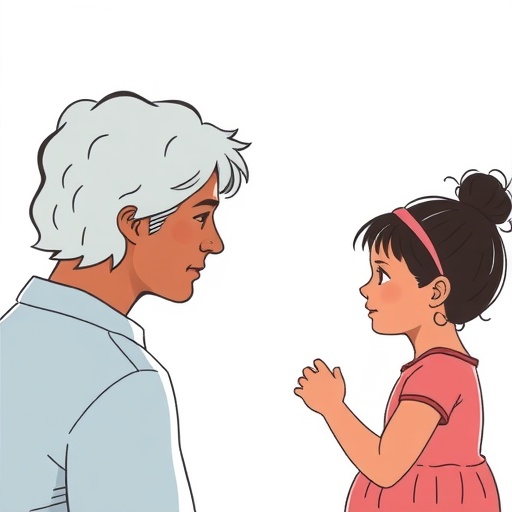
In a groundbreaking study published in the Journal of Aggression, Maltreatment & Trauma, researchers reveal how the presence of a consistent, caring adult during childhood can significantly mitigate the long-term health consequences of physical and sexual abuse among Indigenous adults in the United States. Analyzing data from over 2,100 American Indian and Alaska Native (AI/AN) adults collected through the 2021–2023 U.S. Behavioral Risk Factor Surveillance System, this research underscores the profound, lasting influence that protective relationships exert on both mental and physical health outcomes decades after childhood adversity.
Childhood abuse, both physical and sexual, remains a disturbingly common experience among Indigenous populations, with more than 25% of study participants reporting physical abuse and nearly 12.5% indicating sexual abuse. These early traumas have been consistently linked to heightened risks of chronic illnesses and psychological disorders in adulthood, such as depression, arthritis, stroke, asthma, cognitive impairments, and obesity. However, the researchers’ key discovery focuses on how having at least one adult figure in the household who provided a steady sense of safety can substantially reduce these associated risks.
The study’s lead author, Ashley L. Quinn, Assistant Professor at the Factor-Inwentash Faculty of Social Work, University of Toronto, points out that the “buffering” effect provided by trusted adults transcends mere emotional comfort, suggesting a complex psychobiological mechanism by which early protective relationships recalibrate stress responses, thereby altering the trajectory of health outcomes over the life course. This finding challenges oversimplified deficit-based narratives commonly used to characterize Indigenous experiences, pivoting the focus toward resilience and the dynamic role of supportive social environments.
Utilizing sophisticated survey methodology, this research capitalized on nationally representative data, allowing for robust statistical modeling that accounted for multiple confounding variables. The reduction in the strength of associations between childhood abuse and adverse outcomes following the adjustment for perceived childhood safety indicates that the protective factor of a caring adult is not only statistically significant but might also be clinically important. This represents a critical advancement in population health research where relational contexts are often underappreciated.
Mental health outcomes demonstrated striking sensitivity to the presence of a protective adult, with adults reporting consistent childhood safety showing markedly lower odds of major depressive disorder. This suggests that the regulation of stress and the development of adaptive coping strategies during formative years are profoundly shaped by supportive relationships, which in turn influence neural circuitry related to affective processing and resilience in adulthood.
Physical health indicators were also positively influenced by protective relationships during childhood. The data revealed that once the role of a nurturing adult was statistically recognized, the links between childhood abuse and cardiovascular diseases or behavioral risk factors, such as smoking, were significantly attenuated or completely nullified. This suggests that biologically embedded stress pathways—such as inflammatory responses and hypothalamic-pituitary-adrenal axis dysregulation—may be modifiable through early social interventions.
Coauthor Teagan D.M. Miller, a recent graduate of the University of Toronto’s social work program, emphasizes the enduring nature of these early-life protective experiences, suggesting that they lay the groundwork for healthier mental health trajectories well into mid-life and beyond. This perspective aligns with emerging neurodevelopmental research highlighting the plasticity of stress response systems in childhood and their responsiveness to relational environments.
The implications of this study extend far beyond academia. Shannon K. Halls, research coordinator and coauthor, stresses that social relationships should no longer be considered “soft” or ancillary variables in health research. On the contrary, their biological and clinical significance demands that these psychosocial factors be integrated into public health prevention strategies aimed at reducing chronic disease burden and promoting health equity.
Consistent with the study’s culturally sensitive approach, Philip Baiden from the University of Texas at Arlington’s School of Social Work advocates for public health policies that recognize and amplify Indigenous strengths rather than imposing externally derived solutions. Such an approach promotes community empowerment and ensures that interventions are respectful and responsive to Indigenous contexts, traditions, and values.
This paradigm shift toward resilience-oriented research marks a pivotal moment in Indigenous health scholarship, valuing the protective power of positive relationships in the face of historical trauma and social inequities. By grounding their findings in a narrative of strength rather than deficiency, the authors offer a blueprint for holistic health interventions that incorporate social, cultural, and relational dimensions.
Senior author Esme Fuller-Thomson, professor at the University of Toronto and director of the Institute for Life Course & Aging at FIFSW, concludes by emphasizing the policy relevance of these findings. Investing in child protection, mentorship programs, and family support systems is not merely a moral imperative but a strategic public health approach that could dramatically reduce the incidence of chronic illness among Indigenous populations in the future.
Ultimately, this study substantiates the intrinsic role of early supportive adult relationships in fostering resilience and buffering the lifelong physiological and psychological consequences of childhood abuse. It challenges public health frameworks to integrate social relational factors as focal points for intervention and aligns with a broader movement toward culturally informed, strength-based strategies in addressing health disparities.
Subject of Research: People
Article Title: Bridges to Wellness: Protective Adults During Childhood Mitigate the Toll of Childhood Abuse Among Indigenous Adults
News Publication Date: April 21, 2026
Web References: 10.1080/10926771.2026.2653979
References: The article draws on research supported by the Social Sciences and Humanities Research Council of Canada (#435-2025-0608; PI E Fuller-Thomson).
Keywords: Childhood abuse, Indigenous health, protective relationships, resilience, mental health, chronic disease, social determinants of health, trauma, American Indian, Alaska Native, public health, social work, long-term health outcomes
Tags: American Indian and Alaska Native health studyBehavioral Risk Factor Surveillance System datachildhood adversity and psychological disorderschildhood trauma and chronic illnessIndigenous adult health outcomesIndigenous trauma and resilience researchlong-term effects of childhood abusemitigating childhood abuse consequencesphysical and sexual abuse in Indigenous populationsprotective relationships and mental healthrole of consistent caregivers in abuse recoverytrusted adult support in childhood