In a groundbreaking advancement in neuro-ophthalmic research, scientists have unveiled a complex and previously elusive neuroinflammatory circuit that critically contributes to corneal neuropathy, a debilitating condition marked by nerve damage in the cornea leading to chronic pain and vision impairment. This pioneering discovery, centering around the transient receptor potential vanilloid 1 (TRPV1) receptor, has the potential to redefine therapeutic approaches for corneal neuropathies, illuminating pathways for targeted treatment and symptom alleviation.
The study, conducted by a team of researchers led by Pizzano, Vereertbrugghen, and Martinez Gomez, and recently published in Experimental & Molecular Medicine, provides compelling evidence of a TRPV1-dependent interaction between corneal nerves and the trigeminal ganglion, the nerve hub responsible for sensation in the face. This interaction orchestrates a neuroinflammatory circuit that exacerbates nerve injury and sustains neuropathic pain responses, suggesting that TRPV1 acts as a pivotal molecular switch in this pathological cascade.
At the heart of the investigation lies the transient receptor potential vanilloid 1 channel, a non-selective cation channel known for its role in detecting noxious stimuli such as heat, acidity, and inflammatory agents. While TRPV1’s function in pain modulation has been extensively studied in peripheral sensory neurons, its specific involvement in corneal neuropathic mechanisms had remained largely unexplored until now. The research demonstrates that activation of TRPV1 on corneal sensory neurons triggers a feed-forward amplification of neuroinflammation via the trigeminal system, thereby perpetuating nerve degeneration and pain signaling.
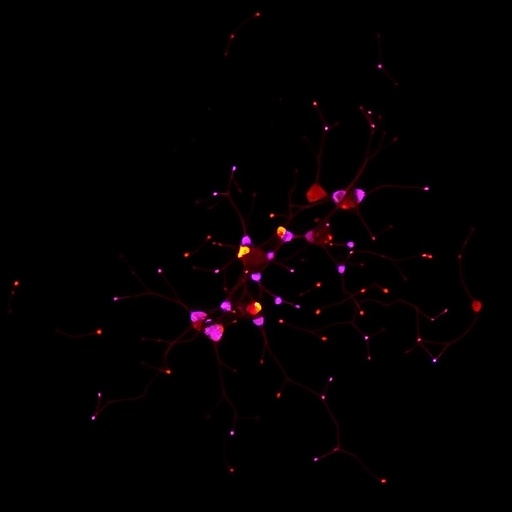
Employing advanced molecular and imaging techniques, the researchers meticulously delineated the communication between corneal nociceptors and the trigeminal ganglion. After inducing corneal injury in experimental models, they observed a marked upregulation of TRPV1 expression, concomitant with the release of pro-inflammatory cytokines within both the corneal tissue and the trigeminal ganglion. This cytokine storm fosters a maladaptive immune response that sustains neural hyperexcitability and inflammatory damage well beyond the initial insult.
Crucially, the study highlights that pharmacological inhibition or genetic deletion of TRPV1 significantly mitigated neuroinflammation and corneal nerve pathology. This therapeutic blockade reduced the secretion of inflammatory mediators and improved nerve fiber density and function. These findings position TRPV1 as a viable molecular target for the development of novel analgesics designed to interrupt the destructive neuroimmune feedback loop characteristic of corneal neuropathy.
The implications of this research extend far beyond fundamental neurological insights, offering a beacon of hope for patients afflicted with chronic ocular pain syndromes, which have historically been challenging to diagnose and treat effectively. Corneal neuropathy manifests in a spectrum ranging from dry eye disease to more severe neuropathic conditions induced by surgery, trauma, or systemic diseases such as diabetes, where nerve dysfunction is sustained by unresolved inflammation and immune dysregulation.
Moreover, the elucidation of a corneal–trigeminal neuroinflammatory axis opens new investigative frontiers related to facial pain disorders, migraine, and trigeminal neuralgia, conditions that also involve trigeminal nerve sensitization and maladaptive inflammatory processes. Understanding the role of TRPV1 within this circuit provides a mechanistic framework to explore pharmacological interventions aimed at modulating peripheral and central sensitization concurrently.
Intriguingly, the study reveals that this circuit operates in a transient yet self-sustaining manner, suggesting that early intervention targeting TRPV1 could interrupt the cycle at a critical juncture, preventing progression to chronic neuropathy. This transient dynamic challenges prior assumptions that neuroinflammation in the corneal nerves is static and irreversible, encouraging a paradigm shift toward temporally precise therapeutic strategies.
The research team employed state-of-the-art in vivo calcium imaging to monitor real-time neuronal activity and inflammatory signaling in freely moving subjects, providing unprecedented insights into the temporal and spatial characteristics of this neuroinflammatory circuit. Such methodological advancements lend robustness and translational relevance to the findings, bridging the gap between experimental models and clinical applicability.
Of note, this extensive investigation underscores the nuanced role of TRPV1 as not merely a nociceptor but a critical mediator intertwining sensory neurons and immune cells. The interplay of neuronal excitation and immune activation orchestrated through TRPV1 channels in corneal tissues echoes similar patterns observed in other peripheral neuropathies, suggesting broad applicability of these findings to diverse neuroimmune pathologies.
In addition to defining the pathological underpinnings of corneal neuropathy, the study explores potential molecular signalling partners within the TRPV1-dependent circuit, including chemokines and neurotrophic factors that further amplify neuroimmune crosstalk. By mapping this molecular landscape, the research paves the way for multifaceted interventions targeting multiple nodes within the neuroinflammatory network.
Importantly, given the accessibility of the cornea for topical treatments, these insights herald a new era of localized pharmacotherapy with reduced systemic side effects. Targeted delivery of TRPV1 antagonists or modulators directly to the ocular surface could revolutionize clinical management, enhancing efficacy while minimizing risks associated with systemic drug administration.
As this research gains traction, the prospect of personalized medicine in ophthalmology becomes more tangible. Biomarkers identified within the TRPV1-mediated circuit may serve to stratify patients based on inflammatory profiles or TRPV1 expression levels, allowing tailored treatment regimens optimized for maximal therapeutic benefit and minimal adverse reactions.
While this study represents a significant leap forward, the authors acknowledge that further research is essential to unravel the full integrative complexity of the corneal–trigeminal neuroimmune network. Longitudinal studies tracing chronic disease progression and diverse patient cohorts will be instrumental in validating these findings and translating them into clinically viable interventions.
In conclusion, the discovery of a transient receptor potential vanilloid 1-dependent neuroinflammatory circuit between the cornea and trigeminal ganglion heralds a transformative step in our understanding of corneal neuropathy pathogenesis. This scientific breakthrough not only illuminates the intricate dance between sensory neuron excitation and immune activation but also unlocks new avenues for innovative therapies targeting debilitating ocular neuropathic pain.
Subject of Research:
Article Title:
Article References:
Pizzano, M., Vereertbrugghen, A., Martinez Gomez, M.J. et al. A transient receptor potential vanilloid 1-dependent corneal–trigeminal neuroinflammatory circuit promotes corneal neuropathy. Exp Mol Med (2026). https://doi.org/10.1038/s12276-026-01653-y
Image Credits: AI Generated
DOI: 25 February 2026
Keywords:
Tags: chronic pain pathways in corneal neuropathycorneal nerve pain modulationmolecular mechanisms of corneal nerve damageneuroinflammation and corneal nerve injuryneuroinflammatory circuits in eye paintargeted therapies for corneal neuropathiestransient receptor potential vanilloid channels in neuro-ophthalmologytrigeminal ganglion sensory processingTRPV1 and trigeminal ganglion interactionTRPV1 as a therapeutic targetTRPV1 receptor in corneal neuropathy