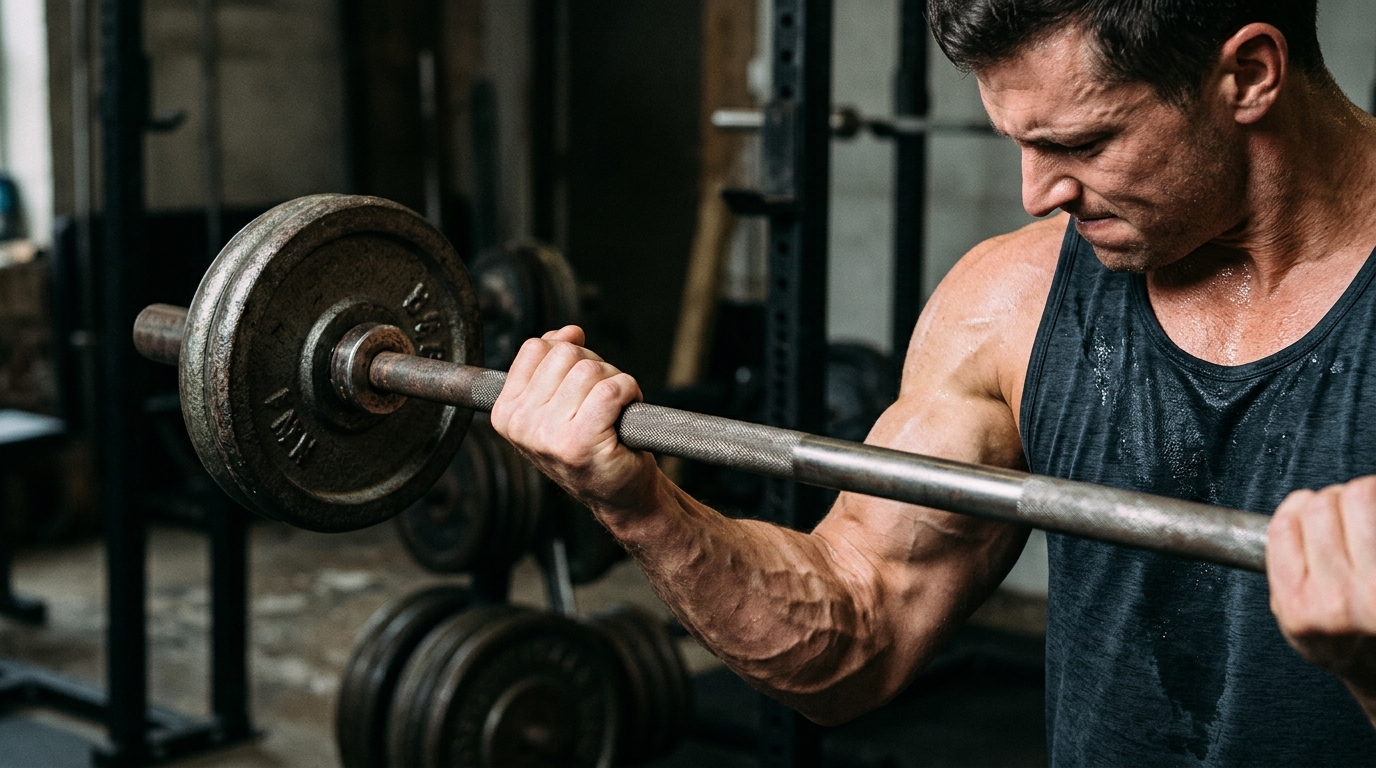
Low-load and high-load resistance training performed to volitional failure produced similar muscular adaptations and strength gains in untrained young men, according to a randomised trial published in BMC Sports Science, Medicine and Rehabilitation. While low-load resistance training carried out to failure has been considered an alternative to high-load resistance training, comparative adaptations between the two modalities have remained unclear when overall training volume load is taken into account. The study compared the specific effects of low-load and high-load regimens on muscle hypertrophy and estimated one-repetition maximum strength.
The trial examined twenty-two healthy untrained young males with a mean age of 21.1 ± 2.6 years, who were randomly assigned to either a low-load training group of eleven participants or a high-load training group of eleven participants. Over a six-week intervention, participants completed supervised knee-extension training to volitional failure three times per week. Before and after the training period, assessments recorded estimated one-repetition maximum strength alongside ultrasound-derived muscle thickness and cross-sectional area of both the rectus femoris and the vastus intermedius. Cumulative training volume load, calculated as repetitions multiplied by load across all sessions, was evaluated using a two-way mixed-model ANOVA.
Following six weeks of training, estimated one-repetition maximum strength increased in both cohorts, rising by 35.9 kg in the low-load group and by 32.5 kg in the high-load group, with no significant differences observed between groups. Muscle thickness in the rectus femoris increased by 0.46 cm in the low-load cohort and by 0.34 cm in the high-load cohort, while cross-sectional area expanded by 2.07 cm² and 2.36 cm², respectively. Parallel increases were documented for vastus intermedius muscle thickness and cross-sectional area, also demonstrating no between-group differences. Total training volume load was greater in the low-load group at 58,119 ± 12,439 kg compared to 45,598 ± 7,963 kg in the high-load group.
The authors concluded that low-load and high-load resistance training to volitional failure elicited equivalent muscle hypertrophy and estimated one-repetition maximum strength in untrained young males. They noted that the observed equivalence in both hypertrophy and strength likely reflects the rapid neural and morphological responses characteristic of early-phase adaptations in sedentary individuals. The trial was retrospectively registered at ClinicalTrials.gov under identifier NCT07412600 on February 14, 2026.
Subject of Research: Muscular adaptations from high- versus low-load resistance training to failure
Article Title: High- and low-load resistance training to failure result in similar muscular adaptations in untrained young males: a randomised trial
Article References: Kayhan, A., Aslankeser, Z., Karaman, S., Ozer, H., & Topaloglu, O. F. (2026). High- and low-load resistance training to failure result in similar muscular adaptations in untrained young males: a randomised trial. BMC Sports Science, Medicine and Rehabilitation. https://doi.org/10.1186/s13102-026-02230-6
Image Credits: AI Generated
DOI: 10.1186/s13102-026-02230-6
Keywords: resistance training, muscle hypertrophy, muscle thickness, one-repetition maximum, knee extension, low-load training, high-load training, rectus femoris, High-, low-load, resistance, training
News Source: Ophelia Keating. (November 6, 2026). Trial Finds Similar Muscle Adaptations in Untrained Men Across Training Loads. Scienmag.