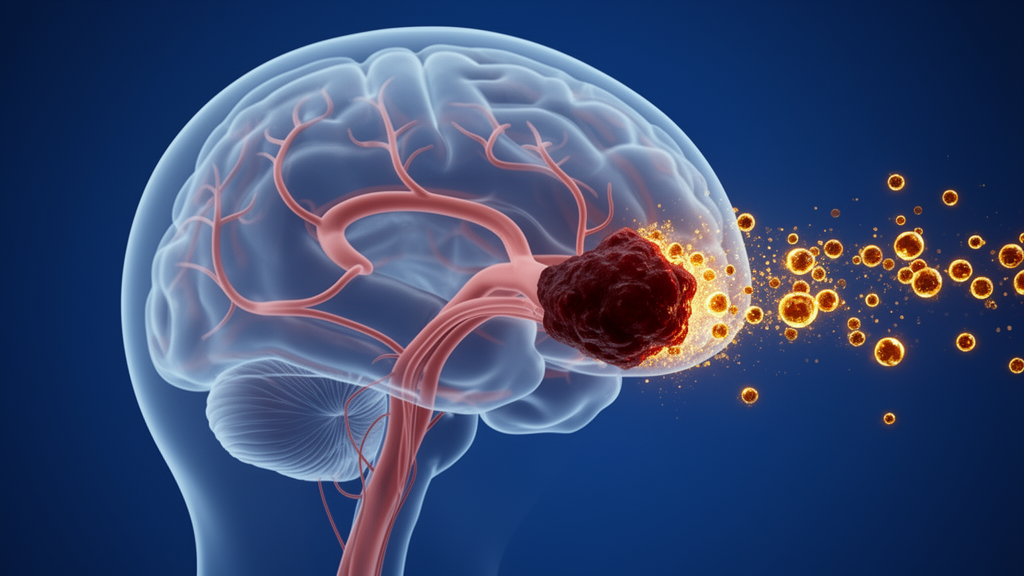
Traumatic cerebral venous sinus thrombosis, a rare but dangerous complication of head injury, remains one of the most management-challenging conditions in neurocritical care. A new retrospective cohort study from a level 1 trauma center in Melbourne, Australia, published in Neurocritical Care, has now documented how the condition was identified, treated and resolved in 138 patients over more than fourteen years, and its central message is sobering: the clinical benefit of anticoagulation in this setting remains unproven.
The researchers identified patients from the Alfred Health Trauma Registry and hospital coding data between 1 January 2010 and 30 June 2024. Because accurate diagnosis matters, venous imaging was reviewed by two neuroradiologists to confirm the tCVST diagnosis and characterize each thrombus. The condition was confirmed in 138 patients, representing an incidence of 0.9% within the center’s traumatic brain injury population. All-cause inpatient mortality was 10.9%, corresponding to 15 deaths among the cohort.
Anticoagulation, which is often used to prevent intracranial complications of venous sinus thrombosis, was administered to 78 patients, or 56.5% of the cohort. Treatment began a median of five days after diagnosis, with an interquartile range of two to nine days. Importantly, the decision to anticoagulate was not made in a vacuum: patients who received anticoagulation generally had less severe traumatic injuries, as measured by the Injury Severity Score and admission Glasgow Coma Scale, but were more likely to have occlusive thrombosis. This pattern of selection highlights the central confounding problem in tCVST research, since concurrent traumatic brain injury and other injuries complicate treatment decisions and make it difficult to isolate the effect of any single therapy.
Among the 123 patients who survived to hospital discharge, 93 underwent follow-up venous imaging from day 14 onward. Complete recanalization, meaning the blocked venous sinus reopened, was achieved in 57% of these patients by their final available imaging. The primary outcome of the study was discharge destination, with recanalization assessed as a secondary outcome, reflecting the clinical reality that functional recovery after head trauma depends on far more than the state of the venous sinuses alone.
The imaging analysis yielded two clear radiographic predictors of poorer recanalization: occlusive thrombosis and involvement of multiple sinuses. Patients whose thrombus completely occluded a sinus, or whose thrombus extended across several sinuses, were less likely to achieve complete reopening on follow-up scans. Strikingly, however, the study identified no association between anticoagulation and recanalization, a finding that will resonate with clinicians who have long lacked consensus guidelines for this condition.
The authors conclude that traumatic CVST is a rare complication of head injury with multiple confounders influencing outcomes and uncertain optimal management, and that the clinical benefit of anticoagulation in this cohort requires further investigation. As a single-center retrospective study, the findings describe practice patterns and associations rather than establishing causal treatment effects, and the authors themselves frame their results as a call for further investigation rather than a change in practice.
Subject of Research: Management and outcomes of traumatic cerebral venous sinus thrombosis after head injury
Article Title: Management and Outcomes in Traumatic Cerebral Venous Sinus Thrombosis
Article References: Richardson, T. E., Balabanski, A. H., Moses, J., Colman, B., Churilov, L., Whiriskey, R., Kam, A., Mathew, J., & Cloud, G. C. (2026). Management and Outcomes in Traumatic Cerebral Venous Sinus Thrombosis. Neurocritical Care. https://doi.org/10.1007/s12028-026-02687-w
Image Credits: AI Generated
DOI: 10.1007/s12028-026-02687-w
Keywords: traumatic cerebral venous sinus thrombosis, traumatic brain injury, anticoagulation, sinus recanalization, retrospective cohort study, neurocritical care, level 1 trauma center, injury severity score, venous imaging, inpatient mortality, Management, Outcomes
News Source: Ophelia Keating. (October 28, 2026). Traumatic Venous Sinus Thrombosis: Anticoagulation Benefit Remains Uncertain in 14-Year Study. Scienmag.