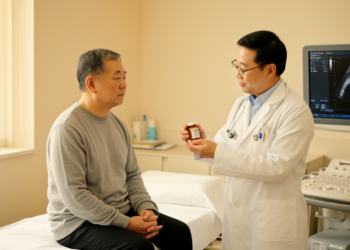
Person-centered, trauma-informed care can strengthen resilience in people exposed to intimate partner violence, but only when it is built on safety, trust, and genuine participation, according to an integrative review published in Frontiers in Public Health. The review, led by Nóra Kerekes of University West in Sweden with colleagues at the Center for Holistic Psychiatry Research and the High Institute of Nursing Professions and Health Techniques in Fez, Morocco, synthesized twelve peer-reviewed studies published between 2015 and March 2026. Its central argument is striking: the way care is delivered is not merely a matter of good bedside manner but may reflect how trauma physically rewires the nervous system’s expectations of the world.
The review followed Whittemore and Knafl’s methodology for integrative reviews, which allows qualitative and quantitative research to be synthesized in a single analysis. The team searched CINAHL and APA PsycInfo in March 2026, screened results through a documented PRISMA flow chart, and appraised study quality using the CASP frameworks, applying the qualitative checklist to nine qualitative studies and one mixed-methods study, and the randomized controlled trial checklist to two quantitative studies. Eleven studies were judged high quality and one medium quality, the latter carrying an elevated risk of selection bias because participants self-selected into intervention and control groups in a quasi-experimental design.
The evidence base comprised 544 individuals with lived experience of intimate partner violence, 537 of them women and 7 men, aged between 15 and 73 years, drawn from studies conducted in Australia, Ireland, Iceland, Japan, Puerto Rico, Taiwan, Turkey, and the United States. The perspectives of 31 professionals, including nurses, midwives, physicians, psychiatrists, psychologists, social workers, psychotherapists, and intimate partner violence advocates, were also incorporated. From this material, the analysis distilled three overarching themes: a safe, trusting, and accessible care relationship as the foundation for resilience; empowerment through participation, autonomy, and reclaiming control; and the mobilization of individual and social resources for long-term recovery.
The first theme underscores how fragile the care encounter can be for someone whose nervous system has been shaped by chronic threat. Sensory impressions such as touch and medical examinations, and emotional cues such as body language, could trigger intense discomfort and a sense of reliving the trauma, sometimes years after the violence had ended. Poor communication, absent informed consent, and experiences of not being believed deepened vulnerability and eroded trust. By contrast, empathy, respect, and active listening, letting individuals tell their story at their own pace, eased loneliness and strengthened the willingness to seek and continue care. Clear information about what to expect during examinations, and control over what was and was not permitted during physical examinations, eased stress responses and built safety.
Having a voice in one’s own care emerged as a precondition rather than an optional extra. Standardized, paternalistic approaches felt violating and in some cases drove people away from care altogether, particularly when individuals felt pushed toward decisions without their specific situation being considered. Flexible, individually adapted care created stronger feelings of control, empowerment, and safety. Some participants took autonomy into their own hands, carefully selecting providers they deemed safe and respectful, with a marked preference for female providers for physical examinations tied to previous experiences of violence. Structural factors repeatedly undermined these relational gains: limited appointment time, long waiting lists, high staff turnover, and fragmented systems forced survivors to retell traumatic experiences repeatedly, a burden that could itself be re-traumatizing.
The second theme framed recovery as a successive reclaiming of control. Shared decision-making, flexible goal setting, and respect for the individual’s own recovery pace were described as central by both survivors and providers. One quantitative study, a randomized controlled trial of a structured empowerment program in Turkey, found that women who completed ten weekly sessions scored significantly higher on self-esteem and learned resourcefulness than controls, and shifted toward more optimistic, self-confident, and social-support-seeking coping strategies, while helpless and yielding approaches decreased significantly. Qualitative accounts echoed this shift, with participants describing a changed self-image, from feeling vulnerable to feeling capable of acting on their own behalf. Providers emphasized that an empowerment-based, nonjudgmental, autonomy-centered approach fits this population particularly well precisely because autonomy is so often what abusive relationships take away.
The third theme highlighted strength-based interventions and social community. An eight-week strengths-based support-group intervention in Taiwan showed some promise for reducing depressive symptoms and improving the pathways component of hope, though resilience scores were not significantly affected, and the authors of the review caution that these findings rest on a small, non-randomized sample. Long-term support groups counteracted isolation, normalized experiences, and fostered hope; for some participants, the impact extended further, as they became sources of support for others, strengthening their own self-esteem and sense of agency. Notably, a mixed-methods study of rural Irish women found that sociocultural barriers to help-seeking, including shame, hopelessness, and mistrust, were significantly associated with greater symptom burden and lower social support, while structural barriers such as cost, availability, and transportation showed no such relationship.
The review’s most distinctive contribution is its neurobiological interpretation of these findings. Prolonged exposure to violence keeps the nervous system locked in a sympathetic, threat-oriented state, meaning a care encounter can reactivate that state as easily as it can help regulate it. Drawing on predictive-processing accounts of brain function, the authors argue that the brain’s primary task is not to react to incoming stimuli but to anticipate them, building an internal model of reality from prior experience. Trauma alters the weighting of this model: threat-related signals are assigned disproportionately high precision even when objectively neutral, while safety signals are given too little weight to register as credible. In this framework, safety does not automatically feel safe; it must be demonstrated consistently enough to shift what the brain expects. A rushed explanation, an unexpected touch, or a dismissive tone does not merely feel unpleasant, it confirms what a dysregulated nervous system already predicted.
This lens reframes re-traumatizing encounters not simply as failures of individual empathy but as failures to account for what trauma had already done to a person’s physiology before they entered the room. It also explains why consistency, predictability, and being heard mattered so much across the synthesized studies: within this framework, they may constitute a mechanism by which trust becomes physiologically possible again. The authors stress that resilience itself is dynamic and nonlinear, shaped by individual resources, relationships with care staff, and structural conditions, and that in acute crisis an intense focus on self-determination can initially feel overwhelming rather than strengthening.
The review carries important limitations. The search was restricted to two databases and required a nursing-related term in every search combination, which may have excluded studies on care delivered exclusively by non-nursing professionals. Most included studies were qualitative, limiting generalizable quantitative conclusions; the sample was heavily skewed toward women; and most studies came from high- and middle-income countries. One included study reported an age range extending below the adult-only inclusion criterion, a deviation the authors acknowledge. Trauma-informed care itself remains inconsistently implemented and under-researched, and the authors note that its evidence base is inconclusive in places, with a risk that an intense focus on trauma could define people primarily through it. Even so, the synthesis points clearly toward a need for training in trauma-informed, person-centered approaches across all professions supporting survivors, and for organizational conditions, continuity, time, and a culture free of blame, that allow such knowledge to be applied in practice.
Subject of Research: Person-centered, trauma-informed care and resilience after intimate partner violence
Article Title: Person-centered, trauma-informed care and support for resilience after intimate partner violence: an integrative review through a neurobiological lens
Article References: Kerekes, N., Ackemo, C., Alfredsson, E., & Sfendla, A. (2026). Person-centered, trauma-informed care and support for resilience after intimate partner violence: an integrative review through a neurobiological lens. Frontiers in Public Health, 14, 1962315. https://doi.org/10.3389/fpubh.2026.1962315
Image Credits: AI Generated
DOI: 10.3389/fpubh.2026.1962315
Keywords: intimate partner violence, trauma-informed care, person-centered care, resilience, neurobiology, predictive processing, empowerment, social support, nursing, integrative review, public health, recovery
News Source: Ophelia Keating. (October 27, 2026). Trauma-Informed Care Rebuilds Resilience After Intimate Partner Violence, Review Finds. Scienmag.