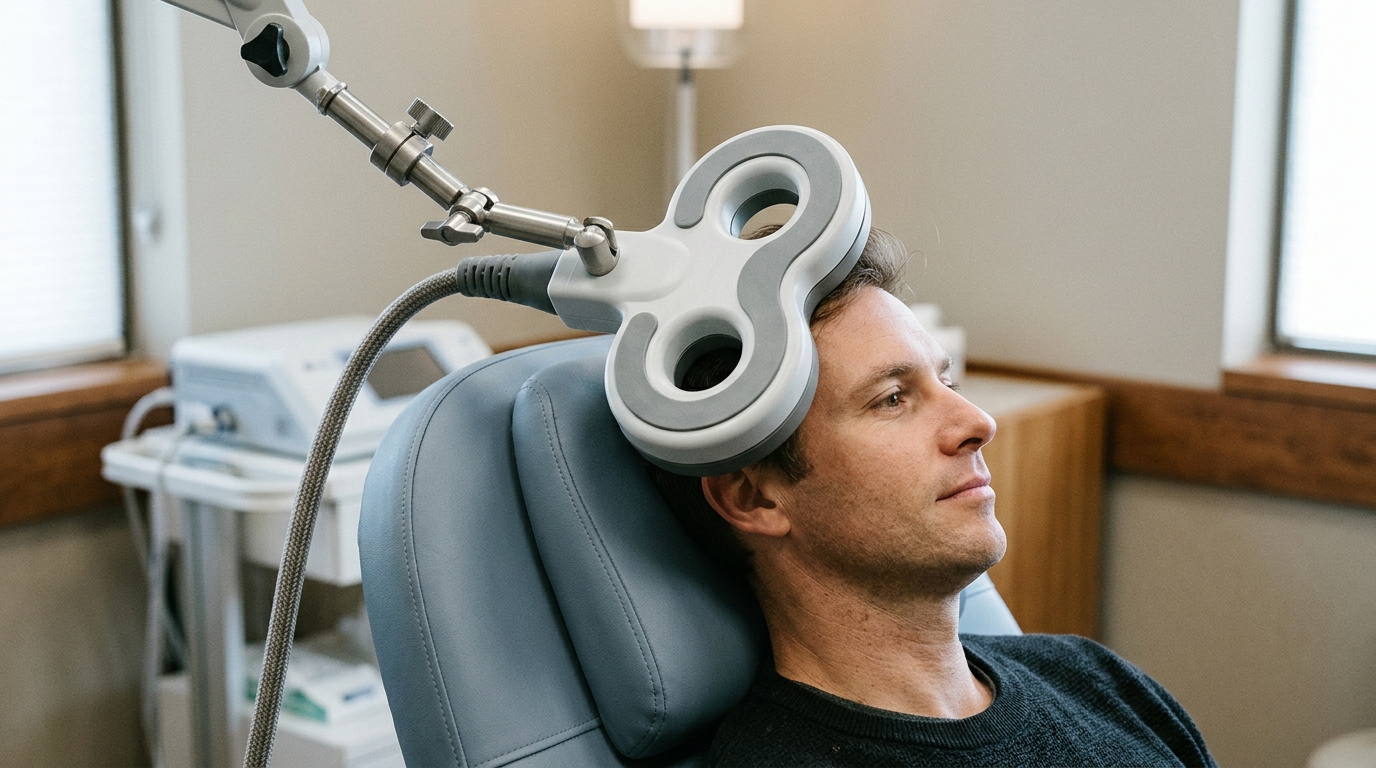
Researchers at the Medical University of Warsaw have published a comprehensive narrative review in Frontiers in Psychiatry evaluating transcranial magnetic stimulation as an exploratory therapeutic strategy for post-SSRI sexual dysfunction. The condition, commonly abbreviated as PSSD, is characterized by persistent and frequently debilitating sexual impairments that endure long after patients discontinue selective serotonin reuptake inhibitor antidepressants. Although selective serotonin reuptake inhibitors represent the primary therapeutic class prescribed for major depression, anxiety disorders, and obsessive-compulsive disorder, their administration can precipitate enduring adverse effects across physiological, sensory, and affective domains. At present, no evidence-based therapeutic protocols or gold-standard clinical treatments have been established to alleviate this disorder, leaving clinicians with minimal guidance and patients with enduring distress. In response to this profound clinical deficit, the authors synthesized neurobiological, neuroimaging, and neurostimulation literature to delineate how non-invasive electromagnetic neuromodulation might engage dysfunctional cortico-striatal and fronto-limbic circuitry, while explicitly emphasizing that all proposed protocols remain hypothesis-generating frameworks requiring rigorous prospective empirical validation.
Clinically, post-SSRI sexual dysfunction encompasses a broad constellation of multifaceted disturbances that extend well beyond localized urological or gynecological complaints. Patients afflicted by the disorder report severe reductions in sexual desire, delayed orgasm, complete anorgasmia, and a profound attenuation of sexual pleasure termed sexual anhedonia. A hallmark diagnostic feature is genital anesthesia, marked by severe reductions in tactile and erogenous sensitivity or a complete lack of genital sensation. Male patients additionally report anatomical symptoms including flaccidity of the penile glans during erection and markedly diminished ejaculatory force. Beyond somatic sexual impairments, individuals frequently exhibit neuropsychiatric disturbances such as emotional blunting, generalized anhedonia, apathy, reduced empathy, and executive cognitive difficulties encompassing impaired concentration and memory. Many describe altered sensory processing across tactile, gustatory, and olfactory modalities, as well as depersonalization, derealization, chronic fatigue, and sleep disruption. Crucially, these multifaceted symptoms persist for months or years following antidepressant cessation despite normal endocrine profiles and the documented absence of active underlying psychiatric illness.
The therapeutic landscape for post-SSRI sexual dysfunction remains remarkably sparse, characterized almost exclusively by isolated case reports and uncontrolled observational registries. The review compiled existing pharmacological and physical strategies, highlighting their inconsistent clinical efficacy and low success rates. Documented pharmacological attempts include the administration of vortioxetine, which achieved significant improvements in an isolated five-patient case series but showed partial or refractory outcomes when combined with nutraceuticals or administered at higher dosages. Bupropion has demonstrated occasional partial sensory gain or functional restoration in single-patient reports, yet combinations with phosphodiesterase inhibitors yielded refractory outcomes. A retrospective analysis of twelve male patients receiving an L-citrulline compound demonstrated improvements in erectile function and arousal, whereas dopaminergic agonists such as cabergoline and pramipexole carry limited anecdotal evidence alongside risks of dizziness, nausea, and impulse control disorders. An observational survey of three hundred patients registered within the RxISK database revealed that standard pharmacological antidotes failed in over ninety percent of chronic cases. Non-pharmacological interventions, including low-level laser therapy, pelvic vibration, and multimodal systems sexology, similarly rely on isolated case observations, underscoring the urgent need for structured neurobiological investigations.
Human sexual functioning is orchestrated by complex, coordinated networks linking subcortical hubs with higher cortical structures across distinct cognitive, emotional, motivational, and autonomic dimensions. At the subcortical core, the medial preoptic area and paraventricular nucleus of the hypothalamus integrate autonomic reflexes, initiate penile erection, and coordinate neuroendocrine signals. The ventral striatum and nucleus accumbens govern the motivational wanting component of sexual behavior, driving reward-seeking and copulatory drive via mesolimbic dopaminergic signaling. Emotional valuation, sexual salience detection, and autonomic arousal involve the amygdala and anterior cingulate cortex, while the insular cortex provides conscious awareness of rising desire and integrates somatosensory feedback. Primary and secondary somatosensory cortices process genital tactile inputs relayed through the thalamus, while the orbitofrontal and dorsolateral prefrontal cortices exert cognitive appraisal and inhibitory control. Pharmacologically, dopamine facilitates sexual motivation and genital reflexes, whereas serotonin acts primarily as an inhibitory modulator. Serotonin selectively dampens mesolimbic dopamine release, with distinct receptor subtypes exerting opposing influences: five-HT2C receptor activation inhibits ejaculation while supporting erection, whereas five-HT1A receptor activation facilitates ejaculation but can inhibit erection.
Functional neuroimaging studies elucidate the specific neural fingerprint through which selective serotonin reuptake inhibitors disrupt this intricate sexual response architecture. Crossover functional magnetic resonance imaging conducted by Abler and colleagues revealed that seven days of paroxetine administration significantly attenuates activation during erotic stimulation across critical cerebral regions. Specifically, paroxetine suppresses activation in the ventral striatum and nucleus accumbens, the dopaminergic midbrain, and the subgenual, pregenual, and anterior midcingulate cortices. Circulating paroxetine blood concentrations directly correlate with blunted activation in the posterior midcingulate cortex, linking objective neural attenuation to subjective sexual dysfunction. Psychophysiological interaction analyses indicate that increased negative functional coupling between the anteroventral prefrontal cortex and the nucleus accumbens reflects heightened inhibitory cognitive control over primary reward pathways. Conversely, dopaminergic and noradrenergic agents like bupropion enhance midbrain and amygdala activation without impairing sexual parameters. At the spinal level, selective serotonin reuptake inhibitors amplify tonic serotonergic inhibition exerted by the nucleus paragigantocellularis upon the lumbosacral spinal ejaculation generator, directly causing delayed or absent orgasm and establishing central cerebral reactivity as the primary driver of dysfunction.
The enduring persistence of post-SSRI sexual dysfunction long after drug clearance has generated several prominent, non-mutually exclusive pathophysiological hypotheses. One leading model posits persistent desensitization and downregulation of presynaptic five-HT1A autoreceptors on raphe serotonergic neurons following chronic exposure. Because these autoreceptors normally serve as homeostatic brakes restricting serotonin release, their enduring impairment could sustain excessive serotonergic tone and maintain tonic suppression over mesolimbic dopamine release. Epigenetic modifications, including altered DNA methylation at the five-HT1A receptor gene promoter region and histone modifications affecting neuroplasticity and neurosteroid synthesis, represent another hypothesized pathway, though direct empirical proof in clinical cohorts remains absent. A 2025 preclinical investigation established that paroxetine produces durable alterations in dopamine signaling and transcriptional expression within the nucleus accumbens during both active administration and prolonged discontinuation. Additional proposed mechanisms include sustained bioelectric alterations in neural resting membrane potentials and peripheral nerve injury, such as transient receptor potential vanilloid-one channel disruption and small fiber neuropathy underlying persistent genital numbness.
The review also incorporates cognitive and affective factors, conceptualizing them not as competing psychological causes but as neurobiologically grounded modulators of symptom expression. Cognitive appraisal styles, health-related anxiety, somatic hypervigilance, and symptom attribution can significantly shape how underlying physiological disruptions are monitored, experienced, and reported. Fluctuations in mood, sexual desire, or physical energy that fall within normal human variability and remain below clinical depression thresholds may be catastrophically misinterpreted as permanent pharmacological injury. Such catastrophic interpretations foster self-perpetuating cycles of hypervigilance and distress, operating through established nocebo mechanisms. These psychological processes possess direct neurobiological foundations due to dense reciprocal connections linking anxiety-related structures, including the amygdala and anterior cingulate cortex, to the interoceptive insula and striatal reward networks. Rather than dismissing post-SSRI sexual dysfunction as psychosomatic, the authors argue that an integrative model must account for the interaction between underlying neurobiological injury and cognitive-affective amplifiers when designing interventions and clinical trials.
Transcranial magnetic stimulation operates via electromagnetic induction to modulate cortical excitability, offering a targeted tool capable of inducing lasting neuroplastic adaptations across distributed neural networks. Conventional repetitive transcranial magnetic stimulation employs low frequencies at or below one hertz to induce inhibitory changes, whereas high frequencies at or above five hertz stimulate cortical excitability. Intermittent theta-burst stimulation delivers patterned excitatory pulses in concise intervals, whereas continuous theta-burst stimulation exerts inhibitory effects. Positron emission tomography demonstrates that ten-hertz repetitive stimulation applied to the left dorsolateral prefrontal cortex triggers substantial dopamine release in the ipsilateral subgenual anterior cingulate cortex, pregenual anterior cingulate cortex, and medial orbitofrontal cortex. Complementary preclinical microdialysis confirms that frontal magnetic stimulation increases extracellular dopamine and glutamate in the nucleus accumbens. Clinically, experimental work by Prause and colleagues showed that excitatory theta burst stimulation over the left dorsolateral prefrontal cortex modulated electroencephalographic alpha responses to sexual stimuli, which correlated with subsequent orgasm frequency, supporting transcranial neuromodulation of human sexual reward networks.
Synthesizing these neurobiological mechanisms, the authors proposed four hypothesis-driven candidate targets tailored to distinct symptom domains of post-SSRI sexual dysfunction. The primary candidate approach targets the left dorsolateral prefrontal cortex and its functional axis with the nucleus accumbens using high-frequency ten-hertz stimulation or intermittent theta burst stimulation to restore blunted dopaminergic motivation and alleviate anticipatory anhedonia. A second candidate target addresses emotional and autonomic blunting through direct engagement of the anterior cingulate cortex using deep transcranial magnetic stimulation coils, such as the H7 coil, or vertex double-cone configurations capable of stimulating deeper medial prefrontal structures. A third exploratory framework evaluates accelerated intermittent theta burst protocols, inspired by Stanford Neuromodulation Therapy, delivering multiple sessions daily to explore whether intensive treatment schedules enhance neuroplastic recovery or reverse persistent synaptic dysregulation. Finally, a fourth approach explores dorsomedial prefrontal cortex stimulation for affective flattening, alongside neuronavigated stimulation of the primary somatosensory cortex and anterior insula to treat refractory genital tactile anesthesia.
Despite the biological plausibility of these proposed targets, the authors emphasize that clinical implementation remains strictly experimental and requires extensive preliminary safety screening. Transcranial magnetic stimulation carries critical absolute contraindications, most notably the presence of ferromagnetic or conductive metallic implants in or near the head, cochlear implants, intracranial electrodes, and implanted devices such as deep brain stimulators. Elevated seizure susceptibility, concurrent medications lowering the seizure threshold, traumatic brain injury, and acute psychiatric instability represent major relative contraindications demanding rigorous pre-treatment evaluation. Because individuals with post-SSRI sexual dysfunction frequently exhibit heightened somatic vigilance, clear expectation management is essential to prevent adverse nocebo reactions. The authors conclude that transcranial magnetic stimulation must not be incorporated into routine clinical care for post-SSRI sexual dysfunction until prospective, double-blind, randomized controlled trials establish safety, optimal parameters, and therapeutic efficacy.
Subject of Research: Exploratory application of transcranial magnetic stimulation for treating post-SSRI sexual dysfunction
Article Title: Application of Transcranial magnetic stimulation in the treatment of sexual dysfunction associated with selective serotonin reuptake inhibitor therapy – a narrative review
Article References: Paczyńska, M., Dębowska, M., Więdłocha, M., Szulc, A., & Dębowska, W. (2026). Application of Transcranial magnetic stimulation in the treatment of sexual dysfunction associated with selective serotonin reuptake inhibitor therapy – a narrative review. Frontiers in Psychiatry, 17, Article 1925693. https://doi.org/10.3389/fpsyt.2026.1925693
Image Credits: AI Generated
DOI: 10.3389/fpsyt.2026.1925693
Keywords: post-SSRI sexual dysfunction, transcranial magnetic stimulation, PSSD, selective serotonin reuptake inhibitors, neuromodulation, sexual anhedonia, genital anesthesia, dopaminergic signaling, nucleus accumbens, dorsolateral prefrontal cortex, anterior cingulate cortex, repetitive TMS, theta burst stimulation, neuroplasticity, fMRI reward circuitry, neurostimulation
News Source: Glenn Wilkins. (November 27, 2026). Transcranial Magnetic Stimulation Explored as Candidate Therapy for Post-SSRI Sexual Dysfunction. Scienmag.