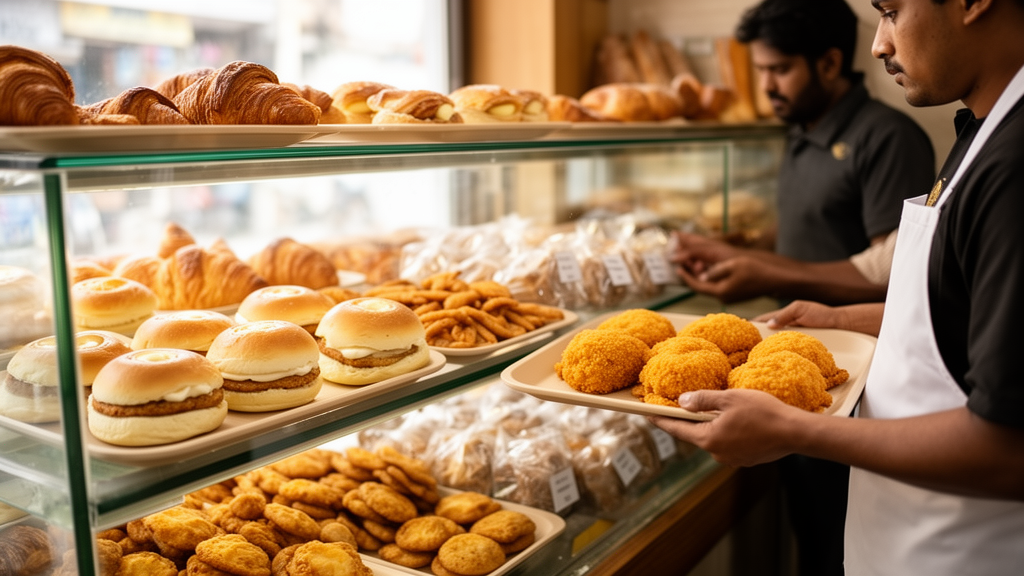
An exploratory chemical analysis of eight unlabeled bakery products sold in Jashore District, Bangladesh, has found trans fatty acids in most of the samples, with concentrations reaching 5.84 percent of total fatty acids in the worst case. The study, published on 7 September 2026 as an open access research article in the journal Food Safety and Risk, also documented total fat contents of up to 24.10 percent, elevated peroxide and acid values in several items, and palmitic acid as the single most abundant fatty acid across the products analyzed. Because none of the items carried nutrition labels, consumers had no way of knowing what kinds of fats they were eating.
The research team, whose first listed authors are Azizur Rahman and Sanaullah Mazumdar, set out to fill a specific data gap. While branded and packaged bakery foods in Bangladesh are nominally subject to nutrition labeling requirements, a large share of bakery items produced and sold locally, particularly in rural and informal markets, remain unlabeled. Earlier studies in the country had concentrated on branded or packaged foods, leaving the fatty acid composition and trans fat content of locally produced, unlabeled products largely uncharacterized. The authors describe their work as a baseline risk-screening assessment rather than a population-level survey.
The samples comprised five biscuit products, one dry cake, one muffin, and one chanachur, a popular fried savory snack, collected from major bakery manufacturers and retail suppliers in Jashore District. Sample masses were approximately 300 grams, except for the muffin at 700 grams. Each product was analyzed in triplicate, but only a single production batch per product could be tested because of logistical and resource limitations, a constraint the authors emphasize throughout the paper. The products were chosen because they are commonly available and widely consumed across different socioeconomic groups.
The analytical work followed internationally accepted protocols. Moisture was determined by oven drying at 105 degrees Celsius according to AOAC method 925.09, and total ash by incineration at 600 degrees Celsius. Total fat was extracted with petroleum ether in a Soxhlet apparatus for 24 to 48 hours. The extracted oils were then characterized for acid value, peroxide value, iodine value, and saponification value using official AOCS, ISO, and Codex-referenced methods. Fatty acid methyl esters were prepared by a two-step methylation procedure and separated on a 100-meter capillary column with a flame ionization detector, with trans fatty acids identified against certified linoleic and linolenic acid isomer standards and quantified by gas chromatography with mass spectrometric confirmation.
The headline numbers are striking. Total fat content ranged from 12.97 percent in the muffin to 24.10 percent in a biscuit sample, with a mean of 17.93 percent, and the differences among samples were statistically significant. Mean moisture content was 6.70 percent and mean ash content 0.90 percent, though moisture varied enormously, from about 2 percent in a biscuit and the dry cake to nearly 30 percent in the muffin. The authors note that several items exceeded the moisture ceilings recommended by the Bangladesh Standards and Testing Institution, which allows a maximum of 5.0 percent for biscuits, 12.86 percent for dry cake, and 12.48 percent for muffins, a sign of potential quality problems in storage and packaging.
The lipid quality indices told a similar story of variable and sometimes degraded fat. Acid values, which indicate free fatty acid release from triglyceride hydrolysis, ranged up to 3.59 milligrams per gram in the chanachur sample, well above the maximum of 0.56 milligrams per gram that the Codex Alimentarius Commission and BSTI set for edible refined oil. Iodine values, reflecting the degree of unsaturation, averaged 84.63 grams per 100 grams, and saponification values averaged 210.73 milligrams KOH per gram, with several samples exceeding the range considered acceptable for palm oil.
The fatty acid profiles showed saturated fats making up 37 to 55 percent of total fatty acids, monounsaturated fats 35 to 47.4 percent, and polyunsaturated fats 7.55 to 14.98 percent. Palmitic acid, the principal saturated fatty acid in palm oil, dominated every sample, peaking at 44.44 percent in one biscuit, a pattern the authors attribute to the widespread use of cheap, high-melting-point tropical fats as substitutes for hydrogenated oils in baking. Oleic acid was the main monounsaturated fatty acid at 29.96 to 40.28 percent. Notably, erucic acid, a fatty acid concentrated in rapeseed oil that the European Food Safety Authority has flagged as a dietary exposure concern in fine bakery products, appeared in all samples, reaching 11.52 percent in the dry cake.
The trans fat findings are the study’s central concern. Six of the eight products contained more than 2 grams of trans fatty acids per 100 grams of fat, the threshold that European Union law imposes on food products. The highest level, 5.84 percent of total fatty acids, was measured in a biscuit sample, followed closely by another biscuit at 5.64 percent, the dry cake at 5.48 percent, and a third biscuit at 5.45 percent. The muffin was the exception at just 0.26 percent. Trans-elaidic acid, the signature trans isomer of industrially partially hydrogenated vegetable oils, was the predominant trans fatty acid detected, ranging from 3.06 to 4.92 percent, and smaller amounts of trans isomers of linoleic and linolenic acid were also identified.
These concentrations matter because of the well-documented health associations of industrial trans fats. The World Health Organization recommends limiting trans fat intake to less than 1 percent of total daily energy and advocates eliminating industrially produced trans fats from the food supply, citing strong and consistent associations with cardiovascular disease, type 2 diabetes, obesity, and certain cancers. Earlier research cited in the paper estimated that daily consumption of roughly 5 grams of trans fat is associated with a 25 percent increased risk of cardiovascular disease. Countries including Denmark, Canada, and Thailand have achieved substantial reductions through bans on partially hydrogenated oils, mandatory labeling, and reformulation, but such measures are harder to enforce in low- and middle-income countries where small-scale and informal producers fall outside formal monitoring systems.
The authors are careful about the limits of what their data can show. Because no internal standard was used, fatty acid quantification relied on chromatographic peak-area normalization, making the results semi-quantitative measures of relative proportions in the extracted oil rather than absolute amounts in the original food. The pilot-scale sample of eight products, one batch each, restricts statistical power and generalizability, and oxidation measurements could not fully separate intrinsic properties from storage and processing effects. Bangladesh’s growing burden of diet-related non-communicable diseases and a national bakery demand of roughly 3.56 million metric tons in 2022 give the findings public health relevance, but the team stresses that comprehensive, statistically representative studies are needed before firm conclusions. In the meantime, they argue, the results make the case for enforcing trans fat regulations across all food products and for transparent labeling that lets consumers see what their biscuits and snacks actually contain.
Subject of Research: Trans fatty acid content and lipid quality of unlabeled bakery products in Jashore District, Bangladesh
Article Title: Physicochemical properties, fatty acid composition, and trans fat content of unlabeled bakery products in Bangladesh: implications for food safety and regulation
Article References: Rahman, A., Mazumdar, S., Khuku, T. K., Hossain, M. S., Lima, R. A., Kabir, M. A., Syduzzaman, M., & Faruque, M. O. (2026). Physicochemical properties, fatty acid composition, and trans fat content of unlabeled bakery products in Bangladesh: implications for food safety and regulation. Food Safety and Risk, 13(1), Article 38. https://doi.org/10.1186/s40550-026-00155-z
Image Credits: AI Generated
DOI: 10.1186/s40550-026-00155-z
Keywords: trans fatty acids, bakery products, Bangladesh, food safety, fatty acid composition, GC-MS, palm oil, elaidic acid, food labeling, lipid oxidation, Jashore, non-communicable diseases
News Source: Daisy Hatcher. (October 29, 2026). Trans Fats Found at High Levels in Unlabeled Bakery Products in Bangladesh. Scienmag.