Recent epidemiological investigations conducted in Japan have revealed a noteworthy escalation in the incidence of therapy-related acute myeloid leukemia (tAML), a particularly aggressive hematologic malignancy that arises subsequent to cancer treatment modalities such as chemotherapy and radiation therapy. This alarming trend, meticulously documented in a comprehensive population-based study spanning three decades, implicates an evolving oncologic landscape shaped by the burgeoning population of cancer survivors and the long-term sequelae of their primary cancer treatments.
tAML represents a severe myeloid neoplasm that originates primarily within the bone marrow following exposure to DNA-damaging agents inherent in cytotoxic cancer therapies. The leukemogenic process is believed to be driven, at least partially, by genotoxic stress inflicted on hematopoietic stem and progenitor cells, culminating in clonal expansion of malignant myeloid blasts. The challenge posed by tAML lies both in its refractory clinical behavior and its rising incidence amidst improvements in overall cancer survival rates, potentially reflecting the paradoxical effect of life-prolonging treatments.
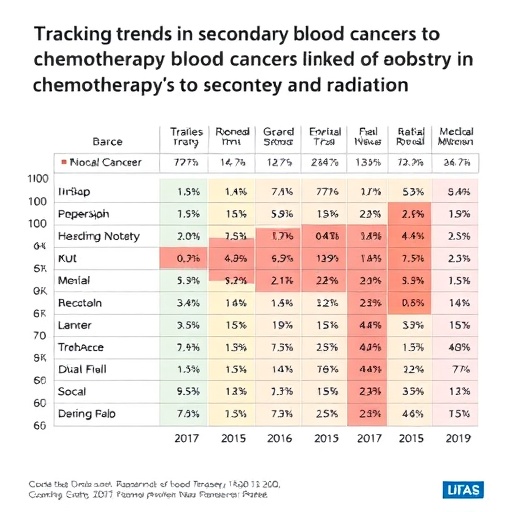
In this expansive inquiry, investigators accessed the Osaka Cancer Registry to assimilate data concerning acute myeloid leukemia diagnoses made between 1990 and 2020. Through rigorous analysis of 9,841 AML cases, it was determined that 636, or approximately 6.5%, were classified as therapy-related. These findings underscore a statistically significant increase in tAML incidence, rising from 0.13 to 0.36 per 100,000 people over the study period—an almost threefold increase, indicative of shifting epidemiological patterns.
A deeper examination of primary malignancies preceding the development of tAML revealed a distinct distribution pattern. Hematologic cancers constituted the most prevalent antecedent diagnoses, accounting for 23.1% of tAML cases. Notably, breast cancer emerged as the second most frequent primary cancer associated with subsequent tAML, representing 14.6% of instances, followed closely by colorectal and gastric malignancies. This evolving distribution reflects changes in cancer prevalence and therapeutic protocols over the past three decades.
The upward trajectory of breast cancer as a primary antecedent of therapy-related leukemia is particularly significant. Advances in breast cancer diagnostics, alongside intensified multimodal treatment regimens that often incorporate anthracyclines and alkylating agents, may potentiate DNA damage to hematopoietic cells. These agents, while efficacious against neoplastic breast tissue, carry a well-recognized risk of inducing secondary hematologic malignancies, necessitating vigilant long-term surveillance.
Conversely, incidents of tAML succeeding gastric cancer treatment have diminished, mirroring decreases in gastric cancer incidence in Japan, likely a result of improved public health measures, dietary shifts, and Helicobacter pylori eradication efforts. This epidemiological shift encapsulates the dynamic interplay between cancer prevention strategies and secondary cancer risks, emphasizing the necessity of tailored survivorship care plans that account for both primary cancer profiles and subsequent treatment-related complications.
The pathobiological mechanisms underpinning tAML are complex and multifactorial. Cytotoxic agents induce double-strand DNA breaks, chromosomal translocations, and epigenetic modifications in hematopoietic stem cells, thereby initiating leukemogenic cascades. Radiation exposure exacerbates genomic instability through direct ionization effects and oxidative stress. The latency period from primary cancer treatment to tAML onset varies, complicating clinical detection and obscuring causal associations in some cases.
From a clinical standpoint, therapy-related AML exhibits a more aggressive disease course compared to de novo AML, often characterized by adverse cytogenetic abnormalities and resistance to conventional chemotherapy. These characteristics contribute to poorer prognosis and heightened mortality, posing significant challenges for oncologists and hematologists tasked with managing patients burdened by dual oncologic diagnoses.
This investigation’s findings illuminate a critical dimension in oncologic survivorship: the imperative to balance effective cancer eradication with mitigation of late-onset, therapy-induced malignancies. As cancer therapies continue to evolve with targeted agents and immunotherapies, ongoing research is needed to delineate their long-term hematologic safety profiles. Enhanced understanding of genetic predispositions, pharmacogenomics, and DNA repair mechanisms may offer insights to stratify patients’ risks and tailor treatment accordingly.
Lead author Dr. Kenji Kishimoto of the Osaka International Cancer Institute emphasizes that these findings underscore the changing face of therapy-related AML in Japan, advocating for integrative cancer control strategies. Such strategies should encompass not only primary cancer treatment optimization but also proactive monitoring and early intervention for secondary malignancies, thereby improving overall patient outcomes in an aging and increasingly cancer-survivor population.
In conclusion, the incremental rise in therapy-related acute myeloid leukemia incidence, especially following breast cancer treatment, reflects both progress and an emerging paradox within contemporary oncology. As survival rates for many primary cancers improve, vigilance against secondary hematologic complications must intensify. This study provides a pivotal framework for the global oncology community to investigate, monitor, and ultimately curtail the burden of therapy-related leukemias, reinforcing the necessity of lifelong surveillance and personalized survivorship care.
This research exemplifies the critical importance of comprehensive cancer registries in elucidating long-term treatment consequences and shaping evidence-based clinical guidelines. Future investigations should aim to integrate molecular diagnostics and real-world treatment data to further decode the etiopathogenesis of tAML and to innovate safer oncologic therapies that minimize cumulative genotoxic exposure while maximizing therapeutic efficacy.
Subject of Research: Therapy-related acute myeloid leukemia incidence and primary cancer distribution trends in Japan over three decades.
Article Title: Increasing incidence and changing distribution of primary cancers in therapy-related acute myeloid leukemia: A population-based study in Osaka, Japan, 1990–2020
News Publication Date: April 6, 2026
Web References: http://dx.doi.org/10.1002/cncr.70316
References: Kishimoto K, Nakata K, Shimadzu Kato M, Ikawa T, Kudo H, Iwaki Y, Kuwabara Y, Morishima T, Miyashiro I. Increasing incidence and changing distribution of primary cancers in therapy-related acute myeloid leukemia: A population-based study in Osaka, Japan, 1990–2020. CANCER. Published Online: April 6, 2026. DOI: 10.1002/cncr.70316.
Keywords: therapy-related acute myeloid leukemia, tAML, chemotherapy, radiation therapy, secondary malignancies, breast cancer, hematologic malignancy, epidemiology, cancer survivorship, DNA damage, cytotoxic therapy, Osaka Cancer Registry
Tags: bone marrow neoplasms post-cancer therapychemotherapy and radiation side effectsclonal expansion in myeloid leukemiaepidemiology of therapy-related AMLgenotoxic stress in hematopoietic stem cellsJapan cancer survivor studieslong-term effects of cancer treatmentpopulation-based cancer registry analysisradiation-induced hematologic malignanciesrising trends in secondary leukemiasecondary blood cancers after chemotherapytherapy-related acute myeloid leukemia incidence