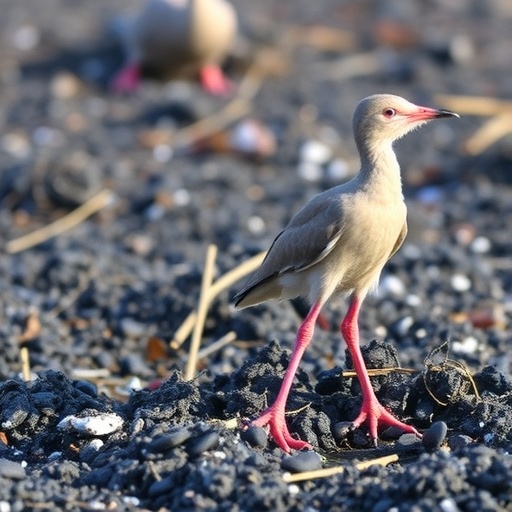
The choice of bird guano as a surveillance tool merits deeper exploration. Excreta from birds provide a concentrated matrix of viral particles shed from the gastrointestinal and respiratory tracts. Environmental stability of these viral fragments can allow for detection days after deposition, offering a non-invasive snapshot of infection prevalence. Crucially, sampling guano circumvents ethical and practical issues linked to capturing wild birds, reduces risk to field personnel, and enables repeated sampling across large and inaccessible areas. The methodological rigor demonstrated in this study includes optimized collection protocols that minimize contamination and degradation, ensuring reliable viral RNA recovery for downstream molecular analyses.
Fieldwork conducted in diverse remote locations—ranging from dense tropical wetlands to high-altitude migratory stopovers—demonstrates the scalability and adaptability of guano-based surveillance. The researchers engaged local communities and leveraged indigenous ecological knowledge to identify high-density roosting sites, enhancing sampling efficiency while fostering community involvement. This aspect not only enhances data quality but also aligns with ethical imperatives, promoting inclusive scientific practices and emphasizing the one-health concept by bridging wildlife, environment, and human health.
Additionally, the research addresses environmental factors influencing virus stability and transmission. Parameters such as temperature, humidity, UV exposure, and substrate composition were systematically evaluated for their impact on viral RNA persistence in guano. This nuanced understanding enables refinement of sampling timing and locations to maximize detection probability, an essential advancement over static one-size-fits-all protocols prevalent in earlier surveillance efforts.
The study also grapples with challenges inherent to field-based molecular surveillance. Variability in viral loads, potential inhibitors in environmental matrices, and the complexity of distinguishing infectious virus particles from residual RNA fragments necessitate advanced quality controls and validation standards. Through exhaustive pilot studies and inter-laboratory comparisons, the researchers established robust operating procedures that can serve as guidelines for broader implementation.
Importantly, the longitudinal data collected foster the construction of predictive models integrating ecological, virological, and environmental variables. These models can forecast hotspots and temporal windows of increased transmission risk, guiding resource allocation. As global climate change alters migratory patterns and habitat distributions, such models are invaluable for anticipating emerging infectious disease risks under shifting ecological landscapes.
Subject of Research: Surveillance of avian influenza viruses via analysis of bird guano in remote regions of the global south to understand transmission dynamics.
Article Title: Surveillance of avian influenza through bird guano in remote regions of the global south to uncover transmission dynamics.
Article References:
Wannigama, D.L., Amarasiri, M., Phattharapornjaroen, P. et al. Surveillance of avian influenza through bird guano in remote regions of the global south to uncover transmission dynamics. Nat Commun 16, 4900 (2025). https://doi.org/10.1038/s41467-025-59322-z
Image Credits: AI Generated
Tags: avian flu transmission pathwaysavian influenza surveillancebird guano analysiscost-effective wildlife monitoringecological impact of bird fluenvironmental sampling methodsinfluenza A virus subtypesinnovative disease detection techniqueslow-resource public health strategiesmigratory bird monitoringpandemic prevention strategiesremote region epidemiology