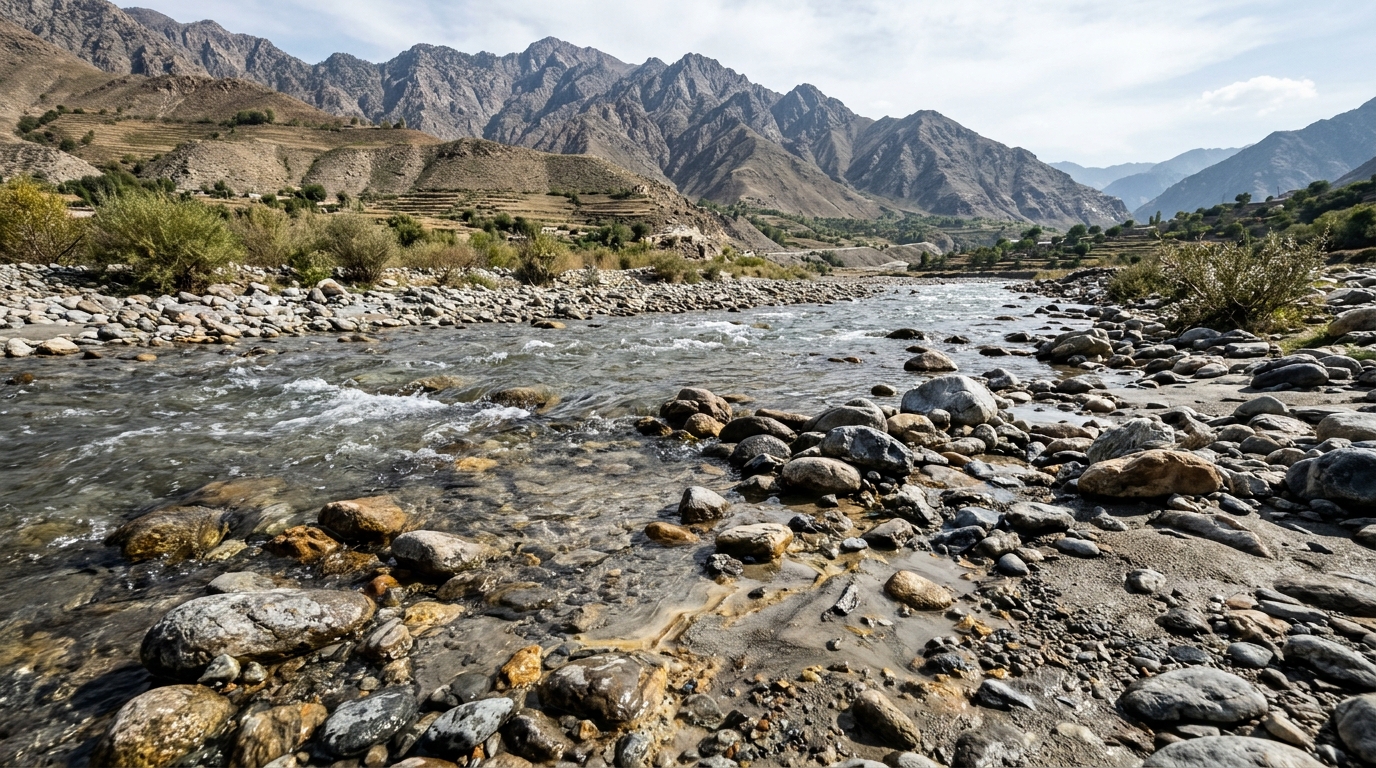
In a snapshot assessment of the Swat River basin in the Hindu Kush region of Pakistan, researchers evaluated surface water, sediment, and fish samples from three tributaries, finding that Mingora and Marghuzar streams exhibited high-degree contamination while Jambil Stream displayed considerable-degree contamination. The study applied an integrated approach combining multivariate statistics, ecological indices, and scenario-based human health modeling to characterize the distribution of eight potentially toxic elements: cadmium, lead, zinc, copper, chromium, cobalt, nickel, and iron.
Contamination indices applied across the multi-media sampling revealed distinct contamination levels among the investigated tributary streams. Contamination degrees reached 32.67 in Mingora Stream and 30.29 in Marghuzar Stream, categorizing both waters as showing high-degree contamination, whereas Jambil Stream exhibited considerable-degree contamination with a contamination degree of 19.81. Because Mingora Stream traverses a densely populated urban center, the researchers noted that it may represent a potential source of potentially toxic elements contributing to the downstream Swat River.
To differentiate the origins of the observed elemental contamination, the researchers conducted principal component analysis, which identified distinct elemental assemblages across the watershed. One group of elements, comprising chromium, nickel, and cobalt, was identified as potentially associated with natural bedrock weathering. In contrast, a separate elemental assemblage consisting of cadmium, lead, and zinc was linked to anthropogenic influences, including wastewater discharge, mining activities, and traffic.
Ecological risk indices calculated for the tributary systems identified cadmium as the principal contributor to the overall ecological risk among the eight evaluated elements. The investigation utilized these indices alongside multi-media sampling across water, sediment, and aquatic biota to evaluate potential ecological vulnerability in mountainous watersheds, which face pressures from both natural weathering processes and human activities.
Scenario-based health risk modeling indicated that risks associated with individual exposure pathways remained below the recommended safety threshold during the investigated sampling period. The evaluation assessed drinking water exposure for children and adults, while risks related to fish consumption were evaluated separately for the general population and fishermen. The authors noted that this integrated assessment of contamination patterns, elemental sources, ecological risks, and human health risks provides baseline information to support future environmental monitoring and management of mountainous tributary systems.
Subject of Research: Potentially toxic element contamination and risk assessment in Swat River tributaries
Article Title: Potentially toxic element contamination in the tributaries of Swat River system, Pakistan: multi-media assessment of contamination patterns, ecological risks, and human health implications
Article References: Ali, S., Li, J., Shams, D. F., & Nawab, J. (2026). Potentially toxic element contamination in the tributaries of Swat River system, Pakistan: multi-media assessment of contamination patterns, ecological risks, and human health implications. Environmental Geochemistry and Health, 48(17), Article 679. https://doi.org/10.1007/s10653-026-03582-1
Image Credits: AI Generated
DOI: 10.1007/s10653-026-03582-1
Keywords: Swat River basin, tributaries, potentially toxic elements, water contamination, ecological risk, health risk assessment, sediment, fish consumption, Potentially, toxic, element, contamination
News Source: Violet Maxwell. (November 6, 2026). Toxic Element Contamination Assessed Across Swat River Tributaries in Pakistan. Scienmag.