In a groundbreaking study poised to redefine therapeutic strategies for liver cancer, researchers have uncovered a compelling molecular mechanism underlying resistance to transarterial chemoembolization (TACE) in hepatocellular carcinoma (HCC). The investigation reveals a sophisticated positive feedback loop between transketolase (TKT) and the oncogenic transcription factor c-Myc, a discovery that illuminates the intricate biochemical pathways fueling drug resistance in one of the most aggressive forms of liver cancer. This work not only broadens our understanding of HCC biology but also opens promising avenues for the development of targeted interventions that could overcome TACE resistance and improve patient outcomes.
Hepatocellular carcinoma ranks as a leading cause of cancer-related deaths globally, with therapeutic resistance posing a formidable challenge in clinical management. Among current treatments, TACE stands as a primary modality for intermediate-stage HCC, involving localized delivery of chemotherapeutic agents combined with arterial embolization to induce ischemic necrosis in tumors. However, a significant subset of patients eventually relapses due to multifactorial resistance mechanisms, curtailing the long-term efficacy of TACE. The molecular drivers orchestrating this resistance have remained only partially understood, impeding the advent of efficacious countermeasures.
Central to the emerging narrative is the role of TKT, a pivotal enzyme in the non-oxidative branch of the pentose phosphate pathway (PPP), which mediates essential metabolic fluxes crucial for nucleotide biosynthesis and redox homeostasis. Elevated TKT expression in cancer cells has been implicated in promoting anabolic metabolism and supporting rapid proliferation. The new study delineates how TKT not only facilitates metabolic rewiring in HCC but also engages in a bidirectional regulatory interplay with c-Myc, a master regulator of cellular growth and metabolism, frequently dysregulated in myriad cancers.
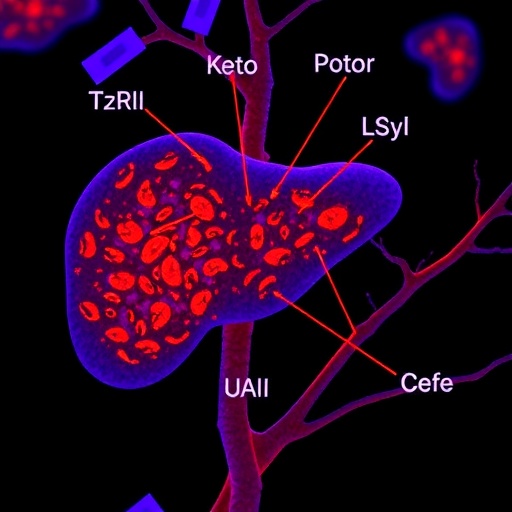
Through an integrative approach combining patient-derived tumor analyses, in vitro mechanistic dissections, and in vivo modeling, the researchers demonstrate that TKT expression is transcriptionally augmented by c-Myc. Concurrently, TKT enzymatic activity reinforces c-Myc stability by modulating downstream metabolic intermediates that influence c-Myc post-translational modifications, creating a self-perpetuating feedback loop. This loop effectively sustains elevated oncogenic signaling, conferring survival advantages under chemotherapeutic stress imposed by TACE.
Mechanistically, the team elucidates that enhanced TKT activity bolsters nucleotide synthesis and maintains a reduced intracellular environment via the PPP, pathways essential to counteract reactive oxygen species and DNA damage induced by chemotherapeutics. Moreover, c-Myc-driven transcriptional programs potentiate the expression of a spectrum of genes involved in cell cycle progression, DNA repair, and metabolic adaptation, establishing a multifaceted defense against cytotoxic insults. Disruption of this crosstalk emerges as a viable strategy to sensitize hepatocellular carcinoma cells to TACE.
Importantly, using pharmacological inhibitors targeting TKT enzymatic function, alongside genetic knockdowns, the investigators achieved notable restoration of TACE susceptibility in resistant HCC models. This dual targeting not only attenuated c-Myc activity but also diminished tumor burden and prolonged survival in animal studies, underscoring the therapeutic promise of attacking this feedback circuitry. The findings suggest a potential combination regimen incorporating TKT inhibitors with conventional TACE to thwart adaptive resistance mechanisms.
This research also underscores the broader paradigm of metabolism-linked transcriptional regulation in cancer drug resistance. The coupling between metabolic enzymes and transcription factors exemplifies how cancer cells integrate nutrient sensing and genetic programming to endure hostile microenvironments and therapeutic interventions. Targeting such metabolic-transcriptional feedback loops could revolutionize treatment frameworks beyond hepatocellular carcinoma, encompassing other malignancies exhibiting similar resistance phenotypes.
While the study shines a light on TKT and c-Myc interactions, it propels further inquiries into the molecular nuances dictating feedback loop dynamics, including potential involvement of microRNAs, epigenetic modulators, and additional metabolic checkpoints. Understanding these layers may refine strategies to disrupt the robustness of oncogenic circuits. Additionally, patient stratification based on TKT-c-Myc axis activity could pave the way for personalized medicine approaches, optimizing therapeutic efficacy and minimizing undue toxicity.
Beyond therapeutic implications, this body of work advances biomarker discovery efforts. Elevated TKT and c-Myc expression profiles could serve as predictive indicators for TACE responsiveness, aiding clinical decision-making. The adoption of multiplexed diagnostic assays incorporating these markers may enhance early identification of resistant tumors, promoting timely intervention with combination therapies designed to dismantle the metabolic-feedback architecture.
The implications of this discovery resonate across the landscape of precision oncology. By unmasking the metabolic underpinnings of treatment resistance, the research compels a re-evaluation of existing chemotherapeutic paradigms and inspires newer classes of metabolic modulators as adjuvants in cancer therapy. It exemplifies the critical need to bridge metabolic biochemistry and oncogenic signaling pathways in drug development pipelines for more durable clinical benefits.
Furthermore, this investigation invited technological advances, particularly in metabolomic profiling and gene editing, which were instrumental in dissecting the complex reciprocity between TKT and c-Myc. These methodological innovations hold promise for elucidating other context-dependent feedback loops in cancer and beyond. Their integration into routine research and clinical platforms could accelerate transformative breakthroughs in cancer biology.
In conclusion, the elucidation of a positive feedback loop between TKT and c-Myc as a key driver of TACE resistance in hepatocellular carcinoma constitutes a seminal advance with profound therapeutic and diagnostic ramifications. The prospect of intercepting this molecular crosstalk offers hope for overcoming current barriers limiting treatment efficacy for HCC patients. As the oncology community continues to grapple with tumor heterogeneity and adaptive resistance, such insights render a compelling blueprint for targeting metabolic vulnerabilities intertwined with oncogenic signaling networks. Ultimately, this knowledge propels the frontier toward more effective, personalized, and durable cancer care strategies.
Subject of Research: Mechanisms of transarterial chemoembolization (TACE) resistance in hepatocellular carcinoma, focusing on the metabolic and oncogenic interplay between transketolase (TKT) and c-Myc.
Article Title: A positive feedback loop between TKT and c-Myc drives TACE resistance in hepatocellular carcinoma.
Article References:
Xiao, Y., Liu, M., Zhou, Y. et al. A positive feedback loop between TKT and c-Myc drives TACE resistance in hepatocellular carcinoma. Cell Death Discov. (2026). https://doi.org/10.1038/s41420-026-03125-8
Image Credits: AI Generated
DOI: https://doi.org/10.1038/s41420-026-03125-8
Tags: biochemical pathways in liver cancer progressionc-Myc oncogenic transcription factor in liver cancerhepatocellular carcinoma drug resistance pathwaysmolecular mechanisms of TACE resistancenon-oxidative pentose phosphate pathway in cancerovercoming TACE resistance in hepatocellular carcinomatargeted therapy for HCCtherapeutic strategies for intermediate-stage HCCTKT and c-Myc positive feedback looptransarterial chemoembolization resistance in liver cancertransketolase role in cancer metabolism