• HOME
  • NEWS
  • EXPLORE
    • CAREER
      • Companies
      • Jobs
    • EVENTS
    • iGEM
      • News
      • Team
    • PHOTOS
    • VIDEO
    • WIKI
  • BLOG
  • COMMUNITY
    • FACEBOOK
    • INSTAGRAM
    • TWITTER
Monday, October 5, 2026
BIOENGINEER.ORG
No Result
View All Result
  • Login
  • HOME
  • NEWS
  • EXPLORE
    • CAREER
      • Companies
      • Jobs
        • Lecturer
        • PhD Studentship
        • Postdoc
        • Research Assistant
    • EVENTS
    • iGEM
      • News
      • Team
    • PHOTOS
    • VIDEO
    • WIKI
  • BLOG
  • COMMUNITY
    • FACEBOOK
    • INSTAGRAM
    • TWITTER
No Result
View All Result
Bioengineer.org
No Result
View All Result
Home NEWS Science News

Tissue-engineered model developed to study bone-invading tumor

Bioengineer by Bioengineer
February 24, 2017
in Science News
Reading Time: 2 mins read
0
Share on FacebookShare on TwitterShare on LinkedinShare on RedditShare on Telegram
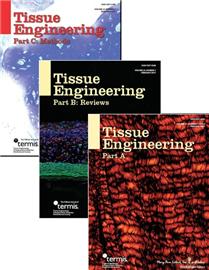
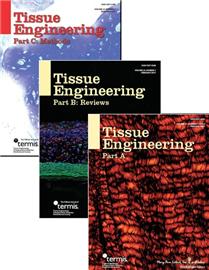
IMAGE

Credit: Mary Ann Liebert, Inc., publishers

New Rochelle, NY, February 24, 2017–Researchers have used tissue engineering to create models for studying the bone-destroying activity of tumors such as the aggressive pediatric cancer Ewing's sarcoma. A new 3-dimensional, living model of the osteolytic process and bone remodeling, which can serve a valuable tool for exploring disease mechanisms and the effectiveness of potential treatments, is described in Tissue Engineering, Part C, Methods, a peer-reviewed journal from Mary Ann Liebert, Inc., publishers. The article is available free on the Tissue Engineering website until March 24, 2017.

In the article entitled "Tissue-Engineered Model of Human Osteolytic Bone Tumor," Gordana Vunjak-Novakovic and coauthors from Columbia University, New York, NY and Politecnico di Milano, Italy, present the methods used to bioengineer a living Ewing's sarcoma model that includes both osteoclasts and osteoblasts in a controllable biomimetic environment. The researchers demonstrate the usefulness of the model for testing anti-osteolytic drugs.

"There is an urgent need for the development of human-like tumor models. This article is an excellent example of the progress being made," says Methods Co-Editor-in-Chief John A. Jansen, DDS, PhD, Professor and Head, Department of Biomaterials, Radboud University Medical Center, The Netherlands.

###

Research reported in this publication was supported by the National Institutes of Health under Award Numbers EB002520 and EB17103. The content is solely the responsibility of the authors and does not necessarily represent the official views of the National Institutes of Health.

About the Journal

Tissue Engineering is an authoritative peer-reviewed journal published monthly online and in print in three parts: Part A, the flagship journal published 24 times per year; Part B: Reviews, published bimonthly, and Part C: Methods, published 12 times per year. Led by Co-Editors-In-Chief Antonios Mikos, PhD, Louis Calder Professor at Rice University, Houston, TX, and Peter C. Johnson, MD, Principal, MedSurgPI, LLC, President and CEO, Scintellix, LLC, Raleigh, NC, the Journal brings together scientific and medical experts in the fields of biomedical engineering, material science, molecular and cellular biology, and genetic engineering. Tissue Engineering is the official journal of the Tissue Engineering & Regenerative Medicine International Society (TERMIS). Complete tables of content and a sample issue may be viewed online at the Tissue Engineering website.

About the Publisher

Mary Ann Liebert, Inc., publishers is a privately held, fully integrated media company known for establishing authoritative peer-reviewed journals in many promising areas of science and biomedical research, including Stem Cells and Development, Human Gene Therapy, and Advances in Wound Care. Its biotechnology trade magazine, GEN (Genetic Engineering & Biotechnology News), was the first in its field and is today the industry's most widely read publication worldwide. A complete list of the firm's 80 journals, books, and newsmagazines is available on the Mary Ann Liebert, Inc., publishers website.

Media Contact

Kathryn Ryan
[email protected]
914-740-2250
@LiebertPub

http://www.liebertpub.com

############

Story Source: Materials provided by Scienmag

Share12Tweet8Share2ShareShareShare2

Related Posts

Three Warning Signals Could Help VR Users Spot AI Hallucinations

Three Warning Signals Could Help VR Users Spot AI Hallucinations

October 5, 2026
AI Model Brings Transparency to the Chaotic World of Industrial Process Monitoring

AI Model Brings Transparency to the Chaotic World of Industrial Process Monitoring

October 5, 2026

New Tool Reads Hidden Host DNA in Microbiome Data to Predict Biological Sex

October 5, 2026

Physicochemical Graphs Make RNA Location Predictions Interpretable and Light

October 5, 2026
Please login to join discussion

POPULAR NEWS

  • Alloys That Shrink Their Own Grains: New PIX Mechanism Refines Metals With Heat Alone

    Alloys That Shrink Their Own Grains: New PIX Mechanism Refines Metals With Heat Alone

    29 shares
    Share 12 Tweet 7
  • Endurance Exercise Reshapes the Liver in Males and Females Through Distinct Molecular Routes

    29 shares
    Share 12 Tweet 7
  • Single Transcription Factor PU.1 Rapidly Converts Fibroblasts into Macrophage-Lineage Cells

    29 shares
    Share 12 Tweet 7
  • New Scale Measures How Ready Nurse Educators Really Are for the AI Era

    29 shares
    Share 12 Tweet 7

About

We bring you the latest biotechnology news from best research centers and universities around the world. Check our website.

Follow us

Recent News

Alloys That Shrink Their Own Grains: New PIX Mechanism Refines Metals With Heat Alone

Endurance Exercise Reshapes the Liver in Males and Females Through Distinct Molecular Routes

Single Transcription Factor PU.1 Rapidly Converts Fibroblasts into Macrophage-Lineage Cells

Subscribe to Blog via Email

Success! An email was just sent to confirm your subscription. Please find the email now and click 'Confirm' to start subscribing.

Join 85 other subscribers
  • Contact Us

Bioengineer.org © Copyright 2023 All Rights Reserved.

Welcome Back!

Login to your account below

Forgotten Password?

Retrieve your password

Please enter your username or email address to reset your password.

Log In
No Result
View All Result
  • Homepages
    • Home Page 1
    • Home Page 2
  • News
  • National
  • Business
  • Health
  • Lifestyle
  • Science

Bioengineer.org © Copyright 2023 All Rights Reserved.