• HOME
  • NEWS
  • EXPLORE
    • CAREER
      • Companies
      • Jobs
    • EVENTS
    • iGEM
      • News
      • Team
    • PHOTOS
    • VIDEO
    • WIKI
  • BLOG
  • COMMUNITY
    • FACEBOOK
    • INSTAGRAM
    • TWITTER
Tuesday, April 14, 2026
BIOENGINEER.ORG
No Result
View All Result
  • Login
  • HOME
  • NEWS
  • EXPLORE
    • CAREER
      • Companies
      • Jobs
        • Lecturer
        • PhD Studentship
        • Postdoc
        • Research Assistant
    • EVENTS
    • iGEM
      • News
      • Team
    • PHOTOS
    • VIDEO
    • WIKI
  • BLOG
  • COMMUNITY
    • FACEBOOK
    • INSTAGRAM
    • TWITTER
  • HOME
  • NEWS
  • EXPLORE
    • CAREER
      • Companies
      • Jobs
        • Lecturer
        • PhD Studentship
        • Postdoc
        • Research Assistant
    • EVENTS
    • iGEM
      • News
      • Team
    • PHOTOS
    • VIDEO
    • WIKI
  • BLOG
  • COMMUNITY
    • FACEBOOK
    • INSTAGRAM
    • TWITTER
No Result
View All Result
Bioengineer.org
No Result
View All Result
Home NEWS Science News

Tiny robots step closer to treating hard-to-reach parts of the body

Bioengineer by Bioengineer
November 22, 2017
in Science News
Reading Time: 2 mins read
0
Share on FacebookShare on TwitterShare on LinkedinShare on RedditShare on Telegram
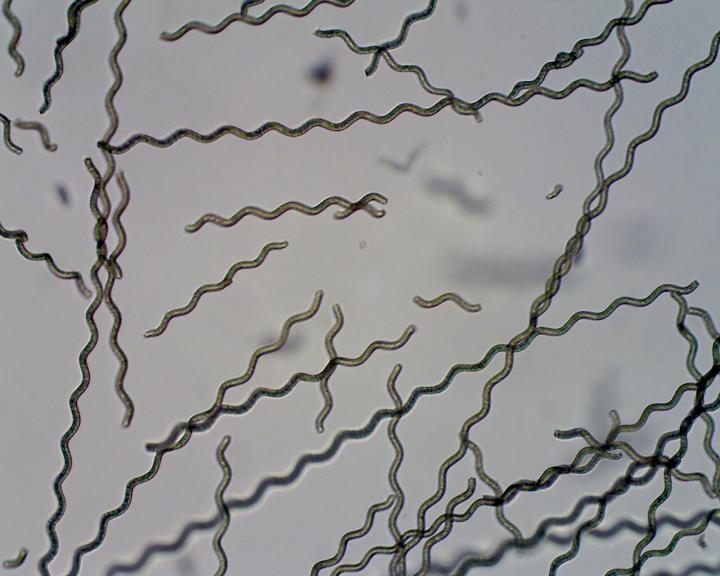
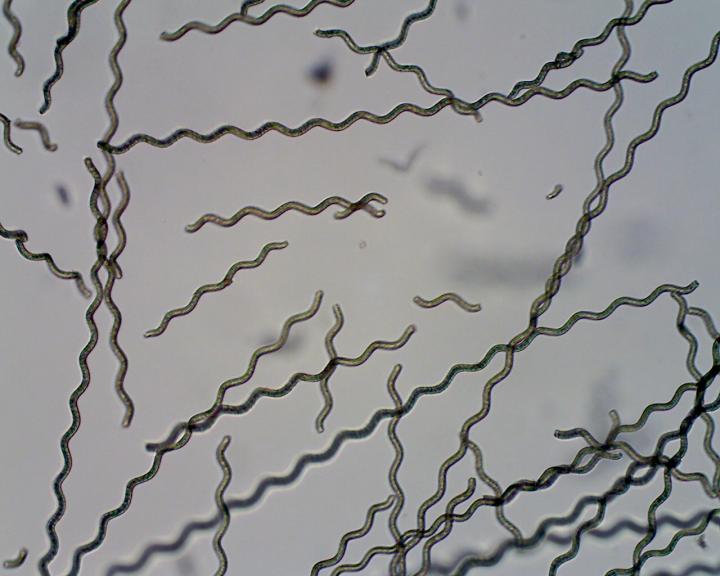
IMAGE

Credit: Yan et al Science Robotics 2017

Tiny remotely operated robots could be designed to diagnose and treat illness in hard-to-reach areas of the human body, research suggests.

In tests, a swarm of robots measuring a few millionths of a metre long – about the size of a blood cell – were guided magnetically to sites in the stomach of rats.

The robots were manufactured by coating tiny algae with magnetic particles.

They could be tracked in tissue close to the skin's surface by imaging the algae's natural luminescence, and in hard-to-reach deeper tissue by magnetic resonance imaging (MRI).

Scientists suggest their findings could lead to a way to deliver drugs to parts of the body that are otherwise difficult to treat.

The robots could also sense chemical changes linked to the onset of illness within parts of the body, which makes them potentially useful as probes for remote diagnosis.

An international team of researchers, led by the Chinese University of Hong Kong, developed micro-robots by coating a microscopic algae with non-harmful, biocompatible magnetic particles. The devices can smoothly swim in biological fluids, such as dilute blood and gastric fluid.

The time taken for the robots to function and biodegrade within the body could be tailored by adjusting the thickness of their manufactured coating.

In lab tests, the devices were found to release potent compounds from the algae core during degradation, which selectively attacked cancer cells while leaving healthy cells unharmed. Further research could show whether this might have potential as a treatment, researchers say.

The study, published in Science Robotics, was carried out in collaboration with the Universities of Edinburgh and Manchester. It was supported by the Research Grants Council of Hong Kong.

Qi Zhou, of the University of Edinburgh's School of Engineering, who worked on the study, said: "A small-scale robot that can be remotely guided, is easily tracked and harmlessly biodegrades, potentially overcomes many of the challenges faced by minimally invasive therapies. We hope our discoveries will pave the way for the development of useful diagnostics or treatments."

###

Media Contact

Catriona Kelly
[email protected]
44-779-135-5940
@edinunimedia

http://www.ed.ac.uk

Share12Tweet8Share2ShareShareShare2

Related Posts

tRNA-Deacylase Uncovers Hidden Biosynthetic Pathways

tRNA-Deacylase Uncovers Hidden Biosynthetic Pathways

April 14, 2026

Autonomous Closed-Loop Boosts Perovskite Solar Reproducibility

April 14, 2026

Tap Water Chemicals May Pose Risks to Embryo Development

April 14, 2026

AI-Driven Task-Oriented Architecture Paves the Way for 6G Networks

April 14, 2026
Please login to join discussion

POPULAR NEWS

  • Scientists Investigate Possible Connection Between COVID-19 and Increased Lung Cancer Risk

    60 shares
    Share 24 Tweet 15
  • Boosting Breast Cancer Risk Prediction with Genetics

    47 shares
    Share 19 Tweet 12
  • Popular Anti-Aging Compound Linked to Damage in Corpus Callosum, Study Finds

    45 shares
    Share 18 Tweet 11
  • Revolutionary Theory Transforms Quantum Perspective on the Big Bang

    41 shares
    Share 16 Tweet 10
>

About

We bring you the latest biotechnology news from best research centers and universities around the world. Check our website.

Follow us

Recent News

tRNA-Deacylase Uncovers Hidden Biosynthetic Pathways

Autonomous Closed-Loop Boosts Perovskite Solar Reproducibility

Tap Water Chemicals May Pose Risks to Embryo Development

Subscribe to Blog via Email

Enter your email address to subscribe to this blog and receive notifications of new posts by email.

Join 79 other subscribers
  • Contact Us

Bioengineer.org © Copyright 2023 All Rights Reserved.

Welcome Back!

Login to your account below

Forgotten Password?

Retrieve your password

Please enter your username or email address to reset your password.

Log In
No Result
View All Result
  • Homepages
    • Home Page 1
    • Home Page 2
  • News
  • National
  • Business
  • Health
  • Lifestyle
  • Science

Bioengineer.org © Copyright 2023 All Rights Reserved.