…
…
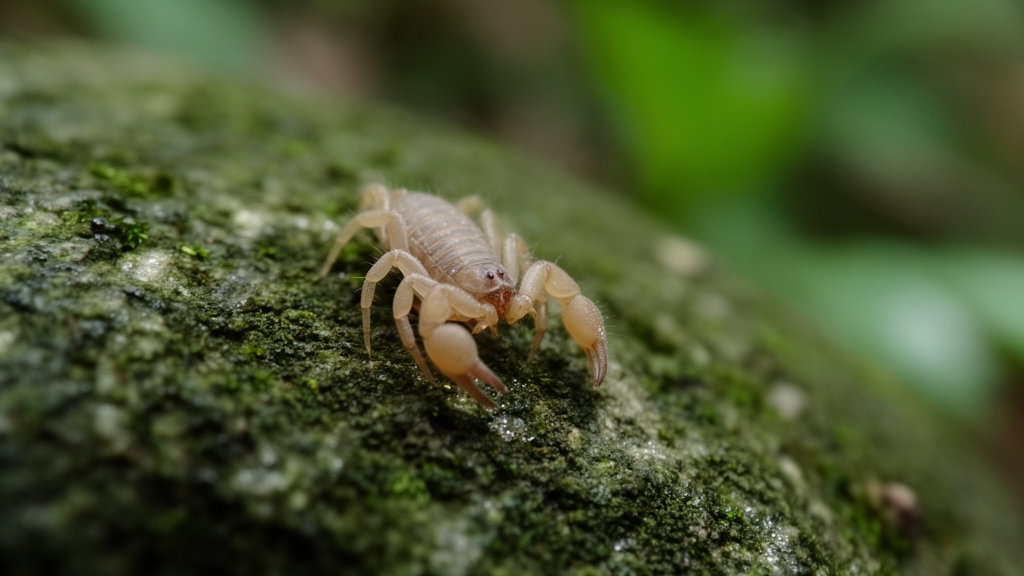
The description of Mundochthonius tsushimaensis adds a notable chapter to the ongoing reassessment of pseudoscorpion diversity in East Asia, a region where soil and litter-dwelling arthropods have historically been catalogued using external anatomy alone. Pseudoscorpions are ancient arachnids with fossil records stretching back tens of millions of years, and their small size, secretive habits, and preference for humid microhabitats such as leaf litter, soil crevices, and caves mean that many species occupy extremely restricted ranges. When an animal with limited dispersal capacity becomes isolated on an island or on one side of a major geological barrier, populations stop exchanging genes, and over evolutionary time the accumulated genetic differences can become far larger than any visible change in body form. This decoupling of genetic and morphological evolution is precisely what the Tsushima discovery illustrates: the new species is essentially indistinguishable from its relatives under the microscope, yet its mitochondrial COI sequences differ by roughly fourteen percent from every other known member of the genus, a level of divergence that in many arthropod groups corresponds to millions of years of independent evolution.
The COI barcode region has become the workhorse of animal DNA barcoding because it mutates rapidly enough to distinguish closely related species while remaining identifiable across broad taxonomic scales. In pseudoscorpions, comparative studies of related lineages have suggested that interspecific divergences often cluster around six to seven percent, which is why the authors applied a 6.8 percent threshold borrowed from work on the sister family Pseudotyrannochthoniidae. Against that yardstick, the fourteen percent separation of the Tsushima lineage is exceptional, roughly double the conventional cutoff, and it places the new species among the most genetically distinct members of the genus known from Japan. Equally important, the genetic distinctiveness is corroborated by geography: Tsushima Island lies in the Korea Strait, closer to the Korean peninsula than to mainland Kyushu, and its fauna has long been recognized as a blend of continental and Japanese elements shaped by fluctuating land bridges and sea levels during the Pleistocene. An island population cut off from both sides of the strait is an ideal candidate for allopatric speciation, and the molecular data confirm that expectation.
The broader pattern emerging from the phylogeny is just as significant as the new species itself. Japanese Mundochthonius fall into seven major clades, and their distribution across the archipelago is not random. Five of the clades are confined to eastern Japan, while one clade spans much of western Japan, and the boundary between these two faunal provinces coincides with the Itoigawa-Shizuoka Tectonic Line. This geological structure, running roughly from the Sea of Japan coast in Niigata Prefecture down to the Pacific coast in Shizuoka Prefecture, marks the western edge of the Fossa Magna, a deep geological depression where the Izu volcanic arc is colliding with the main island of Honshu. Biologists have long recognized this line as a major faunal and floral divide, separating eastern and western Japanese populations in groups as varied as insects, amphibians, and plants, and the pseudoscorpion data now show the same signature in a group of minute litter predators. Such concordance across unrelated organisms points to shared historical causes: repeated fragmentation of habitats during glacial cycles, volcanic activity, mountain building, and the formation and severing of land connections all left lasting imprints on the distributions of species with poor dispersal abilities.
The authors interpret this geographic structuring through a refugial model, in which deeply divergent lineages survived in isolated pockets of suitable habitat while surrounding populations were repeatedly lost and recolonized during climatic oscillations. Under this scenario, the short-range endemic clades of eastern Japan would represent ancient lineages that persisted in stable refugia, such as unglaciated forested valleys and coastal lowlands, while the more widespread western clade may reflect a history of broader connectivity across the Inland Sea region and the Korean peninsula. Short-range endemism of this kind is a hallmark of soil arthropods worldwide, and it carries practical consequences: species with tiny ranges and no dispersal ability are inherently vulnerable to habitat destruction, and many such species likely go extinct before they are ever formally named. Recognizing cryptic species through DNA barcoding is therefore not merely an academic exercise in splitting; it directly changes conservation assessments, because a population previously considered a single widespread species may in fact comprise several narrow endemics, each requiring protection in its own right.
Methodologically, the study exemplifies the integrative taxonomy framework that has become standard practice for difficult groups. Rather than relying on a single analysis, the authors applied five independent species-delimitation approaches: two distance-based methods that automatically detect gaps in the distribution of pairwise genetic distances, two tree-based methods that infer species as independently evolving lineages on the phylogeny, and a fixed-threshold criterion calibrated from related taxa. These methods disagreed on the precise number of species, estimating anywhere from twenty-one to thirty-five putative species among the sampled Japanese specimens, which is a common and informative outcome. Distance-based methods tend to be conservative, merging lineages when barcode gaps are ambiguous, while tree-based approaches can be liberal, splitting lineages when population-level structure is strong. The fact that all five methods nevertheless agreed on the distinctiveness of the Tsushima lineage, and on the separation of Mundochthonius scolytidis from nominal M. japonicus, gives confidence that these are real species boundaries rather than artifacts of a particular analytical choice. The formal elevation of scolytidis to full species status, based on genetic distinctiveness, follows a growing practice in which subspecies whose genetic divergence matches or exceeds that of recognized congeners are reclassified, bringing nomenclature into line with evolutionary reality.
The genus Mundochthonius itself is a useful case study in how morphology can mislead. With twenty-four described species spread across the Eastern Palearctic, Nearctic, and Western Palearctic, the genus is characterized by minute bodies under a millimeter in length, conserved counts of carapacal setae, similar patterns of tergal chaetotaxy, and standard chelal trichobothria. These features, which once served as the backbone of pseudoscorpion taxonomy, vary little among species, and measurements can shift depending on how specimens were preserved or simply on individual variation within a population. The result is that morphological keys under-differentiate species, lumping what genetics reveals to be separate evolutionary lineages. This problem is not unique to Mundochthonius; comparable cryptic diversity has been documented in other chthoniid and pseudotyrannochthoniid pseudoscorpions, in mites, in springtails, and in many other soil invertebrates whose small size and conservative anatomy conceal deep evolutionary splits. The Japanese archipelago, with its complex geology, long isolation from the continent, and diverse forest habitats ranging from subtropical Ryukyu islands to cool-temperate Hokkaido, appears to be a particular hotspot for such hidden diversity.
An interesting technical detail of the study concerns the provenance of the molecular data for the new species. The COI and 18S sequences attributed to Mundochthonius tsushimaensis were not newly generated from the 2025 collections; instead, they come from a specimen, M068, that had been deposited in public sequence databases years earlier and had been treated as M. japonicus in prior work because the earlier studies focused on morphological variation and did not formally evaluate the taxonomic status of the Japanese populations. The newly collected specimens came from the same locality as M068 and match its published morphological description, allowing the authors to link the old sequences to the new species with reasonable confidence. This episode highlights both the value and the challenge of public sequence databases: archived barcodes can yield new species descriptions long after collection, but such reuse depends on careful matching of locality and morphology, and it underscores the importance of associating voucher specimens with sequence records so that future researchers can re-evaluate identifications as taxonomy evolves.
The sampling design also merits attention. Sixty-two specimens were analyzed, drawing on sequence data from earlier Japanese surveys and supplemented with outgroup taxa from related chthoniid and pseudotyrannochthoniid lineages to root the phylogeny. Two loci were used: the mitochondrial COI barcode fragment and a nuclear ribosomal marker, 18S rDNA. Mitochondrial markers are fast-evolving and excellent for distinguishing recent species, but they represent a single maternally inherited locus and can be confounded by introgression or incomplete lineage sorting; nuclear markers evolve more slowly and provide independent confirmation of deep splits. Combining the two, and then testing species boundaries with multiple analytical methods, produces far more robust conclusions than any single marker or method could. The strong bootstrap support for all seven Japanese clades, and the congruence between the phylogeny and the delimitation results, suggest that the framework is capturing genuine evolutionary partitions rather than noise.
Looking forward, the study raises the number of recognized Mundochthonius species and, more importantly, provides a roadmap for future work. The five delimitation methods imply that many additional lineages within Japanese Mundochthonius await formal description, particularly within clades that currently contain multiple genetically distinct populations. Confirming these as species will require additional sampling across under-collected regions, ideally with fresh material suitable for whole-genome or broader multilocus analyses, and eventually with morphological re-examination informed by molecular hypotheses, since even subtle differences in setal counts or appendage proportions may prove diagnostic once candidate species are identified. Similar integrative surveys in Korea, China, and the Russian Far East, where the genus is also present, would clarify how the Japanese clades relate to continental relatives and whether the refugial model applies across the Sea of Japan region as a whole. For Tsushima Island, the recognition of an endemic pseudoscorpion adds to a growing list of island endemics and reinforces the island’s status as a biogeographic crossroads, where lineages from the Korean peninsula and the Japanese archipelago meet, diverge, and persist in small pockets of ancient forest floor.
Subject of Research: …
Article Title: A new species of Mundochthonius Chamberlin, 1929 ( Pseudoscorpiones , Chthoniidae ) from Tsushima Island, Japan with notes on cryptic diversity and biogeography of the Japanese Archipelago
Article References: Jeong, K.-H., Oh, J., Shida, R., Johnson, J., Harms, D., & Kim, S. (2026). A new species of Mundochthonius Chamberlin, 1929 (Pseudoscorpiones, Chthoniidae) from Tsushima Island, Japan with notes on cryptic diversity and biogeography of the Japanese Archipelago. Evolutionary Systematics, 10(2), 263-274. https://doi.org/10.3897/evolsyst.10.199765
Image Credits: AI Generated
DOI: 10.3897/evolsyst.10.199765
Keywords: species, Mundochthonius, Chamberlin, Pseudoscorpiones, Chthoniidae, Tsushima, Island, Japan, notes, cryptic, diversity, biogeography
News Source: Juliet Wilcox. (October 16, 2026). Tiny new pseudoscorpion from Tsushima Island reveals hidden diversity across Japan. Scienmag.