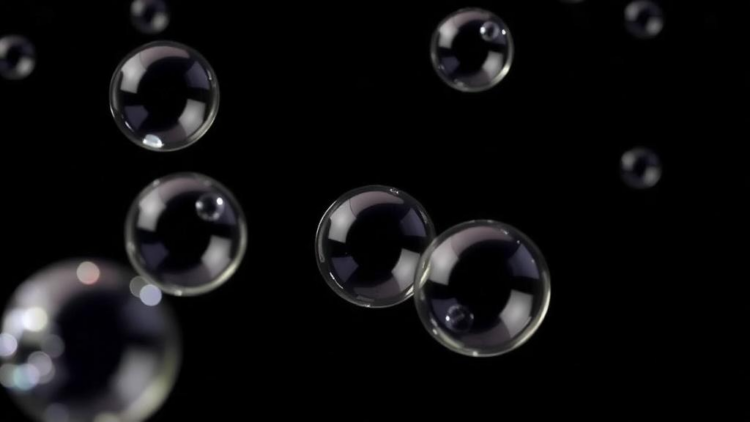
Bubbles so small that billions of them could fit inside a single grain of sand are quietly reshaping some of the world’s most practical industries, from farm irrigation to aquarium maintenance to the cleanup of contaminated rivers. That was the central premise when the New Jersey Institute of Technology hosted the International Conference on Nanobubbles, known as Nanobubble 2026, from August 19 to 22. The gathering drew approximately 140 attendees representing 70 organizations and 17 countries, marking the first time the conference series has been held in the United States after all prior editions took place overseas.
Nanobubbles are gas-filled cavities suspended in liquid, typically measuring less than about 200 nanometers across, far below the resolution of the naked eye. Their minute scale gives them unusual physical properties compared with ordinary bubbles: they can remain stable in water for extended periods, travel deep into soil and porous materials, and carry dissolved gases or chemical payloads to places conventional aeration cannot reach. Conference chairman Wen Zhang, an NJIT professor of civil and environmental engineering, described them as a delivery vehicle for chemicals or gases in air, soil and water, performing functions such as aeration, cleaning and disinfection.
The scientific puzzle at the heart of the field is that classical physics suggests bubbles of this size should collapse almost instantly under the immense internal pressure created by their tiny curvature. Yet experimentally, nanobubbles persist, sometimes for days or weeks. Explaining this stability, and reconciling theory with observation, remains one of the discipline’s defining challenges, and it featured prominently in the conference program.
Jay Meegoda, conference co-chair and NJIT distinguished professor of civil and environmental engineering, led a session devoted to the Mysteries of Nanobubbles and drew on his own team’s environmental clean-up experiments in the nearby Passaic River. He described two persistent puzzles: bubbles that exist even though extreme pressures should theoretically eliminate them, and bubbles whose behavior changes depending on how they are generated in the laboratory. Electrical charges on bubble surfaces and interactions with ozone are among the factors his team has identified as responsible for these anomalies, underscoring how sensitive the technology is to generation method and water chemistry.
Those open questions were taken up directly in a panel discussion titled Critical and Unanswered Questions on Nanobubbles, moderated by Meegoda. Panelists and attendees confronted issues that will determine whether the field matures into a mainstream engineering tool: how to characterize and predict bubble stability, whether the reported benefits of nanobubble treatments can be reliably traced to their proposed mechanisms, and whether the technology is economically viable at industrial scale. Such questions matter because the gap between laboratory promise and field performance is where many emerging water technologies stall.
The commercial footprint of nanobubbles is already broad. Applications discussed at the meeting spanned agriculture, biomedicine, cleaning products, energy, fisheries, food processing, industrial processing and water treatment. In agriculture, oxygen-rich nanobubbles delivered through irrigation water can improve root-zone aeration and support healthier crops; in water treatment, bubbles generated with ozone can oxidize contaminants and disinfect without leaving chemical residues. Zhang’s own research combines material science with nanobubble generation for agricultural applications and environmental remediation, work that connects to processes used in cleaning the Lincoln Memorial Reflecting Pool after algae blooms appeared there in summer 2026.
One of the most vivid illustrations of the technology’s reach came from an unexpected venue. Kent Semmen, a water chemist at Florida’s Walt Disney World, presented the company’s pilot use of nanobubbles to clean aquariums at the EPCOT and Animal Kingdom theme parks. According to Semmen, the approach works faster than traditional cleaning methods and is better for the animals in the tanks, a meaningful consideration where harsh chemicals or disruptive manual cleaning would stress aquatic life. He noted that Disney has not yet extended the technology to its saltwater bodies; testing would need to continue before that step, a reminder that even enthusiastic adopters proceed carefully across different water chemistries.
Commercialization was further represented by Yuhong Jiang, chief executive of Pure NanoTech, a Parsippany, New Jersey startup that commercializes patents developed by Zhang’s team at NJIT. The company serves customers in the agriculture, pharmaceutical and wastewater sectors, and several of its employees are NJIT alumni, including its top three scientists. Jiang also serves as president of the North American Ultrafine Bubble Association, for which NJIT became one of seven founding organizations this summer. The association’s stated mission is to foster responsible and sustainable growth of the industry by promoting best practices, encouraging collaboration, facilitating information sharing and supporting technology standardization.
Standardization is where the science meets the marketplace in a formal sense. The relevant framework is being developed under International Standards Organization Technical Committee 281, which covers fine bubble technology. Zhang explained that the standards address measurement methods for bubble size, concentration and stability, as well as application methods such as how to deploy the technology for aeration and oil remediation. He noted that ISO already offers a number of published standards with many more pending or under development. Common measurement protocols are widely seen as essential for a field in which reported results can depend heavily on how bubbles are generated and counted, allowing buyers and regulators to compare claims across vendors and laboratories.
In opening remarks, NJIT Interim President John Pelesko captured the paradox that gives the field its appeal: there is something fitting about a conference devoted to objects too small to see, yet convenient for discussing consequences that are remarkably visible in the world, whether in clean water, sustainable agriculture, safer food or better health treatments. He added that the conference reflects the values that define NJIT, including innovation, collaboration across disciplines, global engagement and a steady insistence that research should answer the problems people actually have. As nanobubble researchers returned to their laboratories and companies to their pilot projects, the meeting’s first American edition signaled a field moving from curiosity to infrastructure, one nanometer-scale bubble at a time.
Subject of Research: Nanobubble science and its environmental, agricultural and industrial applications
Article Title: Nanobubble scientists convene at NJIT to share environmental research
Article References: Nanobubble scientists convene at NJIT to share environmental research. (n.d.). Original publication
Image Credits: AI Generated
DOI: Not provided
Keywords: nanobubbles, NJIT, water treatment, agriculture, ultrafine bubbles, ISO standardization, environmental remediation, bubble stability, aeration, Pure NanoTech, Walt Disney World, Passaic River
Cite Scienmag News
APA
MLA
Chicago
Alan Morgan. (October 4, 2026). Tiny Bubbles, Big Stakes: Nanobubble Researchers Gather at NJIT. Scienmag. https://scienmag.com/tiny-bubbles-big-stakes-nanobubble-researchers-gather-at-njit/
Alan Morgan. “Tiny Bubbles, Big Stakes: Nanobubble Researchers Gather at NJIT.” Scienmag, 4 October 2026, https://scienmag.com/tiny-bubbles-big-stakes-nanobubble-researchers-gather-at-njit/. Accessed 4 October 2026.
Alan Morgan. “Tiny Bubbles, Big Stakes: Nanobubble Researchers Gather at NJIT.” Scienmag. October 4, 2026. https://scienmag.com/tiny-bubbles-big-stakes-nanobubble-researchers-gather-at-njit/
Copy citation
Download RIS
Tags: aerationagricultureapplications of nanobubblesbubble stabilityenvironmental impact of nanobubblesenvironmental remediationinternational nanobubble researchISO standardizationnanobubble research conferencenanobubble technologynanobubblesnanobubbles for contaminated water cleanupnanobubbles for soil aerationnanobubbles in agriculturenanobubbles in aquatic maintenancenanobubbles in water treatmentNJITNJIT nanobubble symposiumPassaic RiverPure NanoTechultrafine bubblesWalt Disney WorldWater treatment