

• HOME
  • NEWS
  • EXPLORE
    • CAREER
      • Companies
      • Jobs
    • EVENTS
    • iGEM
      • News
      • Team
    • PHOTOS
    • VIDEO
    • WIKI
  • BLOG
  • COMMUNITY
    • FACEBOOK
    • INSTAGRAM
    • TWITTER
Friday, December 12, 2025
BIOENGINEER.ORG
No Result
View All Result
  • Login
  • HOME
  • NEWS
  • EXPLORE
    • CAREER
      • Companies
      • Jobs
        • Lecturer
        • PhD Studentship
        • Postdoc
        • Research Assistant
    • EVENTS
    • iGEM
      • News
      • Team
    • PHOTOS
    • VIDEO
    • WIKI
  • BLOG
  • COMMUNITY
    • FACEBOOK
    • INSTAGRAM
    • TWITTER
  • HOME
  • NEWS
  • EXPLORE
    • CAREER
      • Companies
      • Jobs
        • Lecturer
        • PhD Studentship
        • Postdoc
        • Research Assistant
    • EVENTS
    • iGEM
      • News
      • Team
    • PHOTOS
    • VIDEO
    • WIKI
  • BLOG
  • COMMUNITY
    • FACEBOOK
    • INSTAGRAM
    • TWITTER
No Result
View All Result
Bioengineer.org
No Result
View All Result
Home Cardiology

Time to lower body temperature is critical in out-of-hospital cardiac arrest

Bioengineer by Bioengineer
December 9, 2020
in Cardiology, Clinical Trials, Health, Medicine & Health, Medicine/Health, Stroke, Trauma/Injury
Reading Time: 2 mins read
0
IMAGE
Share on FacebookShare on TwitterShare on LinkedinShare on RedditShare on Telegram

IMAGE

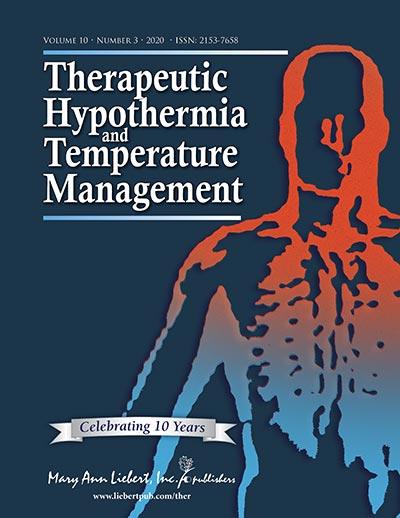
Credit: Mary Ann Liebert Inc., publishers

New Rochelle, NY, December 8, 2020–Time to reach the target body temperature was a significant factor in achieving favorable neurological outcomes in patients with witnessed out-of-hospital cardiac arrest. Significantly more favorable neurological outcomes occurred if the time to target temperature management was Therapeutic Hypothermia and Temperature Management. Click here to read the article now.

Furthermore, the effectiveness of extracorporeal cardiopulmonary resuscitation (ECPR) compared to conventional cardiopulmonary resuscitation (CCPR) increased as the interval from witnessed out-of-hospital cardiac arrest to target temperature decreased. ECPR with extracorporeal membrane oxygenation (ECMO) is a more promising treatment for out-of-hospital cardiac arrest than CCPR.

Comparing the results of this study to previous analyses, Tadashi Kaneko, Mie University Hospital, and coauthors conclude that “target temperature management may improve the neurological outcomes of witnessed out-of-hospital cardiac arrest.” They report higher favorable neurological outcomes than in previous studies of patients with either ECPR or CCPR and no body temperature lowering.

“This article is a significant contribution to the field of therapeutic hypothermia therapy in out-of-hospital cardiac arrest patients emphasizing again the importance of time to treatment and the benefits of ECPR in combination with ECMO,” says W. Dalton Dietrich, III, PhD, Editor-in-Chief of Therapeutic Hypothermia and Temperature Management, Scientific Director of The Miami Project to Cure Paralysis, and Kinetic Concepts Distinguished Chair in Neurosurgery, University of Miami Leonard M. Miller School of Medicine.

###

About the Journal

Therapeutic Hypothermia and Temperature Management is the only peer-reviewed journal providing clinical advances, best practices, and protocols on this critical, life-saving technology, including its application in cardiac arrest, spinal cord and traumatic brain injury, stroke, and burns. The Journal is published quarterly online with open access options and in print. Complete tables of content and a sample issue may be viewed on the Therapeutic Hypothermia and Temperature Management website.

About the Publisher

Mary Ann Liebert, Inc., publishers is known for establishing authoritative peer-reviewed journals in many promising areas of science and biomedical research. A complete list of the firm’s 90 journals, books, and newsmagazines is available on the Mary Ann Liebert, Inc., publishers website.

Media Contact
Kathryn Ryan
[email protected]

Original Source

https://home.liebertpub.com/news/time-to-lower-body-temperature-is-critical-in-out-of-hospital-cardiac-arrest/3789

Related Journal Article

http://dx.doi.org/10.1089/ther.2020.0045

https://scienmag.com/time-to-lower-body-temperature-is-critical-in-out-of-hospital-cardiac-arrest/


Share12Tweet8Share2ShareShareShare2

Related Posts

Body Appreciation Mediates Resilience and Life Satisfaction

December 12, 2025

Long-Term Medication Trends in Older Adults Revealed

December 12, 2025

COVID-19 Insights: Rural and Indigenous Populations’ Resilience

December 12, 2025

Fto-Mediated m6A Modification Crucial for Cerebellar Development

December 12, 2025
Please login to join discussion

POPULAR NEWS

  • New Research Unveils the Pathway for CEOs to Achieve Social Media Stardom

    New Research Unveils the Pathway for CEOs to Achieve Social Media Stardom

    205 shares
    Share 82 Tweet 51
  • Scientists Uncover Chameleon’s Telephone-Cord-Like Optic Nerves, A Feature Missed by Aristotle and Newton

    121 shares
    Share 48 Tweet 30
  • Neurological Impacts of COVID and MIS-C in Children

    108 shares
    Share 43 Tweet 27
  • Nurses’ Views on Online Learning: Effects on Performance

    69 shares
    Share 28 Tweet 17
v>

About

We bring you the latest biotechnology news from best research centers and universities around the world. Check our website.

Follow us

Recent News

Body Appreciation Mediates Resilience and Life Satisfaction

Long-Term Medication Trends in Older Adults Revealed

COVID-19 Insights: Rural and Indigenous Populations’ Resilience

Subscribe to Blog via Email

Enter your email address to subscribe to this blog and receive notifications of new posts by email.

Join 69 other subscribers
  • Contact Us

Bioengineer.org © Copyright 2023 All Rights Reserved.

Welcome Back!

Login to your account below

Forgotten Password?

Retrieve your password

Please enter your username or email address to reset your password.

Log In
No Result
View All Result
  • Homepages
    • Home Page 1
    • Home Page 2
  • News
  • National
  • Business
  • Health
  • Lifestyle
  • Science

Bioengineer.org © Copyright 2023 All Rights Reserved.
