• HOME
  • NEWS
  • EXPLORE
    • CAREER
      • Companies
      • Jobs
    • EVENTS
    • iGEM
      • News
      • Team
    • PHOTOS
    • VIDEO
    • WIKI
  • BLOG
  • COMMUNITY
    • FACEBOOK
    • INSTAGRAM
    • TWITTER
Saturday, June 27, 2026
BIOENGINEER.ORG
No Result
View All Result
  • Login
  • HOME
  • NEWS
  • EXPLORE
    • CAREER
      • Companies
      • Jobs
        • Lecturer
        • PhD Studentship
        • Postdoc
        • Research Assistant
    • EVENTS
    • iGEM
      • News
      • Team
    • PHOTOS
    • VIDEO
    • WIKI
  • BLOG
  • COMMUNITY
    • FACEBOOK
    • INSTAGRAM
    • TWITTER
  • HOME
  • NEWS
  • EXPLORE
    • CAREER
      • Companies
      • Jobs
        • Lecturer
        • PhD Studentship
        • Postdoc
        • Research Assistant
    • EVENTS
    • iGEM
      • News
      • Team
    • PHOTOS
    • VIDEO
    • WIKI
  • BLOG
  • COMMUNITY
    • FACEBOOK
    • INSTAGRAM
    • TWITTER
No Result
View All Result
Bioengineer.org
No Result
View All Result
Home NEWS Science News Chemistry

Tidal landscapes a greater carbon sink than previously thought

Bioengineer by Bioengineer
February 1, 2024
in Chemistry
Reading Time: 2 mins read
0
Mangrove trees
Share on FacebookShare on TwitterShare on LinkedinShare on RedditShare on Telegram

Mangroves and saltmarshes sequester large amounts of carbon, mitigating the greenhouse effect. New research from the University of Gothenburg shows that these environments are perhaps twice as effective as previously thought.
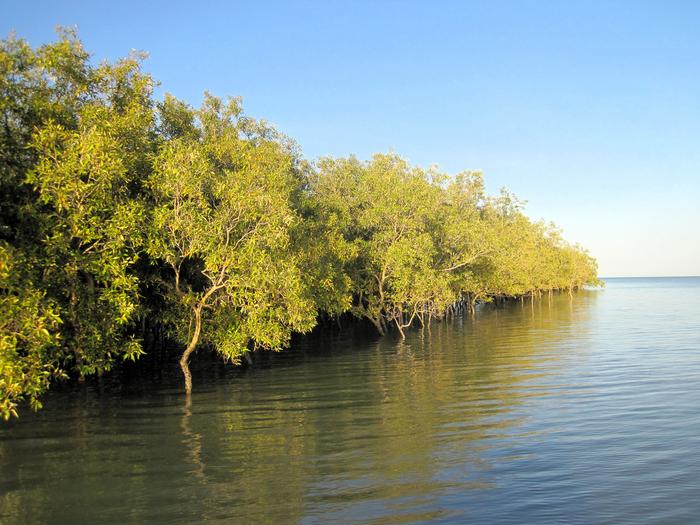
Mangrove trees

Credit: Luke Jeffrey

Mangroves and saltmarshes sequester large amounts of carbon, mitigating the greenhouse effect. New research from the University of Gothenburg shows that these environments are perhaps twice as effective as previously thought.

Natural habitats flooded by the tide form ecosystems that captures large amounts of carbon, which can help to mitigate climate change. Carbon dioxide is stored in the biomass and in the muddy soils. Therefore, several governments have launched blue carbon market initiatives to encourage landowners to restore and preserve mangrove and saltmarsh ecosystems, similar to the rainforest.

Large flow of bicarbonate

A new research report from the University of Gothenburg shows that the climate mitigation effect is even better than previously thought. 

”We have uncovered additional stored carbon in mangrove forests and salt marshes. Our new findings show that much of the carbon is exported to the ocean bound as bicarbonate as the tide recedes and remains dissolved in the ocean for thousands of years. Bicarbonate stabilises the pH and can reduce ocean acidification. This contribution has previously been overlooked,” says Gloria Reithmaier, a researcher in marine chemistry at the University of Gothenburg.

Bicarbonate is harmless and is used in baking powder, among other things. In the oceans, carbonate and bicarbonate are used to build shells and coral skeletons.

Measured all over the world

Reithmaier and her colleagues enlisted the help of scientists from 12 different countries to analyse intertidal carbon transport in 45 mangrove swamps and 16 salt marshes around the world. When they accounted for bicarbonate export from the ecosystems to the ocean, the size of the carbon trap in these ecosystems doubled.

”Our results showed that bicarbonate exports were equal to, or even surpassed, the amount of carbon stored in the soil. Therefore, previous estimates of these blue carbon sources have underestimated the potential of mangroves and saltmarshes to mitigate climate change,” says Gloria Reithmaier, adding:

”Our results show that blue carbon ecosystems are more effective in mitigating climate change than previously thought. It is now even more important to protect and restore mangrove and salt marsh ecosystems.”


Journal

Nature Communications

DOI

10.1038/s41467-023-44037-w

Method of Research

Experimental study

Article Title

Carbonate chemistry and carbon sequestration driven by inorganic carbon outwelling from mangroves and saltmarshes

Article Publication Date

11-Dec-2023

Share12Tweet8Share2ShareShareShare2

Related Posts

AI and Physics Collaborate to Design Advanced Hydrogen Storage Materials

June 25, 2026

International Team Including Dresden Scientists Develops Novel Designer Proteins for Advanced Study of Living Tissue

June 25, 2026

New Study Uncovers Key Factors Driving Water Chemistry in Nanoscale Environments

June 25, 2026

Plasma Technology Extends Catalyst Lifespan in Hydrogen Production

June 24, 2026

POPULAR NEWS

  • Saying Goodbye to PGY-6: Pediatric Fellowship Realities

    103 shares
    Share 41 Tweet 26
  • Multi-Hospital Study Reveals Long Covid Burden Is Twice as High as Current Estimates

    92 shares
    Share 36 Tweet 23
  • Detection of EDCs in Breast Milk and Infant Urine Up to Six Months Highlights Early Exposure Risks

    77 shares
    Share 31 Tweet 19
  • New Drug Candidate Developed at McMaster Shows Potential for Treating Brain Cancer

    58 shares
    Share 23 Tweet 15

About

We bring you the latest biotechnology news from best research centers and universities around the world. Check our website.

Follow us

Recent News

Tracking Lanthanide-Labeled Microplastics in Plants

POSTECH Researchers Slash Cost of Reconstituted Cell-Free Systems by 95%

AI and Physics Collaborate to Design Advanced Hydrogen Storage Materials

Subscribe to Blog via Email

Success! An email was just sent to confirm your subscription. Please find the email now and click 'Confirm' to start subscribing.

Join 82 other subscribers
  • Contact Us

Bioengineer.org © Copyright 2023 All Rights Reserved.

Welcome Back!

Login to your account below

Forgotten Password?

Retrieve your password

Please enter your username or email address to reset your password.

Log In
No Result
View All Result
  • Homepages
    • Home Page 1
    • Home Page 2
  • News
  • National
  • Business
  • Health
  • Lifestyle
  • Science

Bioengineer.org © Copyright 2023 All Rights Reserved.