• HOME
  • NEWS
  • EXPLORE
    • CAREER
      • Companies
      • Jobs
    • EVENTS
    • iGEM
      • News
      • Team
    • PHOTOS
    • VIDEO
    • WIKI
  • BLOG
  • COMMUNITY
    • FACEBOOK
    • INSTAGRAM
    • TWITTER
Thursday, November 19, 2026
BIOENGINEER.ORG
No Result
View All Result
  • Login
  • HOME
  • NEWS
  • EXPLORE
    • CAREER
      • Companies
      • Jobs
        • Lecturer
        • PhD Studentship
        • Postdoc
        • Research Assistant
    • EVENTS
    • iGEM
      • News
      • Team
    • PHOTOS
    • VIDEO
    • WIKI
  • BLOG
  • COMMUNITY
    • FACEBOOK
    • INSTAGRAM
    • TWITTER
No Result
View All Result
Bioengineer.org
No Result
View All Result
Home NEWS Science News Health

Thyroid Status Does Not Independently Predict Ovarian Reserve in PMOS Patients

by
November 16, 2026
in Health
Reading Time: 2 mins read
0
Thyroid Status Does Not Independently Predict Ovarian Reserve in PMOS Patients

Thyroid Status Does Not Independently Predict Ovarian Reserve in PMOS Patients

Share on FacebookShare on TwitterShare on LinkedinShare on RedditShare on Telegram

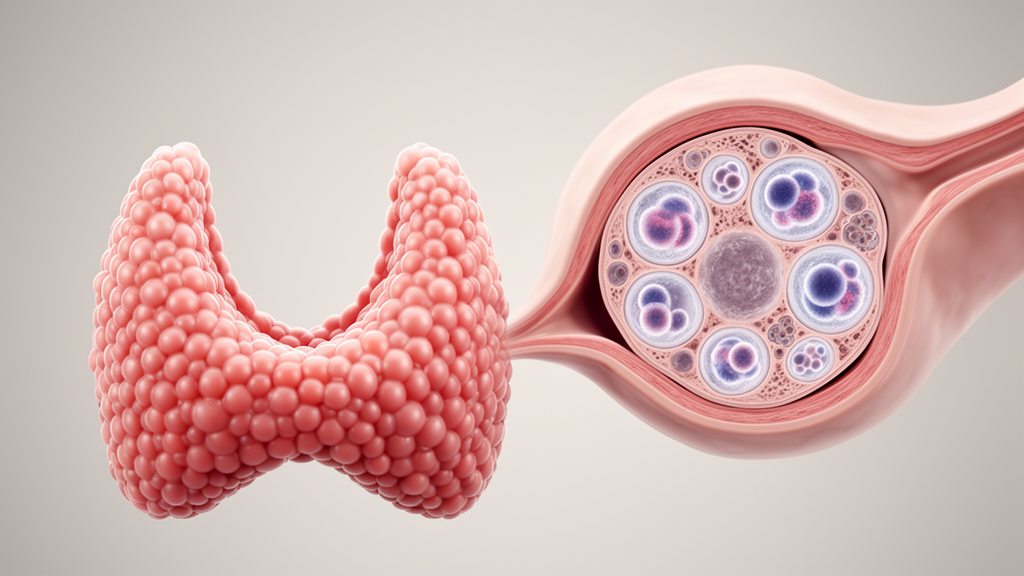
A recent retrospective cross-sectional study has determined that subclinical hypothyroidism and thyroid autoimmunity are not independently associated with markers of ovarian reserve in women diagnosed with polyendocrine metabolic ovarian syndrome (PMOS). The research, which analyzed data from 897 patients, sought to clarify the clinical relationship between thyroid function and reproductive markers in a population presenting with irregular menstruation and no overt thyroid dysfunction. The findings indicate that, after adjusting for confounding factors, thyroid-related variables do not serve as independent predictors of ovarian reserve parameters.

To evaluate these associations, the study stratified participants based on their thyroid-stimulating hormone (TSH) concentrations into three distinct groups: SCH0 (0.27–2.49 mIU/L), SCH1 (2.50–4.20 mIU/L), and SCH2 (greater than 4.20 mIU/L). Researchers also accounted for the modifying role of thyroid autoimmunity (TAI).

The quantitative results showed no statistically significant differences in primary ovarian reserve markers across the categorized TSH levels. Specifically, the study found no significant variations in Anti-Müllerian hormone (p = 0.362), follicle-stimulating hormone (p = 0.566), luteinizing hormone (p = 0.528), or estradiol (p = 0.833). Furthermore, polycystic ovarian morphology (p = 0.793) and cycle-related ovarian structures (p = 0.066) remained consistent across the different thyroid status groups.

A specific exception was noted regarding phenotype D, where researchers observed a variation in Anti-Müllerian hormone levels across the different TSH categories (p = 0.017). Despite this localized finding, subsequent multivariable adjustment demonstrated that thyroid-related variables overall lacked an independent association with ovarian reserve markers or related clinical parameters, with all other p-values remaining above 0.05.

In conclusion, the investigators suggested that the variability seen in ovarian reserve parameters among women with PMOS is primarily explained by factors such as body mass index, age, and the specific PMOS phenotype, rather than thyroid status alone.

Subject of Research: Reproductive endocrinology and metabolic health in women with PMOS.

Article Title: Ovarian reserve markers in women with polyendocrine metabolic ovarian syndrome and subclinical hypothyroidism: the modifying role of thyroid autoimmunity

Article References: Baran, R., Jach, R., & Gawron, I. (2026). Ovarian reserve markers in women with polyendocrine metabolic ovarian syndrome and subclinical hypothyroidism: the modifying role of thyroid autoimmunity. Journal of Ovarian Research. https://doi.org/10.1186/s13048-026-02358-6

Image Credits: AI Generated

DOI: 10.1186/s13048-026-02358-6

Keywords: Polyendocrine metabolic ovarian syndrome, PMOS, subclinical hypothyroidism, SCH, thyroid autoimmunity, TAI, ovarian reserve, Anti-Müllerian hormone, AMH, follicle-stimulating hormone, FSH, luteinizing hormone, estradiol, polycystic ovarian morphology, reproductive health, cross-sectional study, thyroid-stimulating hormone, endocrine markers, metabolic health

News Source: Ophelia Keating. (November 16, 2026). Thyroid Status Does Not Independently Predict Ovarian Reserve in PMOS Patients. Scienmag.


Tags: AMHanti-Müllerian hormoneCross-sectional Studyendocrine markersestradiolfollicle-stimulating hormoneFSHluteinizing hormoneMetabolic Healthovarian reservePMOSpolycystic ovarian morphologypolyendocrine metabolic ovarian syndromereproductive healthSCHsubclinical hypothyroidismTAIthyroid autoimmunitythyroid-stimulating hormone
Share12Tweet7Share2ShareShareShare1

Related Posts

Short-Term Dietary Macronutrient Changes Alter Left Ventricular Function in Cats

Short-Term Dietary Macronutrient Changes Alter Left Ventricular Function in Cats

November 19, 2026
Providing Effect Sizes Fails to Eliminate Medical Student P-Value Misconceptions

Providing Effect Sizes Fails to Eliminate Medical Student P-Value Misconceptions

November 19, 2026

Reconstructing Al-Farabi’s Ethics Reveals Weak Associations with Contemporary Bioethical Attitudes

November 19, 2026

Albuminuria Association With Cardiac Structure Varies by Body Mass Index

November 19, 2026

POPULAR NEWS

  • First-Principles Calculations Reveal High Thermoelectric Efficiency and Half-Metallicity in Co2VPb Alloy

    First-Principles Calculations Reveal High Thermoelectric Efficiency and Half-Metallicity in Co2VPb Alloy

    29 shares
    Share 12 Tweet 7
  • Mobile Bird Hosts Enable Regional Gene Flow in Crater Lake Parasites

    29 shares
    Share 12 Tweet 7
  • Ultrasound Shows Low Diagnostic Accuracy for Sexing Immature Agile Frogs

    29 shares
    Share 12 Tweet 7
  • Lithuanian Forest Foragers Link Solitary Mushroom Gathering to Cross-Border Trade

    29 shares
    Share 12 Tweet 7

About

We bring you the latest biotechnology news from best research centers and universities around the world. Check our website.

Follow us

Recent News

Short-Term Dietary Macronutrient Changes Alter Left Ventricular Function in Cats

Providing Effect Sizes Fails to Eliminate Medical Student P-Value Misconceptions

Reconstructing Al-Farabi’s Ethics Reveals Weak Associations with Contemporary Bioethical Attitudes

Subscribe to Blog via Email

Enter your email address to subscribe to this blog and receive notifications of new posts by email.

Join 88 other subscribers
  • Contact Us

Bioengineer.org © Copyright 2023 All Rights Reserved.

Welcome Back!

Login to your account below

Forgotten Password?

Retrieve your password

Please enter your username or email address to reset your password.

Log In
No Result
View All Result
  • Homepages
    • Home Page 1
    • Home Page 2
  • News
  • National
  • Business
  • Health
  • Lifestyle
  • Science

Bioengineer.org © Copyright 2023 All Rights Reserved.