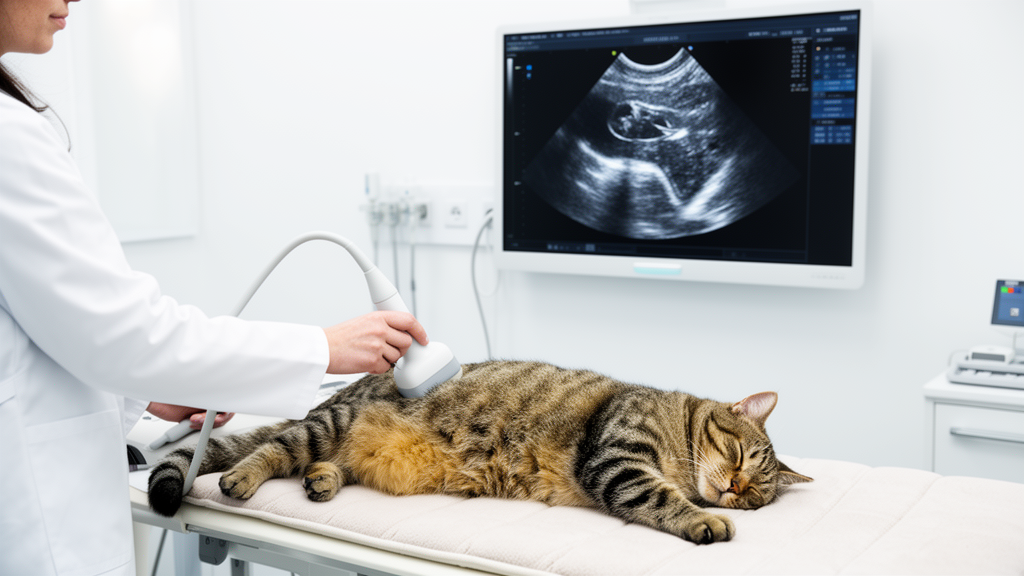
Short-term modifications in dietary macronutrient composition can alter specific echocardiographic measurements of cardiac function in adult male cats, according to a controlled study published in BMC Veterinary Research. The investigation evaluated how formulated maintenance diets varying in protein, fat, and carbohydrate ratios influence cardiovascular physiology, comparing outcomes between lean felines and those with established obesity.
Researchers designed the trial to investigate the direct short-term effects of low-protein, low-fat, and low-carbohydrate diets on echocardiographic parameters, systemic blood pressure, serum insulin-like growth factor-1 (IGF-1), and cardiac troponin I (cTnI). By contrasting lean and obese adult male cats, the investigators sought to identify whether underlying body condition alters the myocardial response to shifts in dietary energy sources.
The study cohort consisted of eighteen adult male cats divided evenly by body condition score. Nine lean cats with body condition scores of 4 to 5 on a 9-point scale and nine obese cats with scores of 8 or higher were enrolled. The animals were fed each experimental diet to maintain stable body weight over four-week feeding periods structured within a 3 × 3 Latin square crossover design.
Three extruded maintenance diets were formulated using identical ingredients in varying proportions through pairwise isoenergetic reduction of macronutrients. The low-protein diet provided 28 percent protein, 40 percent fat, and 32 percent nitrogen-free extract of metabolizable energy. The low-fat diet contained 40 percent protein, 30 percent fat, and 30 percent nitrogen-free extract, while the low-carbohydrate diet delivered 36 percent protein, 41 percent fat, and 23 percent nitrogen-free extract. Daily energy intake remained similar across all three diets, averaging 218.47 kcal per day on the low-protein diet, 220.42 kcal per day on the low-fat diet, and 225.37 kcal per day on the low-carbohydrate diet.
Cardiovascular and biochemical evaluations followed a precise testing timeline during each four-week feeding block. Echocardiographic examinations were conducted on day 23, followed by blood sampling for fasted serum IGF-1 and cTnI on day 24, and blood pressure monitoring on day 25. Statistical assessments utilized the GLIMMIX procedure in SAS Studio, with false discovery rate adjustments applied to account for multiple comparisons at a significance threshold of P < 0.05.
Echocardiographic analysis revealed that dietary composition significantly influenced myocardial tissue velocity. Specifically, septal S’ was lower in cats consuming the low-fat diet compared to those fed the low-carbohydrate and low-protein formulations, an effect that remained statistically significant after false discovery rate correction. Lateral A’ was lower during low-protein and low-fat feeding relative to the low-carbohydrate diet. Additionally, obese cats on the low-protein diet exhibited longer isovolumic relaxation times than when consuming low-fat or low-carbohydrate diets, whereas lean cats showed longer relaxation times on the low-fat diet; however, these interaction effects did not survive false discovery rate adjustment.
Independent of diet, body condition was associated with notable differences in cardiac wall dimensions and circulating growth factor concentrations. Obese cats exhibited significantly thicker diastolic left ventricular free walls and interventricular septa compared to lean cats. When wall dimensions were adjusted for lean soft tissue mass, the thickening of the interventricular septum remained statistically significant, whereas left ventricular free wall thickening did not persist. Fasting serum IGF-1 concentrations were also significantly higher in obese cats, averaging 308.23 ng/mL compared to 197.82 ng/mL in lean cats.
The authors concluded that short-term shifts in dietary macronutrient balance can alter feline cardiac function with few divergent responses between lean and obese animals. While feline obesity was definitively linked with structural myocardial adaptations, the researchers noted that the long-term clinical implications of dietary macronutrient variations on feline cardiac structure and health require continued investigation.
Subject of Research: Effects of dietary macronutrients on feline left ventricular structure and function
Article Title: Influence of dietary macronutrients on left ventricular structure and function in lean and obese adult male cats
Article References: Godfrey, H., Fonfara, S., Ribeiro, É., Verton-Shaw, S., Kostiuk, D., Kelly, J., Saunders-Blades, J., Shoveller, A., & Verbrugghe, A. (2026). Influence of dietary macronutrients on left ventricular structure and function in lean and obese adult male cats. BMC Veterinary Research. https://doi.org/10.1186/s12917-026-06093-4
Image Credits: AI Generated
DOI: 10.1186/s12917-026-06093-4
Keywords: feline cardiology, dietary macronutrients, echocardiography, feline obesity, left ventricular function, interventricular septum, left ventricular free wall, insulin-like growth factor-1, cardiac troponin I, low-fat diet, low-protein diet, low-carbohydrate diet, septal S', lateral A', isovolumic relaxation time, body condition score, Latin square design
News Source: Daisy Hatcher. (November 19, 2026). Short-Term Dietary Macronutrient Changes Alter Left Ventricular Function in Cats. Scienmag.