A small organ long dismissed as a fading remnant of childhood may be an overlooked factor in how adults respond to cancer treatment. New research involving more than 1,100 people with non-small cell lung cancer (NSCLC) has found that radiation exposure to the thymus was associated with a higher risk of cancer spreading to distant organs and with poorer survival. The relationship appeared specifically among patients whose thymus was relatively healthy before treatment, suggesting that the organ’s remaining immune activity may be clinically important even in adulthood.
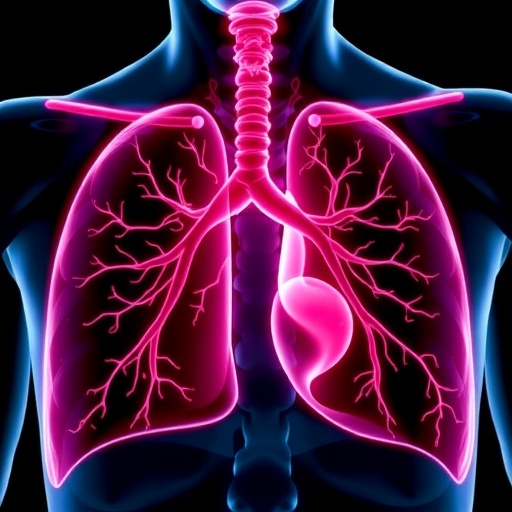
The thymus is located behind the breastbone, in the upper central chest, close to the heart, lungs and major blood vessels. Its principal role is to produce and educate T cells, a group of white blood cells that identify infected or abnormal cells and coordinate immune attacks against them. During childhood, the thymus is highly active. After puberty, it gradually becomes smaller, and much of its functional tissue is replaced by fat in a process known as involution. Because of this visible decline, medical thinking for decades generally treated the adult thymus as biologically unimportant. Recent evidence, however, indicates that involution is highly variable and that some adults retain considerably more functional thymic tissue than others.
The study, published in Annals of Oncology, used artificial intelligence to estimate the condition of the thymus from routine computed tomography scans acquired before radiotherapy. Rather than relying only on the organ’s size, the researchers assessed several imaging features, including its shape, density and the balance between apparent functional tissue and fat. These measurements were combined into a thymic health score. A higher score represented a better-preserved thymus, while a lower score indicated extensive fatty replacement or structural changes consistent with reduced function or previous damage. The approach allowed the investigators to examine an immune organ that is not routinely measured during cancer care.
The researchers then mapped each patient’s radiotherapy treatment plan to determine how much radiation reached the thymus. In lung cancer treatment, the organ may receive an unintended dose because of its position in the centre of the chest. Radiotherapy is designed to destroy malignant cells by damaging their DNA, but tissues located near the target can also be exposed. Although modern planning systems can shape and direct radiation with increasing precision, the thymus is not generally designated as an organ that must be protected in adult patients. The investigators therefore asked whether incidental thymic irradiation might influence the long-term course of NSCLC.
The analysis included 460 patients from the randomised phase III RTOG-0617 trial, which compared different radiotherapy doses alongside carboplatin and paclitaxel-based chemoradiotherapy, with or without cetuximab. It also included 647 people treated in routine clinical settings across two additional cohorts. One group received platinum-based chemoradiotherapy between 2003 and 2014, while another was treated between 2017 and 2023 and subsequently received durvalumab, an immune checkpoint inhibitor that has become part of standard care for some patients with locally advanced NSCLC. Including patients treated before and after immunotherapy became routine allowed the researchers to explore whether the thymus might be particularly relevant when treatment depends on an active immune response.
Across all three patient groups, greater radiation exposure to the thymus was consistently associated with a higher likelihood of distant metastasis. The association was not uniform across the entire study population. It was concentrated among patients who had relatively healthy thymic tissue before treatment. In the RTOG-0617 trial, higher thymic radiation exposure in this subgroup was associated with a 29 percent increase in the risk of distant metastasis. The corresponding increase was 33 percent in the Harvard chemoradiotherapy cohort and 95 percent among patients who received chemoradiotherapy followed by durvalumab. The figures represent relative increases in risk, not proof that radiation directly caused each metastasis, and the study was observational in its central analysis.
The pattern raises a biological possibility: a functioning adult thymus may contribute to the supply and diversity of T cells available to detect and attack tumour cells, and radiation damage could weaken that reserve. The thymus does not act alone. Mature T cells circulate through the blood and lymphatic system, communicate with other immune cells and respond to signals released by tumours and treatments. A diverse T-cell population may improve the chances that at least some cells recognise abnormal tumour proteins. This could be especially important with durvalumab, which works by blocking an inhibitory pathway and releasing existing T cells to mount a stronger response. If radiation reduces the thymus’s ability to support T-cell production or diversity, immunotherapy may have a less effective immune system to activate.
Additional findings were consistent with this interpretation, although they did not establish it conclusively. Patients exposed to higher thymic radiation doses showed a greater decline in their thymic health score one year after treatment, suggesting that the organ may undergo measurable structural damage following irradiation. In a smaller subgroup for whom blood-count information was available, higher exposure also tended to coincide with lower lymphocyte counts. Lymphocytes include T cells, B cells and natural killer cells, so a total lymphocyte count cannot reveal precisely which immune populations changed. Nevertheless, the result provides a possible link between the radiation dose received by the thymus, alterations visible on imaging and changes in systemic immunity.
The researchers identified a potential practical response using radiotherapy planning methods that are already available. In treatment simulations, thymic exposure could often be reduced substantially without compromising the radiation delivered to the tumour or increasing doses to other critical organs. This does not mean that thymus-sparing is ready to become a universal clinical standard. The study included differences in patient selection, treatment technique and disease characteristics, and many participants were white, limiting certainty about how the findings apply across populations. The AI models were trained and tested on diverse imaging collections, but further validation will be needed across scanners, hospitals and countries. The analysis also used 35 gray (Gy) as an exploratory threshold separating lower and higher thymic radiation exposure; that value is not a validated clinical cut-off.
The authors say prospective studies should now test whether deliberately protecting the thymus improves immune recovery, treatment response, metastasis rates or survival. Such trials would need to compare carefully planned radiotherapy strategies while monitoring tumour control, blood-cell populations, T-cell diversity and the effects of immunotherapy. The results also reinforce a broader shift in oncology: protecting healthy organs may eventually include preserving immune tissues, not only the heart, lungs and spinal cord. If future research confirms that the association is causal, the thymus could become one of the first immune organs routinely considered during radiation planning for adults. For now, the findings offer a provocative warning that an organ once regarded as nearly obsolete may still influence the success of modern cancer treatment.
Subject of Research: People with non-small cell lung cancer
Article Title: Thymic radiation is associated with worse outcomes in patients with NSCLC
News Publication Date: 26-Aug-2026
Web References: https://doi.org/10.1016/j.annonc.2026.07.001
References: Prudente, V. et al. “Thymic radiation is associated with worse outcomes in patients with NSCLC.” Annals of Oncology. DOI: 10.1016/j.annonc.2026.07.001. Bernatz, S., Prudente, V., Pai, S. et al. “Thymic health consequences in adults.” Nature 652, 986–994 (2026). Bernatz, S., Prudente, V., Pai, S. et al. “Thymic health and immunotherapy outcomes in patients with cancer.” Nature 652, 995–1003 (2026).
Keywords: Thymus, immune system, non-small cell lung cancer, lung cancer, radiotherapy, radiation therapy, metastasis, immunotherapy, T cells, cancer treatment, artificial intelligence, thymic health
Tags: adult thymus and T cell productioneffects of thymic tissue preservation on cancer therapyimmune system involvement in lung cancer progressionimpact of thymus on cancer survivalimplications of thymus health on cancer treatmentnon-small cell lung cancer treatment outcomesradiation exposure and cancer metastasis riskrole of thymus in adult immune functionthymus activity and patient prognosisthymus involution and immune response in adultsThymus radiation effects in lung cancerthymus size variability in adults